
The 3-Month Financial Health Check-up: Strategies for U.S. Families to Boost Savings by $5,000 in Early 2026
In the dynamic economic landscape of the United States, managing family finances effectively has become more crucial than ever. For many U.S. families, the dream of boosting savings by a significant amount, say $5,000, in a relatively short period like three months, might seem ambitious. However, with a focused family financial check-up and strategic planning, this goal is not only achievable but can also lay the groundwork for long-term financial stability. This comprehensive guide will walk you through a detailed 3-month plan designed to help your family achieve this impressive savings milestone by early 2026.
The journey to increasing your family’s savings begins with a clear understanding of your current financial standing. Just as you would conduct a health check-up for your physical well-being, a regular and thorough family financial check-up is essential for fiscal health. This involves more than just glancing at your bank balance; it requires a deep dive into income, expenses, debt, and future goals. Our 3-month framework is structured to empower U.S. families with the tools and knowledge to make informed financial decisions, identify areas for improvement, and implement effective strategies.
Why aim for $5,000 in three months? This target is significant enough to make a noticeable difference in your emergency fund, provide a cushion for unexpected expenses, or kickstart a larger savings goal like a down payment or college fund. It’s also a challenging yet realistic goal that fosters discipline and demonstrates the power of consistent effort in financial management. Let’s embark on this transformative journey together.
Month 1: The Deep Dive – Understanding Your Financial Landscape
The first month of your family financial check-up is all about gaining clarity. You can’t fix what you don’t understand, and often, families are surprised by where their money truly goes. This phase requires honesty, diligence, and a commitment to uncovering every financial detail.
Week 1: Income and Expense Tracking – The Foundation of Your Check-up
The very first step in any effective family financial check-up is to meticulously track every dollar that comes in and goes out. This isn’t just about knowing your salary; it’s about understanding all sources of income and categorizing every single expense. For U.S. families, this might include wages, side hustles, government benefits, or investment dividends. On the expense side, think beyond major bills:
- Fixed Expenses: Mortgage/rent, car payments, insurance premiums, loan repayments. These are usually consistent month-to-month.
- Variable Expenses: Groceries, utilities, gas, dining out, entertainment, clothing. These fluctuate and are often areas where significant savings can be found.
- Discretionary Spending: Subscriptions you don’t use, impulse purchases, daily coffees. These are typically the easiest to cut.
Actionable Steps:
- Choose a Method: Use budgeting apps (Mint, YNAB, Personal Capital), spreadsheets, or even a simple notebook. The key is consistency.
- Collect Data: Gather bank statements, credit card statements, and receipts for the past 30-60 days. This historical data provides a realistic baseline.
- Categorize Everything: Create clear categories for your spending. This will highlight where your money is actually going.
- Involve the Family: Make this a family effort. Even older children can learn about budgeting and contribute to identifying unnecessary expenses.
By the end of Week 1, you should have a crystal-clear picture of your family’s monthly cash flow. This foundational understanding is critical for the subsequent steps of your family financial check-up.
Week 2: Budget Creation and Goal Setting – Charting Your Course
With your income and expenses laid bare, it’s time to create a realistic budget and set your $5,000 savings goal firmly in place. A budget isn’t about restriction; it’s about intentional spending and aligning your money with your values and goals.
Actionable Steps:
- Build Your Budget: Allocate specific amounts for each expense category based on your tracking from Week 1. A popular method is the 50/30/20 rule: 50% for needs, 30% for wants, and 20% for savings and debt repayment. Adjust this to fit your family’s unique situation.
- Identify Savings Opportunities: Look at your variable and discretionary spending categories. Where can you realistically cut back? Can you reduce dining out, cancel unused subscriptions, or find cheaper alternatives for groceries?
- Set Your $5,000 Goal: Break down the $5,000 goal into monthly and weekly targets. Over three months, this means saving approximately $1,667 per month, or about $417 per week. This makes the large goal feel more manageable.
- Establish a Dedicated Savings Account: Open a separate high-yield savings account specifically for this $5,000 goal. This physical separation makes it less tempting to dip into and often comes with better interest rates.
The budget is your roadmap. Review it regularly and be prepared to make adjustments as needed. This iterative process is a key component of an ongoing family financial check-up.
Week 3: Debt Assessment and Prioritization – Freeing Up Cash Flow
High-interest debt can be a significant drag on your family’s ability to save. During this week, you’ll assess all outstanding debts and strategize on how to tackle them efficiently, freeing up more cash for savings.
Actionable Steps:
- List All Debts: Compile a list of all consumer debts: credit cards, personal loans, car loans, student loans (excluding mortgage for now). Include the creditor, current balance, interest rate, and minimum monthly payment.
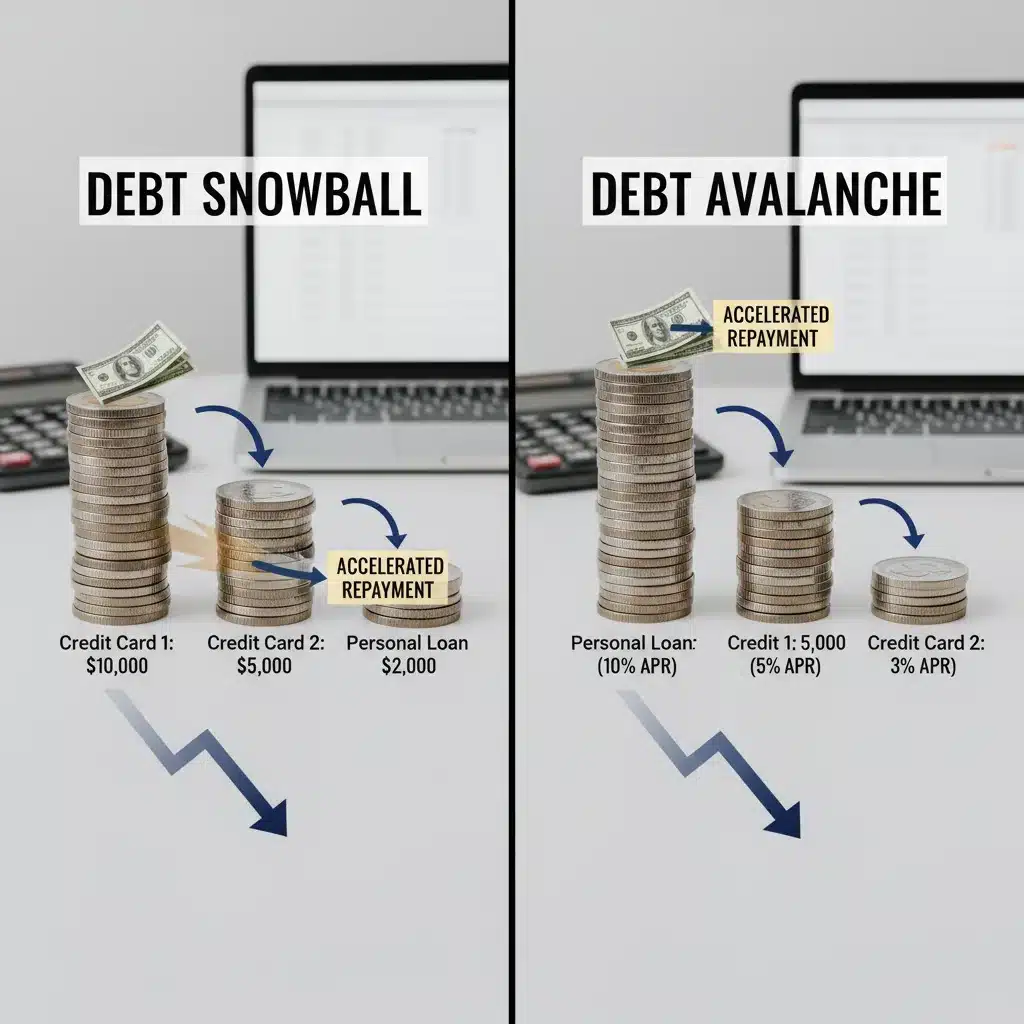
- Prioritize Debt Repayment: Consider strategies like the debt snowball (pay off smallest balance first for psychological wins) or debt avalanche (pay off highest interest rate first to save money). The goal is to reduce interest payments and free up cash flow.
- Negotiate Interest Rates: Call credit card companies and lenders to inquire about lower interest rates. Many are willing to negotiate, especially if you have a good payment history.
- Avoid New Debt: Commit to not taking on any new debt during this 3-month period. This is crucial for progress.
Reducing debt is a form of saving, as it prevents future interest payments. Integrating debt management into your family financial check-up is vital.
Week 4: Review and Refine – Solidifying Your Plan
Month 1 concludes with a comprehensive review of everything you’ve uncovered and planned. This is where you solidify your commitment and make any necessary adjustments before moving into the execution phase.
Actionable Steps:
- Family Meeting: Hold a dedicated family meeting to discuss your findings, the budget, and the $5,000 savings goal. Ensure everyone is on board and understands their role.
- Automate Savings: Set up automatic transfers from your checking account to your dedicated savings account right after payday. Out of sight, out of mind, and less temptation to spend.
- Emergency Fund Check: Briefly review your existing emergency fund. While the $5,000 goal is separate, ensuring a basic emergency fund is in place provides security.
- Identify Potential Roadblocks: Discuss potential challenges and how your family plans to overcome them. This proactive approach strengthens your resolve.
By the end of Month 1, your family financial check-up will have provided a robust foundation. You’ll know exactly where you stand, where you want to go, and how you plan to get there.
Month 2: The Optimization Phase – Boosting Income and Cutting Costs
With a solid understanding of your finances, Month 2 shifts focus to active optimization. This involves implementing your budget, finding creative ways to increase income, and aggressively cutting down on unnecessary expenses to accelerate your savings toward the $5,000 target.

Week 5-6: Aggressive Expense Reduction – The Low-Hanging Fruit
Now is the time to put your budget into action and make real cuts. This part of the family financial check-up can be challenging but incredibly rewarding.
Actionable Steps:
- Challenge Every Expense: Go through each budget category and ask: Is this absolutely necessary? Can I get it cheaper? Can I do without it for three months?
- Grocery Optimization: Plan meals, use coupons, buy store brands, avoid impulse buys, and reduce food waste. Consider a ‘no-spend’ challenge for a week on non-essentials.
- Utility Audit: Look for ways to reduce utility bills: unplug electronics, adjust thermostat, use energy-efficient practices. Call providers to see if you’re on the best plan.
- Entertainment Alternatives: Opt for free or low-cost entertainment: library visits, parks, free community events, game nights at home.
- Subscription Purge: Cancel any unused streaming services, gym memberships (if not being used), or other recurring subscriptions.
Every dollar saved here directly contributes to your $5,000 goal. Be creative and involve the whole family in finding ways to cut costs.
Week 7-8: Income Enhancement Strategies – Finding Extra Dollars
While cutting expenses is crucial, increasing income can significantly accelerate your savings. This aspect of the family financial check-up explores various avenues for earning extra money.
Actionable Steps:
- Sell Unused Items: Declutter your home and sell items you no longer need on platforms like eBay, Facebook Marketplace, or local consignment shops. Think clothes, electronics, furniture, and collectibles.
- Side Hustles: Explore opportunities for temporary side gigs: freelancing (writing, graphic design, virtual assistant), pet sitting, babysitting, delivering food, or tutoring.
- Overtime or Extra Shifts: If applicable, consider picking up extra hours at your current job.
- Review Tax Withholding: Consult a tax professional or use the IRS tax withholding estimator to ensure you’re not overpaying taxes each paycheck, which could free up immediate cash flow.
- Negotiate a Raise: If you’ve been performing exceptionally well, consider discussing a raise or bonus with your employer.
Even small amounts from these efforts add up quickly when combined with expense reductions. Remember, every extra dollar earned goes directly towards your $5,000 target.
Month 3: Momentum and Maintenance – Locking in Your Gains
The final month of your family financial check-up is about sustaining the momentum you’ve built and ensuring these positive changes become permanent habits. You’re nearing your $5,000 goal, and consistency is key.
Week 9-10: Debt Acceleration and Smart Spending – Maximizing Impact
Continue your efforts from Month 2, but now with an emphasis on accelerating debt repayment with any extra funds you’ve freed up, and making smarter spending choices.
Actionable Steps:
- Apply Extra Funds to Debt or Savings: Any unexpected income (bonus, tax refund, selling items) should be immediately directed towards your highest-interest debt or directly into your $5,000 savings fund.
- Mindful Spending: Before every purchase, pause and ask yourself: Is this a need or a want? Does it align with my financial goals? Can I find a cheaper alternative?
- Meal Prep and Packed Lunches: Continue to prioritize home-cooked meals and packed lunches to avoid costly impulse food purchases.
- Utilize Rewards: If you use credit cards responsibly, redeem any points or cashback rewards to offset expenses or add to your savings.
This phase of the family financial check-up is about reinforcing the positive habits you’ve developed.
Week 11-12: Final Push and Future Planning – Sustaining Success
As you approach the end of the three months and your $5,000 goal, it’s time for a final push and to start thinking about the future beyond this initial challenge.
Actionable Steps:
- Final Savings Review: Tally up your savings. Celebrate your progress, regardless of whether you hit the exact $5,000 mark. Even coming close is a huge achievement!
- Automate Future Savings: Now that you’ve seen what’s possible, continue automating a portion of your income into savings. Make it a permanent part of your budget.
- Revisit Your Budget: Adjust your budget for the long term. Some of the aggressive cuts might not be sustainable, but many new habits can be maintained.
- Set New Financial Goals: What’s next? A larger emergency fund, retirement savings, college funds, a down payment for a home? Use the momentum from this family financial check-up to set your next financial targets.
- Schedule Regular Check-ups: Commit to quarterly or semi-annual financial reviews. This keeps your family on track and allows you to adapt to changing circumstances.
By early 2026, with these strategies implemented, your U.S. family will not only have boosted its savings by $5,000 (or close to it) but will also have cultivated invaluable financial habits that will serve you for years to come. This family financial check-up is more than just a savings challenge; it’s a blueprint for lasting financial health.
Beyond the 3-Month Check-up: Long-Term Financial Health for U.S. Families
Achieving a $5,000 savings boost in three months is a significant accomplishment, but true financial health is a marathon, not a sprint. For U.S. families, integrating these practices into a continuous financial strategy is paramount. A regular family financial check-up shouldn’t be a one-time event but rather a consistent habit that evolves with your family’s life stages and economic conditions.
Establishing Financial Habits for Life
The discipline and awareness gained during this 3-month period are your most valuable assets. Here’s how to ensure these positive habits stick:
- Regular Budget Reviews: Make it a monthly ritual to sit down as a family and review your budget. Adjust it as income or expenses change. This keeps everyone informed and accountable.
- Automate Everything Possible: Continue to automate savings transfers, bill payments, and even investment contributions. This reduces the effort required and ensures consistency.
- Continuous Learning: Stay informed about personal finance. Read books, listen to podcasts, and follow reputable financial advisors. The more you know, the better decisions you can make.
- Teach Financial Literacy to Children: Involve your children in age-appropriate financial discussions. Teach them about saving, spending, and the value of money. This prepares them for their own financial futures.
Adapting to Economic Changes
The U.S. economy is constantly shifting. Inflation, interest rate changes, and job market fluctuations can all impact your family’s finances. A robust family financial check-up framework allows you to adapt:
- Inflation Adjustments: Regularly review your budget to account for rising costs of goods and services. Adjust spending categories as needed.
- Interest Rate Impact: Understand how interest rate changes affect your debts (especially variable-rate loans) and your savings accounts. Adjust debt repayment strategies or seek higher-yield savings options.
- Job Market Awareness: Stay aware of your industry’s job market. Consider upskilling or exploring new opportunities to maintain or increase income.
Building Wealth Beyond Savings
Once your emergency fund is robust and you’ve achieved your initial savings goals, the next step in your comprehensive family financial check-up is to explore wealth-building strategies:
- Investing: Begin exploring investment options such as 401(k)s, IRAs, and brokerage accounts. Even small, consistent investments can grow significantly over time due to compounding.
- Retirement Planning: Work with a financial advisor to create a long-term retirement plan tailored to your family’s goals.
- College Savings: If you have children, investigate 529 plans or other college savings vehicles.
- Estate Planning: Consider wills, trusts, and life insurance to protect your family’s financial future.
Conclusion: Empowering Your Family’s Financial Future
Embarking on a 3-month financial health check-up with the goal of boosting your U.S. family’s savings by $5,000 in early 2026 is an ambitious yet entirely attainable endeavor. It’s a journey that demands discipline, commitment, and a willingness to confront your financial realities head-on. By meticulously tracking income and expenses, creating a realistic budget, aggressively tackling debt, and actively seeking opportunities to increase income, your family can achieve this significant milestone.
More importantly, this intensive family financial check-up provides a transformative learning experience. It instills invaluable habits of financial awareness, intentional spending, and proactive planning that will serve as the bedrock for long-term financial security and prosperity. Remember, every small decision, every saved dollar, and every thoughtful financial choice contributes to a stronger, more resilient financial future for your U.S. family. Start today, and watch your financial health flourish!