Smart Debt Management 2026: Reduce High-Interest Debt by 20% in 12 Months

In an increasingly complex financial landscape, managing debt effectively has never been more crucial. As we look towards 2026, the imperative to reduce high-interest debt becomes even more pronounced. High-interest debt, often stemming from credit cards, personal loans, or certain types of mortgages, can be a relentless drain on your financial resources, hindering your ability to save, invest, and achieve long-term financial goals. This comprehensive guide will equip you with smart debt management strategies designed to help you reduce high-interest debt by a significant 20% within just 12 months. This isn’t just about paying off debt; it’s about reclaiming your financial future.
The journey to financial freedom often begins with a clear understanding of your current debt situation. Many people feel overwhelmed by the sheer volume of their debt, leading to inaction. However, by breaking down the problem into manageable steps and adopting a proactive approach, you can transform your financial outlook. Our focus on 2026 means we’ll be looking at contemporary tools, evolving financial advice, and sustainable practices that will set you up for success not just in the short term, but for years to come. Let’s dive into how you can effectively reduce high-interest debt and build a stronger financial foundation.
Understanding High-Interest Debt: The Enemy of Financial Progress
Before we can conquer high-interest debt, we must first understand its nature and how it impacts your financial health. High-interest debt is typically characterized by annual percentage rates (APRs) that are significantly above the prime rate, often ranging from 15% to 30% or even higher. Common culprits include credit card balances, payday loans, certain personal loans, and sometimes even medical debt or older student loans. The insidious nature of high-interest debt lies in its ability to compound rapidly, meaning the interest you owe can quickly grow on top of previous interest, making it incredibly difficult to pay down the principal.
Consider a credit card with a 20% APR. If you carry a balance of $5,000 and only make minimum payments, a significant portion of your payment goes towards interest, not the principal. This cycle can trap individuals in a seemingly endless loop, where their debt barely decreases despite consistent payments. This is why targeting and strategically working to reduce high-interest debt is paramount. It frees up cash flow, reduces stress, and allows you to allocate more money towards savings and investments, accelerating your journey towards financial independence.
The psychological toll of high-interest debt is also considerable. It can lead to stress, anxiety, and even impact relationships. Recognizing these consequences is the first step towards motivating yourself to take decisive action. Our goal to reduce high-interest debt by 20% in 12 months is ambitious but entirely achievable with the right strategies and unwavering commitment. We will explore methods that not only tackle the numbers but also foster healthier financial habits.
Phase 1: Assessing Your Current Debt Landscape (Month 1)
The initial phase of any effective debt reduction plan is a thorough assessment of your current financial situation. You cannot effectively reduce high-interest debt if you don’t know exactly what you’re up against. This involves gathering all relevant financial documents and creating a comprehensive overview of your debts.
Step 1: List All Debts
Create a detailed list of every single debt you owe. For each debt, include the following information:
- Creditor Name: Who do you owe money to? (e.g., Visa, Bank of America, Student Loan Servicer)
- Current Balance: The exact amount you currently owe.
- Interest Rate (APR): This is crucial. Identify the highest interest rates.
- Minimum Payment: The smallest amount you are required to pay each month.
- Due Date: When is the payment due?
- Type of Debt: (e.g., credit card, personal loan, student loan, car loan)
You can use a spreadsheet, a notebook, or a dedicated budgeting app for this. The goal is to have a clear, consolidated view of all your liabilities. This step alone can be incredibly illuminating and is foundational to any strategy to reduce high-interest debt.
Step 2: Calculate Your Total Debt and Prioritize
Once you have your list, calculate your total outstanding debt. Then, sort your debts by interest rate, from highest to lowest. This prioritization is key to the “debt avalanche” method, which we’ll discuss shortly. By tackling the debts with the highest interest rates first, you minimize the total amount of interest you pay over time, accelerating your overall debt reduction.
Step 3: Analyze Your Income and Expenses
To free up funds to reduce high-interest debt, you need to understand where your money is going. Create a detailed budget that tracks all your income and expenses for at least one month, but ideally three months for a more accurate picture. Categorize your expenses into fixed (rent, mortgage, loan payments) and variable (groceries, entertainment, dining out). Look for areas where you can cut back. Even small cuts can add up significantly over 12 months.
Tools like Mint, YNAB (You Need A Budget), or even a simple spreadsheet can help you track your spending. The goal is to identify surplus funds that can be redirected towards your high-interest debts. This diligent tracking is a cornerstone of smart debt management and empowers you to make informed financial decisions.
Phase 2: Choosing Your Debt Reduction Strategy (Month 2-3)
With a clear understanding of your financial situation, it’s time to select a strategy to actively reduce high-interest debt. Two popular and effective methods are the Debt Snowball and Debt Avalanche. While both aim to eliminate debt, they approach it differently.
The Debt Avalanche Method: Mathematically Optimal
The debt avalanche method involves paying off debts with the highest interest rates first, while making minimum payments on all other debts. Once the highest-interest debt is paid off, you take the money you were paying on that debt and apply it to the next highest-interest debt. This method saves you the most money on interest over the long run because you’re attacking the most expensive debts first.
Example:
- Credit Card A: $3,000 balance, 25% APR
- Personal Loan B: $5,000 balance, 18% APR
- Credit Card C: $2,000 balance, 20% APR
With the debt avalanche, you’d focus all extra payments on Credit Card A, while making minimum payments on B and C. Once A is paid off, you’d roll its payment amount into Personal Loan B, and so on. This is the most efficient way to reduce high-interest debt from a purely financial perspective.
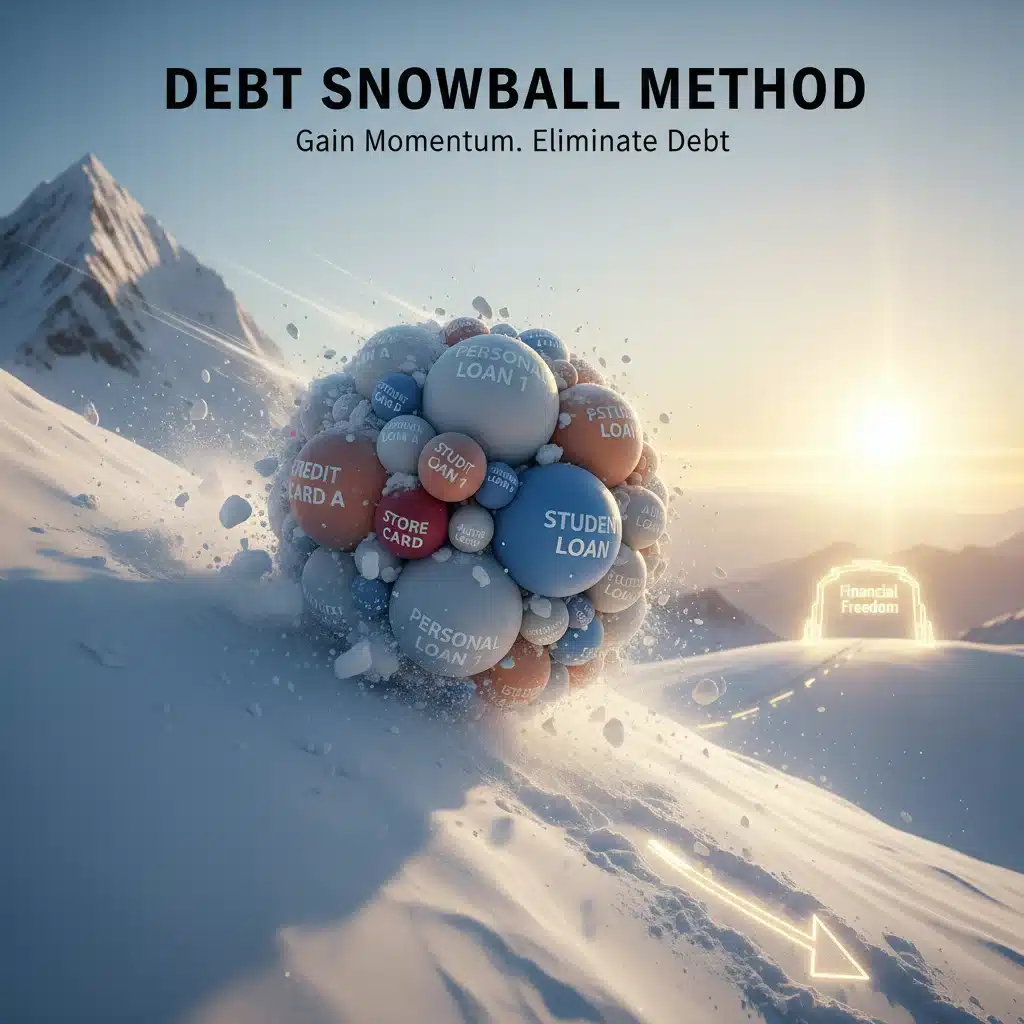
The Debt Snowball Method: Psychologically Powerful
The debt snowball method focuses on paying off the smallest debt first, regardless of its interest rate. Once that debt is paid off, you take the money you were paying on that debt and apply it to the next smallest debt. This method provides psychological wins early on, as you see debts being eliminated quickly, which can be a powerful motivator to keep going.
Example: Using the same debts as above, with the debt snowball, you’d focus all extra payments on Credit Card C ($2,000), then Credit Card A ($3,000), and finally Personal Loan B ($5,000). While you might pay slightly more in interest, the early successes can be invaluable for maintaining momentum, especially if you’re feeling overwhelmed by your debt.
Both methods are effective. Choose the one that best aligns with your personality and financial discipline. The key is consistency in applying extra payments to reduce high-interest debt.
Phase 3: Implementing Smart Debt Management Strategies (Month 4-9)
Once you’ve chosen your strategy, it’s time for aggressive implementation. This phase involves a combination of direct payment strategies and smart financial maneuvers to accelerate your goal to reduce high-interest debt.
Strategy 1: Increase Payments Beyond the Minimum
This is the most direct way to reduce high-interest debt. By paying more than the minimum required, you chip away at the principal balance faster, which in turn reduces the amount of interest you accrue. Even an extra $20 or $50 per month can make a significant difference over a year. Regularly review your budget to find additional funds you can allocate to debt payments.
Strategy 2: Debt Consolidation and Balance Transfers
For those with multiple high-interest debts, especially credit card balances, debt consolidation can be a game-changer. This involves taking out a new loan (like a personal loan) with a lower interest rate to pay off several existing high-interest debts. This simplifies your payments into one monthly bill and can significantly reduce the total interest paid.
Balance transfer credit cards offer 0% APR for an introductory period (typically 12-18 months). If you can qualify for one, transferring your high-interest credit card balances to this new card can give you a window to pay down a significant portion of the principal without accruing any interest. Be mindful of balance transfer fees (usually 3-5% of the transferred amount) and ensure you have a plan to pay off the balance before the promotional period ends and the regular, often high, APR kicks in. This is a powerful tactic to reduce high-interest debt, but requires discipline.
Strategy 3: Negotiate Lower Interest Rates
Don’t be afraid to call your credit card companies or lenders and ask for a lower interest rate. If you have a good payment history, even with a high balance, they may be willing to negotiate to keep you as a customer. Explain your intention to reduce high-interest debt and your commitment to paying it off. Even a few percentage points off your APR can save you hundreds or thousands of dollars.
Strategy 4: Boost Your Income
To reduce high-interest debt faster, consider ways to increase your income. This could involve:
- Side Hustles: Freelancing, gig work, or selling unused items can provide extra cash.
- Overtime: If available at your current job, take advantage of it.
- Salary Negotiation: If you’re due for a raise or promotion, now is the time to pursue it.
Every extra dollar earned can be directly applied to your debt, accelerating your 20% reduction goal.
Strategy 5: Sell Unused Items
Look around your home for items you no longer use or need. Selling old electronics, furniture, clothing, or collectibles on platforms like eBay, Facebook Marketplace, or local consignment shops can provide a quick influx of cash that can be immediately directed towards your highest-interest debts. This not only helps you reduce high-interest debt but also declutters your living space.
Phase 4: Monitoring Progress and Adjusting (Month 10-12)
Consistent monitoring and flexibility are crucial for achieving your goal to reduce high-interest debt. As you approach the 12-month mark, it’s essential to regularly review your progress and make adjustments as needed.
Track Your Progress Religiously
Keep a close eye on your debt balances. Seeing your debt decrease, especially the high-interest ones, can be incredibly motivating. Update your debt list regularly, perhaps monthly, to reflect payments made and interest accrued. Visual aids like charts or graphs can also be very effective in showing your progress over time.
Celebrate small victories! Each debt paid off, or each significant chunk taken out of a high-interest balance, is a step closer to your goal. Acknowledge these milestones to maintain motivation.
Re-evaluate Your Budget and Spending Habits
As your financial situation evolves, so too should your budget. Are there new areas where you can cut back? Or perhaps you’ve found new income streams? Adjust your budget to reflect these changes, always prioritizing extra payments towards your high-interest debt. This continuous refinement is a hallmark of smart debt management.
Be Prepared for Setbacks
Life happens, and sometimes unexpected expenses can derail even the best-laid plans. An emergency fund is critical here. If you don’t have one, start building a small one (e.g., $1,000) before aggressively paying down debt. This acts as a buffer against unforeseen costs, preventing you from incurring new high-interest debt when emergencies arise. If a setback does occur, don’t get discouraged. Re-evaluate, adjust your plan, and get back on track. The goal is to reduce high-interest debt, and minor deviations are part of the journey.

Leveraging Technology and Resources in 2026 for Debt Reduction
The year 2026 brings with it advanced tools and resources that can significantly aid your debt reduction efforts. Leveraging technology can automate processes, provide insights, and keep you accountable.
Budgeting Apps and Software
Modern budgeting apps like YNAB, Mint, Personal Capital, or even specialized debt payoff apps can streamline your financial tracking. These tools often link directly to your bank accounts and credit cards, categorizing expenses automatically and providing real-time insights into your spending. Many also offer features to help you visualize your debt payoff journey and calculate how quickly you can reduce high-interest debt with increased payments.
AI-Powered Financial Advisors
While not a replacement for human financial planners, AI-powered platforms can offer personalized advice based on your financial data. These tools can identify spending patterns, suggest areas for savings, and even recommend optimal debt repayment strategies tailored to your specific situation, helping you to more effectively reduce high-interest debt.
Online Debt Calculators and Visualizers
Numerous free online calculators can help you project your debt payoff dates and total interest paid under different scenarios. Seeing how much faster you can eliminate debt by adding even a small extra payment can be a powerful motivator. Visualizers that show your debt decreasing over time can also keep you engaged and focused on your goal to reduce high-interest debt.
Financial Literacy Resources
Websites, podcasts, and online courses dedicated to personal finance continue to proliferate. Educating yourself on topics like interest rates, compounding, budgeting, and investment can empower you to make smarter financial decisions and avoid future debt traps. Knowledge is a powerful tool in your quest to reduce high-interest debt.
Maintaining Momentum and Preventing Future High-Interest Debt
Achieving your goal to reduce high-interest debt by 20% in 12 months is a monumental accomplishment, but the journey doesn’t end there. Sustaining financial health requires ongoing vigilance and the adoption of lasting habits.
Build a Robust Emergency Fund
Once your high-interest debts are under control, pivot your focus to building a substantial emergency fund, ideally 3-6 months’ worth of living expenses. This fund is your shield against unexpected financial shocks, ensuring you won’t have to resort to high-interest debt again in times of crisis.
Live Below Your Means
Continue the habit of living below your means. This doesn’t necessarily mean deprivation, but rather making conscious choices about your spending and prioritizing savings and investments. The discipline you developed to reduce high-interest debt can be repurposed to build wealth.
Avoid New High-Interest Debt
Be extremely cautious about taking on new debt, especially high-interest credit card debt. If you use credit cards, commit to paying off the full balance every month to avoid interest charges. If a large purchase is necessary, explore financing options with lower interest rates or save up for it.
Regular Financial Reviews
Make it a habit to conduct regular financial reviews – quarterly or at least annually. Assess your budget, check your credit report, review your investments, and ensure you’re still on track with your long-term financial goals. This proactive approach will help you maintain the financial discipline gained from your effort to reduce high-interest debt.
Invest in Your Future
Once debt is under control and an emergency fund is in place, shift your focus to investing. Start contributing to retirement accounts, explore investment opportunities, and let the power of compounding work for you, rather than against you through debt. This is the ultimate reward for successfully managing and reducing high-interest debt.
Conclusion: Your Path to Financial Freedom in 2026 and Beyond
Reducing high-interest debt by 20% within 12 months is an ambitious yet entirely achievable goal. It requires a clear understanding of your financial situation, a well-chosen strategy, disciplined implementation, and continuous monitoring. By following the steps outlined in this guide – from assessing your debts and income to leveraging modern financial tools and adopting sustainable habits – you can significantly improve your financial health by 2026.
Remember, financial freedom is a journey, not a destination. The strategies you employ to reduce high-interest debt will not only help you achieve this specific goal but will also equip you with invaluable skills and habits for lifelong financial well-being. Take control of your finances today, embrace these smart debt management strategies, and look forward to a more secure and prosperous future. The effort you put in now to reduce high-interest debt will pay dividends for years to come, empowering you to live the life you desire without the heavy burden of expensive debt.