Optimize Retirement Portfolio 2026: Maximize Growth & Security

Optimizing Your Retirement Portfolio in 2026: A Step-by-Step Guide to Maximize Growth by 10% Annually
The landscape of retirement planning is ever-evolving, and as we look towards 2026, understanding how to strategically optimize your retirement portfolio becomes paramount. The goal isn’t just to save, but to grow your wealth actively and sustainably, aiming for significant annual returns like 10% while mitigating risks. This comprehensive guide will delve into the critical steps, strategies, and considerations for effective Retirement Portfolio Optimization, ensuring your golden years are financially secure and prosperous.
Retirement planning is not a one-time event; it’s a dynamic process that requires continuous monitoring, adjustment, and a keen eye on market trends. With 2026 on the horizon, new opportunities and challenges will undoubtedly emerge. By proactively optimizing your portfolio, you can position yourself to capitalize on these opportunities and navigate potential pitfalls. This article will equip you with the knowledge to make informed decisions, whether you’re years away from retirement or already enjoying it.
Understanding Your Current Financial Position and Goals
Before any significant adjustments, the first step in Retirement Portfolio Optimization is to gain a clear understanding of your current financial standing and define your retirement goals. This involves a thorough assessment of your existing assets, liabilities, income streams, and expenses. What is your current net worth? How much do you need to live comfortably in retirement? Are you aiming for an early retirement, or do you plan to work longer?
Assessing Your Current Portfolio
Start by compiling a complete list of all your investment accounts: 401(k)s, IRAs, Roth IRAs, brokerage accounts, savings accounts, and any other assets like real estate or business interests. For each account, note the current value, asset allocation (e.g., percentage in stocks, bonds, cash), and the performance over the past few years. Understand the fees associated with each investment, as these can significantly erode your returns over time. High fees are a silent killer of wealth, so identifying and minimizing them is a crucial aspect of Retirement Portfolio Optimization.
Defining Your Retirement Vision and Financial Needs
Your retirement vision is unique. Do you dream of extensive travel, pursuing hobbies, or simply enjoying a quiet life at home? Quantify these aspirations. Estimate your monthly expenses in retirement, factoring in healthcare costs, housing, travel, and leisure activities. Don’t forget inflation, which can significantly impact your purchasing power over decades. Online retirement calculators and financial planners can help you project these costs and determine the lump sum you’ll need to accumulate to support your desired lifestyle.
Setting a Realistic 10% Annual Growth Target
Aiming for a 10% annual growth rate is ambitious but achievable with a well-structured and actively managed portfolio. This target requires a strategic balance between growth-oriented assets and risk management. It’s essential to understand that past performance doesn’t guarantee future results, and market fluctuations are inherent. However, by understanding market cycles, diversifying wisely, and making informed decisions, you can significantly increase your chances of hitting this target. This goal becomes a driving force for your Retirement Portfolio Optimization efforts.
Strategic Asset Allocation for 2026 and Beyond
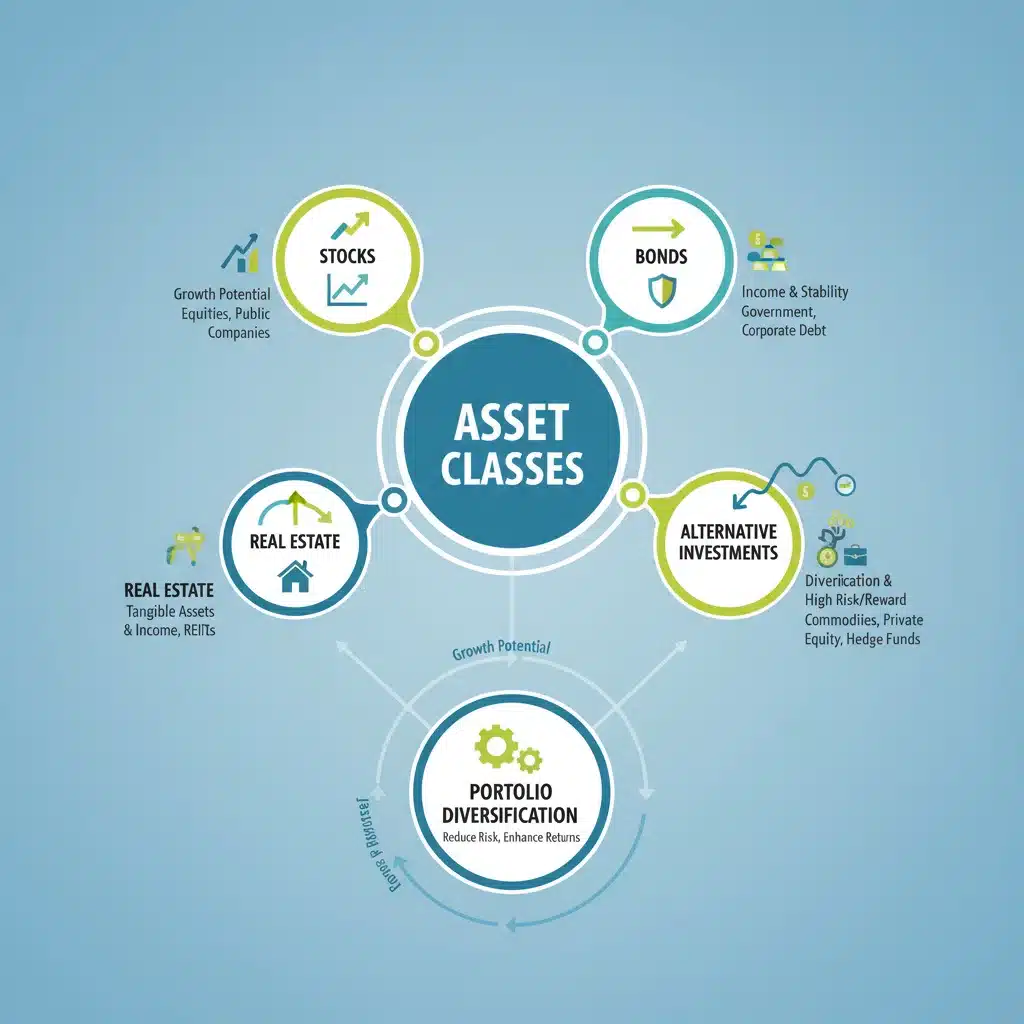
Asset allocation is the cornerstone of any successful investment strategy, particularly for Retirement Portfolio Optimization. It involves dividing your investment portfolio among different asset categories, such as stocks, bonds, cash, and alternative investments. The right allocation depends on your age, risk tolerance, and time horizon.
The Role of Stocks in Growth
Stocks, particularly growth stocks and dividend-paying stocks, are vital for achieving a 10% annual growth target. For those with a longer time horizon (10+ years until retirement), a higher allocation to equities is generally recommended. Consider a diversified approach within stocks, including:
- Large-Cap Growth Stocks: Companies with established track records and significant growth potential.
- Mid-Cap and Small-Cap Stocks: Offer higher growth potential but come with increased volatility.
- International Stocks: Diversify geographically and tap into growth opportunities in emerging markets.
- Dividend Stocks: Provide a steady income stream and can offer capital appreciation, contributing to overall returns.
In 2026, keep an eye on sectors poised for significant growth, such as artificial intelligence, renewable energy, biotechnology, and cybersecurity. Investing in ETFs or mutual funds focused on these sectors can offer diversified exposure without picking individual stocks.
Balancing with Bonds and Fixed Income
While stocks drive growth, bonds and other fixed-income instruments provide stability and income, helping to mitigate risk. As you approach retirement, a higher allocation to bonds is often advisable to protect your accumulated capital. Consider:
- Government Bonds: Generally considered safe havens.
- Corporate Bonds: Offer higher yields than government bonds but carry more credit risk.
- High-Yield Bonds: Offer even higher returns but come with greater risk.
- Inflation-Protected Securities (TIPS): Protect your purchasing power against inflation.
The interest rate environment in 2026 will heavily influence bond performance. Stay informed about central bank policies and economic indicators to make timely adjustments to your fixed-income portfolio.
Exploring Alternative Investments
For sophisticated investors aiming for higher returns and diversification, alternative investments can play a role in Retirement Portfolio Optimization. These might include:
- Real Estate: Through REITs (Real Estate Investment Trusts) or direct investments, real estate can provide income and appreciation.
- Private Equity/Venture Capital: Access to high-growth private companies, though these are typically illiquid and high-risk.
- Commodities: Gold, silver, and other commodities can act as inflation hedges and diversify against market downturns.
- Cryptocurrencies: While highly volatile, a small, speculative allocation might be considered by those with a high-risk tolerance for potential exponential growth.
It’s crucial to approach alternative investments with caution and thorough due diligence, as they often come with higher fees, less liquidity, and increased complexity.
Risk Management and Diversification Strategies
Achieving a 10% annual growth rate while safeguarding your retirement savings requires robust risk management and diversification. Diversification isn’t just about different asset classes; it also extends to geographies, industries, and investment styles.
Understanding Your Risk Tolerance
Your personal risk tolerance is a critical factor in Retirement Portfolio Optimization. Are you comfortable with significant market fluctuations for the potential of higher returns, or do you prefer a more conservative approach? Be honest with yourself. Overestimating your risk tolerance can lead to panic selling during downturns, which can be detrimental to long-term growth.
Beyond Traditional Diversification
While diversifying across stocks and bonds is fundamental, consider these advanced diversification techniques:
- Geographic Diversification: Invest in companies and markets globally to reduce dependence on any single economy.
- Sector Diversification: Spread your investments across various industries (e.g., technology, healthcare, consumer staples) to avoid overexposure to a single sector’s downturn.
- Factor Investing: Focus on specific factors like value, growth, momentum, or low volatility to enhance returns and manage risk.
- Rebalancing: Regularly adjust your portfolio back to your target asset allocation. If stocks have performed exceptionally well, you might sell some to buy more bonds, maintaining your desired risk level. This is a crucial, often overlooked, aspect of Retirement Portfolio Optimization.
Hedging Strategies
For more advanced investors, consider hedging strategies to protect against specific risks. This could include using options or futures contracts to mitigate downside risk in certain positions, though these strategies come with their own complexities and risks. For most investors, a well-diversified portfolio and appropriate asset allocation will be sufficient.
Tax-Efficient Investing for Maximum Returns
Taxes can significantly reduce your net returns, making tax-efficient investing a cornerstone of effective Retirement Portfolio Optimization. Understanding how different account types are taxed and utilizing strategies to minimize your tax burden can add substantial value over time.
Utilizing Tax-Advantaged Accounts
Maximize contributions to tax-advantaged retirement accounts:
- 401(k)s and 403(b)s: Contributions are often pre-tax, reducing your taxable income in the present. Growth is tax-deferred until withdrawal in retirement.
- Traditional IRAs: Similar to 401(k)s, contributions may be tax-deductible, and growth is tax-deferred.
- Roth IRAs and Roth 401(k)s: Contributions are made with after-tax dollars, but qualified withdrawals in retirement are entirely tax-free. This is incredibly powerful for long-term growth, especially if you anticipate being in a higher tax bracket in retirement.
- Health Savings Accounts (HSAs): For those with high-deductible health plans, HSAs offer a triple tax advantage: tax-deductible contributions, tax-free growth, and tax-free withdrawals for qualified medical expenses. They can be a powerful supplementary retirement savings vehicle.
Tax-Loss Harvesting
Tax-loss harvesting involves selling investments at a loss to offset capital gains and potentially a limited amount of ordinary income. This strategy can reduce your current tax liability, freeing up capital for reinvestment. While it doesn’t directly increase your portfolio’s value, it effectively reduces the drag of taxes, thereby improving your net returns – a smart move for Retirement Portfolio Optimization.
Location of Assets
Consider strategically placing different types of investments in different account types. For example, place high-growth, high-turnover investments (like aggressive stock funds) in tax-deferred or tax-free accounts (like Roth IRAs) to avoid annual capital gains taxes. Place tax-inefficient investments (like actively managed bond funds or REITs) in tax-deferred accounts. Tax-efficient investments (like broad market index funds) can be held in taxable brokerage accounts.
Monitoring, Review, and Rebalancing Your Portfolio
Even the best-laid plans require consistent attention. Regular monitoring, review, and rebalancing are non-negotiable for sustained Retirement Portfolio Optimization.
Annual Portfolio Review
At least once a year, conduct a thorough review of your entire portfolio. Ask yourself:
- Has my risk tolerance changed?
- Are my financial goals still the same, or have they evolved?
- How has each investment performed against its benchmark and my expectations?
- Are there any underperforming assets that need to be reevaluated or replaced?
- Are my fees still competitive, or can I find lower-cost alternatives?
- Are there new market opportunities or risks that I need to address?
The Importance of Rebalancing
Market fluctuations will inevitably cause your portfolio’s asset allocation to drift from your target. For instance, if stocks have a strong year, they might now constitute a larger percentage of your portfolio than you originally intended, increasing your risk exposure. Rebalancing involves selling some of your outperforming assets and buying more of your underperforming ones to bring your portfolio back to its target allocation. This strategy is counter-intuitive for many but is crucial for maintaining your desired risk level and can even enhance returns by forcing you to ‘buy low and sell high’.
You can rebalance on a fixed schedule (e.g., annually) or when an asset class deviates by a certain percentage from its target. Automating rebalancing through robo-advisors or specific mutual funds can simplify this process.
Staying Informed and Adapting
The financial world is dynamic. Stay informed about economic forecasts, market trends, and geopolitical events that could impact your investments. While it’s important not to react to every news headline, understanding the broader landscape allows you to make informed, strategic adjustments to your Retirement Portfolio Optimization plan. Consider consulting with a qualified financial advisor, especially for complex situations or if you prefer professional guidance.

Leveraging Technology and Professional Guidance
In today’s digital age, a plethora of tools and resources are available to assist with Retirement Portfolio Optimization. Leveraging technology can streamline the process, while professional guidance can provide invaluable expertise.
Robo-Advisors and Investment Platforms
Robo-advisors offer automated, algorithm-driven financial planning services with lower fees than traditional human advisors. They can help with asset allocation, diversification, and automatic rebalancing, making them an excellent option for hands-off investors or those just starting. Platforms like Vanguard, Fidelity, Schwab, and others also offer a wide range of low-cost index funds, ETFs, and tools for self-directed investors.
Financial Planning Software
Utilize financial planning software to track your progress, project future wealth, and run various scenarios (e.g., what if I retire earlier? What if market returns are lower?). These tools can provide a holistic view of your financial health and help you make data-driven decisions for your Retirement Portfolio Optimization.
The Value of a Human Financial Advisor
While technology is powerful, a human financial advisor can offer personalized advice, behavioral coaching, and expertise in complex financial situations (e.g., estate planning, business succession, advanced tax strategies). Look for a fee-only fiduciary advisor who is legally bound to act in your best interest. They can be particularly helpful in navigating market volatility and ensuring your emotional reactions don’t derail your long-term plan.
Conclusion: Your Path to a Secure and Prosperous Retirement in 2026
Optimizing your retirement portfolio for 2026 and beyond is an ongoing journey that demands diligence, informed decision-making, and adaptability. By understanding your financial position, strategically allocating assets, meticulously managing risk, embracing tax efficiencies, and regularly reviewing your progress, you can significantly enhance your chances of achieving a 10% annual growth rate and securing a financially robust retirement.
The key to successful Retirement Portfolio Optimization lies in a proactive approach. Don’t wait for market shifts to force your hand; instead, anticipate, plan, and execute with precision. Whether you choose to manage your portfolio independently or seek professional guidance, the principles outlined in this guide provide a solid framework for building and maintaining a resilient and high-performing retirement portfolio. Start today, stay disciplined, and look forward to a future where your financial freedom is not just a dream, but a well-earned reality.