Crypto Staking Opportunities 2026: Earn 12% Passive Income in the US

Crypto Staking Opportunities in 2026: Earning Up to 12% Passive Income in the US Market
The world of cryptocurrency is constantly evolving, presenting innovative ways for investors to generate passive income. Among these, crypto staking has emerged as a particularly compelling strategy, especially for those looking to maximize their digital asset holdings. As we look towards 2026, the US market is poised to offer significant crypto staking opportunities, with potential returns reaching an impressive 12% or more. This comprehensive guide will delve into the intricacies of crypto staking in the US, exploring the best platforms, promising assets, regulatory landscape, and essential strategies to help you navigate this exciting frontier.
Understanding Crypto Staking: The Foundation of Passive Income
Before diving into specific opportunities, it’s crucial to grasp the fundamental concept of crypto staking. In essence, staking involves locking up your cryptocurrency assets to support the operations of a blockchain network. This process is integral to Proof-of-Stake (PoS) blockchains, where stakers validate transactions and create new blocks. In return for their participation and commitment, stakers receive rewards, often in the form of additional cryptocurrency.
Think of it as earning interest in a traditional savings account, but with potentially much higher returns and a direct contribution to the security and efficiency of a decentralized network. The rewards generated through staking are a direct incentive for individuals to hold and secure the blockchain, promoting network stability and decentralization.
The allure of crypto staking lies in its ability to generate passive income. Unlike traditional trading, which requires constant attention and active decision-making, staking allows your assets to work for you while you sleep. This makes it an attractive option for long-term investors and those seeking to diversify their income streams within the digital asset space. The US market, with its growing adoption of cryptocurrencies and increasing regulatory clarity, is becoming a fertile ground for these opportunities.
Proof-of-Stake vs. Proof-of-Work: Why Staking Matters
To fully appreciate crypto staking, it’s important to understand its roots in Proof-of-Stake (PoS) consensus mechanisms. This contrasts sharply with Proof-of-Work (PoW), used by Bitcoin, where miners compete to solve complex computational puzzles to validate transactions. PoW is energy-intensive and requires specialized hardware.
PoS, on the other hand, selects validators based on the amount of cryptocurrency they are willing to ‘stake’ as collateral. The more coins staked, the higher the chance of being selected to validate a block and earn rewards. This mechanism is generally considered more energy-efficient and scalable than PoW, making it a preferred choice for many newer blockchain projects.
The transition of Ethereum, the second-largest cryptocurrency, from PoW to PoS (known as ‘The Merge’) significantly amplified the prominence and potential of crypto staking. This move not only reduced Ethereum’s energy consumption but also opened up substantial staking opportunities for its holders, setting a precedent for other networks.
Top Crypto Staking Opportunities in the US for 2026
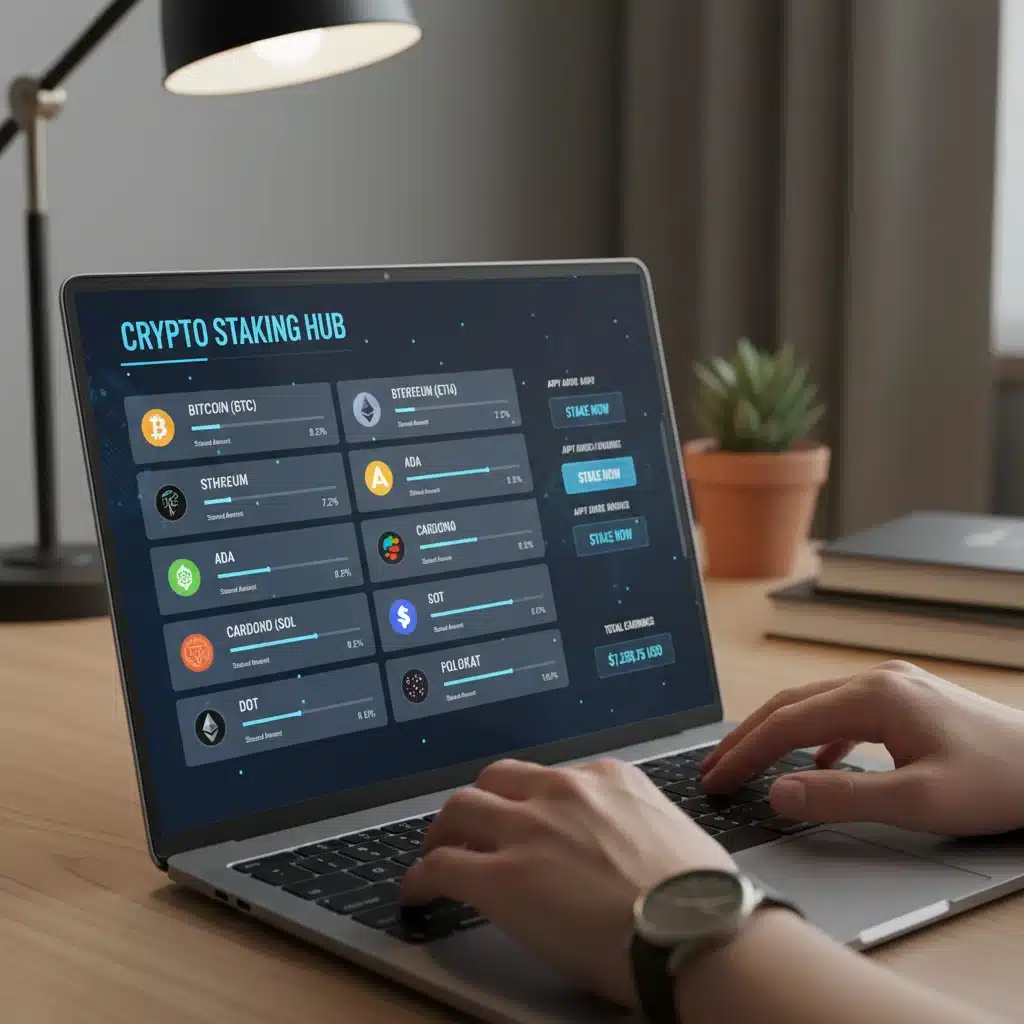
As we approach 2026, several cryptocurrencies and platforms stand out for their promising staking rewards and robust underlying technology. While the market is dynamic and yields can fluctuate, certain assets consistently offer attractive returns for US investors.
Ethereum (ETH) Staking: A Cornerstone Opportunity
Following its successful transition to PoS, Ethereum staking remains one of the most significant opportunities. While direct solo staking requires 32 ETH, which can be a substantial investment, various liquid staking solutions and centralized exchanges offer more accessible entry points. These platforms pool smaller amounts of ETH, allowing users to stake fractions of the required amount and still earn rewards. Expected APYs for ETH staking in 2026 could range from 3-6%, depending on network activity and validator participation.
Solana (SOL) Staking: High Performance, High Rewards
Solana has gained considerable traction for its high transaction throughput and low fees. Its PoS mechanism allows for attractive staking rewards, often in the range of 5-8% APY. Solana’s vibrant ecosystem of DeFi applications and NFTs further enhances its appeal, as a healthy ecosystem often translates to sustained demand for the underlying asset and its staking services. Staking SOL typically involves delegating your tokens to a validator, who then processes transactions on your behalf.
Cardano (ADA) Staking: Decentralization and Sustainability
Cardano is renowned for its academic rigor and focus on sustainability. ADA holders can stake their tokens by delegating them to stake pools, contributing to the network’s security without locking up their funds directly. This non-custodial staking model is highly favored by many, as it allows users to retain control of their assets. Cardano staking rewards generally hover around 4-6% APY, making it a stable and attractive option for long-term holders.
Polkadot (DOT) Staking: Interoperability and Innovation
Polkadot aims to enable different blockchains to communicate with each other, fostering a more interconnected decentralized web. Staking DOT involves bonding your tokens to support validator operations or nominating validators. Polkadot’s staking rewards can be quite competitive, often in the 8-12% APY range, depending on network parameters and participation rates. Its innovative parachain auction model also provides additional opportunities for DOT holders to contribute to the ecosystem and potentially earn more.
Cosmos (ATOM) Staking: The Internet of Blockchains
Cosmos is another project focused on blockchain interoperability, often referred to as the ‘Internet of Blockchains.’ ATOM holders can stake their tokens to secure the Cosmos Hub and participate in its governance. Cosmos staking is known for offering some of the highest APYs in the market, frequently exceeding 10% and sometimes reaching up to 15% or more. This makes ATOM a prime candidate for those seeking to maximize their crypto staking returns in the US.
Choosing the Right Staking Platform in the US
Once you’ve identified promising cryptocurrencies, the next critical step is selecting a reliable and secure staking platform. In the US, options range from centralized exchanges to decentralized protocols and dedicated staking services.
Centralized Exchanges (CEXs)
Platforms like Coinbase, Binance.US, Kraken, and Gemini offer convenient staking services. They act as custodians of your assets and handle the technical complexities of staking. This ease of use makes them ideal for beginners. However, it’s important to remember that using a CEX means you don’t fully control your private keys (‘not your keys, not your coins’). While generally secure, CEXs are susceptible to hacks and regulatory scrutiny. Always choose reputable exchanges with strong security track records.
Decentralized Finance (DeFi) Protocols
DeFi protocols offer a more decentralized approach to staking. Liquid staking platforms like Lido Finance (for ETH) allow you to stake your crypto and receive a liquid staking derivative token (e.g., stETH). This token can then be used in other DeFi applications, providing additional yield opportunities while your original assets are staked. DeFi staking offers greater control over your assets but comes with higher technical complexity and smart contract risks.
Dedicated Staking Providers
Some platforms specialize solely in staking services, often offering a wider range of assets and potentially higher yields than CEXs. These providers typically operate as non-custodial services, meaning you retain control of your private keys. Examples include institutional-grade staking providers and community-run stake pools. Researching their reputation, fees, and security measures is paramount.
Maximizing Your Returns: Strategies for Up to 12% APY
Achieving returns of up to 12% or more from crypto staking US requires a strategic approach. It’s not just about picking a coin; it’s about understanding the nuances of the market and optimizing your staking strategy.
Diversification is Key
Don’t put all your eggs in one basket. Diversify your staking portfolio across multiple cryptocurrencies and platforms. This hedges against potential price volatility of a single asset or issues with a particular platform. A diversified portfolio can help maintain a more consistent passive income stream.
Reinvesting Rewards (Compounding)
One of the most powerful strategies is to reinvest your staking rewards. This compounding effect means your earnings also start earning rewards, significantly accelerating your overall growth. Many platforms offer automatic reward compounding, or you can manually add your earned tokens back into your staked balance.
Monitoring Market Conditions and APYs
Staking APYs are not static; they fluctuate based on network participation, transaction volume, and overall market demand. Regularly monitor the APYs offered by different assets and platforms. Be prepared to adjust your strategy if a particular asset’s yield drops significantly or if more attractive opportunities emerge.
Understanding Lock-up Periods and Unbonding Times
Many staking protocols involve lock-up periods, during which your assets cannot be withdrawn. Additionally, there might be an ‘unbonding’ period after you decide to unstake, during which your tokens are inaccessible. Factor these into your investment strategy, especially if you anticipate needing liquidity. Longer lock-up periods often come with higher rewards as compensation for the reduced liquidity.
Evaluating Risk vs. Reward
Higher APYs often come with higher risks. While 12% is an attractive target, it’s crucial to understand the associated risks, such as smart contract vulnerabilities, validator slashing (penalties for misbehavior), and the inherent volatility of cryptocurrency prices. Always conduct thorough due diligence before committing your funds.
Regulatory Landscape for Crypto Staking in the US (2026 Outlook)
The regulatory environment for cryptocurrencies in the US is complex and continuously evolving. As of 2026, we can expect further clarity and potential changes that will impact crypto staking.
SEC Scrutiny and Classification
The US Securities and Exchange Commission (SEC) has been actively scrutinizing crypto assets, particularly regarding their classification as securities. The classification of a staked asset could have significant implications for how it’s offered and regulated. While direct staking on decentralized protocols might fall outside direct SEC oversight, staking services offered by centralized exchanges are more likely to be under regulatory purview.
Taxation of Staking Rewards
The IRS currently views staking rewards as taxable income. The timing of taxation (when rewards are received vs. when they are sold) and the fair market value used for calculation are critical considerations. As crypto adoption grows, clearer guidance on the taxation of staking rewards is anticipated, but investors should prepare to track their earnings diligently and consult with tax professionals.
Consumer Protection and Licensing
Expect increased focus on consumer protection and licensing requirements for platforms offering crypto staking US services. This could lead to more stringent operational standards for exchanges and dedicated staking providers, ultimately benefiting users through enhanced security and transparency, but potentially limiting options or increasing compliance costs for providers.
Staying informed about these regulatory developments is crucial for any US investor participating in crypto staking. Adherence to regulations not only ensures legal compliance but also contributes to the long-term sustainability and legitimacy of the crypto ecosystem.
Risks Associated with Crypto Staking
While the promise of 12% passive income is enticing, it’s vital to be aware of the inherent risks associated with crypto staking.
Price Volatility
The most apparent risk is the volatility of cryptocurrency prices. Even if you earn a high APY, a significant drop in the underlying asset’s value can erode your gains or even lead to net losses in fiat terms. Staking reduces liquidity, meaning you can’t quickly sell your assets if prices plummet during a lock-up period.
Slashing Risk
In PoS networks, validators can be penalized (‘slashed’) for misbehavior, such as going offline or validating invalid transactions. If you delegate your tokens to a validator who gets slashed, a portion of your staked assets (and potentially your rewards) could be lost. Choosing reliable and reputable validators is crucial to mitigate this risk.
Smart Contract Vulnerabilities
When using DeFi protocols or liquid staking solutions, you interact with smart contracts. These contracts, despite audits, can have vulnerabilities that could be exploited by malicious actors, leading to loss of funds. Only use well-vetted and audited protocols.
Platform Risk (Centralized Exchanges)
If you stake through a centralized exchange, you face platform-specific risks, including potential hacks, insolvency, or regulatory actions that could freeze your assets. While reputable exchanges have strong security measures, the risk is never zero.
Liquidity Risk
As mentioned, staked assets are often locked up for a period, reducing your liquidity. If you need immediate access to your funds, you might be unable to unstake them without incurring penalties or waiting for the unbonding period to end.

Best Practices for Secure and Profitable Crypto Staking
To navigate the world of crypto staking US successfully and minimize risks, adopt these best practices:
- Do Your Own Research (DYOR): Never stake based on hype. Thoroughly research the cryptocurrency, the blockchain project, the staking platform, and the validator. Understand the technology, the team, and the tokenomics.
- Choose Reputable Platforms and Validators: Opt for established centralized exchanges, well-audited DeFi protocols, and validators with a proven track record of uptime and reliability to minimize slashing risk.
- Understand the Terms: Be fully aware of lock-up periods, unbonding times, potential fees, and slashing conditions before committing your assets.
- Diversify Your Staking Portfolio: Spread your investments across different assets and platforms to mitigate specific asset price risk and platform failure risk.
- Secure Your Wallet: Use hardware wallets for storing your unstaked (and sometimes staked, if non-custodial) cryptocurrencies. Enable two-factor authentication (2FA) on all platforms.
- Monitor Your Staked Assets: Regularly check the performance of your staked assets, including APY changes and validator status.
- Stay Informed on Regulations: Keep abreast of regulatory developments in the US, especially concerning taxation and compliance, to ensure you remain compliant.
- Start Small: If you’re new to staking, begin with a smaller amount to understand the process and risks before committing a larger portion of your portfolio.
The Future of Crypto Staking in the US
Looking ahead to 2026 and beyond, the future of crypto staking in the US appears bright, albeit with ongoing evolution. We can anticipate several key trends:
Increased Institutional Adoption
As regulatory clarity improves, more institutional investors are likely to enter the staking space. This influx of capital could further legitimize staking and potentially stabilize yields, while also introducing new, more sophisticated staking products and services.
Innovation in Liquid Staking
Liquid staking solutions are expected to become even more sophisticated, offering greater flexibility and capital efficiency. These innovations will allow users to participate in staking without sacrificing liquidity, potentially unlocking new use cases for staked assets within the broader DeFi ecosystem.
Regulatory Framework Refinement
The US government will likely continue to refine its regulatory framework for digital assets. While this may introduce stricter compliance requirements, it could also provide much-needed legal certainty, fostering innovation and making the market more accessible and safer for mainstream investors.
Focus on Decentralization and Security
With increasing value locked in staking, there will be a continuous emphasis on enhancing the decentralization and security of PoS networks. This includes advancements in validator infrastructure, slashing prevention mechanisms, and robust smart contract auditing.
Integration with Traditional Finance
As the lines between traditional finance and decentralized finance blur, we may see more integration of staking products into conventional investment portfolios. This could involve regulated financial institutions offering staking services or tokenized staking derivatives becoming available on traditional exchanges.
Conclusion: Tapping into Crypto Staking US for Passive Income
Crypto staking in the US for 2026 presents a compelling avenue for generating passive income, with realistic opportunities to earn up to 12% APY or even higher on certain assets. By understanding the underlying technology, carefully selecting assets and platforms, and implementing sound risk management strategies, investors can significantly grow their digital wealth.
While the journey into decentralized finance and crypto staking comes with its own set of challenges, including market volatility and regulatory uncertainties, the potential rewards are substantial. The key to success lies in continuous learning, diligent research, and a pragmatic approach to investment. As the crypto landscape matures, staking will likely become an even more integral part of a diversified digital asset portfolio for savvy US investors.
Embrace the future of finance, explore the robust crypto staking US opportunities, and position yourself to benefit from the ongoing evolution of the blockchain economy.