SEC Staking Regulations 2026: US Crypto Investor Guide
The SEC’s new staking regulations for 2026 are poised to significantly reshape the landscape for US crypto investors, demanding a proactive understanding of compliance and market shifts.
As the digital asset space continues its rapid evolution, staying informed about regulatory shifts is paramount. For US crypto investors, understanding the SEC staking regulations 2026 is not just recommended, it’s essential for navigating the complexities and opportunities within the market.
The Evolving Landscape of Crypto Staking Regulation
The Securities and Exchange Commission (SEC) has been increasingly scrutinizing the cryptocurrency market, particularly areas that resemble traditional financial instruments. Staking, a process integral to many proof-of-stake blockchains, has emerged as a key area of focus for regulatory bodies, leading to the anticipated implementation of new rules by 2026. These regulations aim to bring clarity and investor protection to a sector that has largely operated without explicit federal oversight.
The SEC’s approach is rooted in its mandate to protect investors and maintain fair, orderly, and efficient markets. As staking services proliferate, offering varying degrees of decentralization and investor returns, the SEC is working to classify these activities and apply appropriate regulatory frameworks. This proactive stance is designed to mitigate risks such as fraud, market manipulation, and inadequate disclosure, which could undermine investor confidence.
Defining Staking under SEC Eyes
The SEC’s primary challenge lies in defining what constitutes a security in the context of staking. The Howey Test, a long-standing legal precedent, is often applied to determine if an investment contract exists. If staking arrangements are deemed investment contracts, they would fall under federal securities laws, requiring registration and compliance with stringent disclosure requirements.
- Pooled Staking Services: These services, where investors delegate their tokens to a third-party operator, are under particular scrutiny. The collective management and expectation of profit from the efforts of others often align with the Howey Test criteria.
- Individual Staking: Direct staking by individual token holders, especially on truly decentralized networks, may present a different regulatory profile, though the nuances are still being debated.
- Disclosure Requirements: Whether classified as securities or not, the SEC is pushing for greater transparency regarding the risks, rewards, and operational mechanics of staking services.
The evolving regulatory environment signifies a maturation of the crypto market. While some view regulation as an impediment, it can also foster greater institutional adoption and provide a clearer operational roadmap for legitimate businesses. For US crypto investors, adapting to these changes will be crucial for continued participation in staking activities.
Key Provisions of the Proposed 2026 Staking Regulations
While the final rules are still taking shape, industry insiders and legal experts anticipate several key provisions that will significantly impact how staking operates in the US. These provisions are designed to enhance investor protection, ensure market integrity, and bring staking activities more in line with traditional financial regulations.
One of the central tenets is likely to be increased registration requirements for entities offering staking services. This could mean that platforms facilitating staking will need to register as broker-dealers, investment advisers, or even potentially as national securities exchanges, depending on the specific nature of their offerings. Such registrations entail extensive compliance obligations, including capital requirements, operational safeguards, and robust reporting.
Investor Protection and Disclosure
A major focus of the SEC’s regulatory push is to equip investors with comprehensive information to make informed decisions. This extends beyond basic risk warnings to detailed disclosures about the underlying technology, the economic model of the staked asset, and the potential for illiquidity or slashing penalties.
- Risk Disclosures: Staking providers will likely be mandated to furnish clear and concise risk disclosures, covering smart contract vulnerabilities, network security risks, and the volatility of crypto assets.
- Performance Transparency: Detailed reporting on historical and projected staking rewards, net of fees, will be expected, allowing investors to accurately assess potential returns.
- Custody and Security: Regulations will likely address how staked assets are held and secured, ensuring segregation of client funds and robust cybersecurity measures to prevent loss or theft.
These provisions aim to create a more level playing field, where investors can compare staking products with greater confidence, knowing that a baseline of information and protection is in place. The shift towards greater transparency will be a defining characteristic of the 2026 regulatory landscape, fundamentally altering how staking services are marketed and delivered.
Impact on US Crypto Investors: What to Expect
The implementation of the SEC staking regulations 2026 will undoubtedly usher in a new era for US crypto investors, demanding adjustments in strategy and due diligence. While the immediate reaction might be concern over increased complexity, these changes also present opportunities for a more secure and transparent investment environment.
Investors should prepare for a potential consolidation within the staking service industry. Smaller, less capitalized providers might struggle to meet the new compliance burdens, leading to a market dominated by larger, more established players. This could mean fewer choices for investors, but potentially more reliable and regulated platforms.
Adapting Your Staking Strategy
Navigating the new regulatory environment will require investors to be more discerning about where and how they stake their digital assets. Understanding the regulatory status of a staking provider will become as important as evaluating its reward rates or supported assets.
- Due Diligence: Thoroughly research staking platforms to confirm their compliance status, licensing, and adherence to SEC guidelines. Look for clear disclosures and robust security protocols.
- Diversification: Consider diversifying staking activities across different platforms and assets to mitigate risks associated with single-provider exposure or specific regulatory actions.
- Tax Implications: The new regulations might also bring greater clarity or changes to how staking rewards are taxed. Consulting with a tax professional experienced in crypto will be more critical than ever.
Ultimately, the impact on US crypto investors will hinge on their willingness to adapt and educate themselves. Those who proactively understand and embrace the new regulatory framework will be better positioned to continue benefiting from staking while minimizing potential pitfalls.
Navigating Compliance: Challenges for Staking Providers
For staking providers operating in the US, the SEC staking regulations 2026 will introduce a formidable set of compliance challenges. The transition from a relatively unregulated environment to one with stringent oversight will demand significant investments in legal, operational, and technological infrastructure. Many providers will face the difficult decision of adapting their business models, seeking specific licenses, or exiting the US market entirely.
The primary hurdle will be the cost and complexity of registration. Depending on how their services are classified, providers might need to register as broker-dealers, investment advisers, or even potentially as national securities exchanges. Each of these classifications comes with its own exhaustive set of rules, including capital requirements, reporting obligations, and stringent internal controls designed to protect client assets and prevent market abuse.
Operational Overhauls and Legal Scrutiny
Beyond registration, staking providers will need to undertake comprehensive operational overhauls to align with regulatory expectations. This includes implementing robust know-your-customer (KYC) and anti-money laundering (AML) protocols, enhancing cybersecurity measures, and establishing clear complaint resolution mechanisms. The legal implications of non-compliance are severe, ranging from hefty fines to injunctions and reputational damage.
- Technological Adaptation: Providers must ensure their technology infrastructure can support enhanced reporting, audit trails, and secure asset management in line with regulatory demands.
- Legal Counsel: Engaging specialized legal counsel with expertise in both securities law and blockchain technology will be indispensable for interpreting regulations and ensuring compliance.
- Investor Communications: Developing clear, compliant communication strategies for marketing materials and risk disclosures will be crucial to avoid misleading investors.
The path to compliance will be arduous for many, but successful navigation will ultimately distinguish reputable, long-term players in the staking ecosystem. Those who can effectively adapt will likely gain a significant competitive advantage by offering regulated and trusted services to a growing investor base.
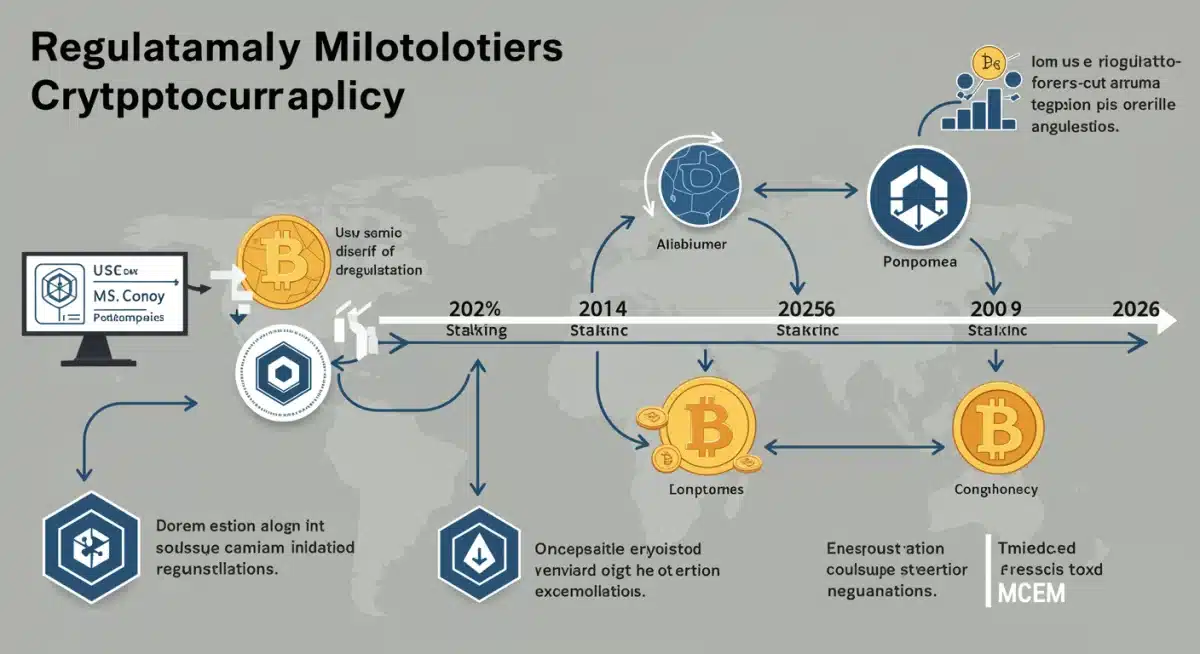
Opportunities and Potential Growth in a Regulated Market
While the prospect of increased regulation often elicits caution, the SEC staking regulations 2026 also present significant opportunities for growth and innovation within the US crypto market. A clearer regulatory framework can foster greater institutional participation and attract a broader base of traditional investors who have previously been hesitant due to perceived risks and lack of oversight.
The legitimization of staking through regulation could pave the way for new financial products and services. We might see the emergence of regulated staking funds, exchange-traded products (ETPs) that offer exposure to staked assets, or even traditional financial institutions offering compliant staking solutions. This influx of capital and expertise could drive further development and adoption of proof-of-stake networks.
Innovation within Regulatory Bounds
Regulation does not necessarily stifle innovation; it often channels it towards more secure, transparent, and sustainable solutions. Staking providers will be incentivized to develop more robust, audited, and user-friendly platforms that meet regulatory standards while still delivering competitive returns.
- Institutional Adoption: Clear rules can unlock substantial institutional capital, as large financial entities require regulatory certainty before committing to new asset classes.
- Enhanced Security: Mandated security standards will lead to stronger protections against hacks and exploits, benefiting all participants in the staking ecosystem.
- Consumer Trust: A regulated environment builds greater trust among retail investors, potentially expanding the overall market for staking and other crypto-related services.
The coming years could see the US becoming a global leader in regulated crypto innovation, attracting talent and investment. For forward-thinking investors and businesses, understanding and leveraging these opportunities will be key to long-term success in the evolving digital asset economy.
Preparing for 2026: A Proactive Approach for Investors
With 2026 on the horizon, US crypto investors have a crucial window to prepare for the incoming SEC staking regulations 2026. A proactive and informed approach will be essential to mitigate risks and capitalize on the opportunities that a regulated staking market will offer. Waiting until the last minute could lead to missed opportunities or unexpected compliance issues.
One of the most immediate steps is to stay continuously updated on SEC announcements and proposed rules. The regulatory landscape is dynamic, and understanding the nuances of new guidance will be critical. Subscribing to reputable crypto news sources, legal analyses, and SEC public statements can provide valuable insights into the direction of future regulations.
Key Actions for Investors
Taking concrete steps now can position investors favorably for the changes ahead. This involves both educational efforts and practical adjustments to current staking practices.
- Educate Yourself: Deepen your understanding of staking mechanics, the specific proof-of-stake protocols you engage with, and the potential impact of regulatory classifications.
- Review Current Staking Providers: Evaluate your existing staking services. Are they likely to meet future compliance standards? Consider diversifying or migrating to providers with a strong track record of regulatory engagement.
- Seek Professional Advice: Consult with financial advisors and tax professionals who specialize in cryptocurrency. They can help you understand the implications for your specific portfolio and tax situation.
By taking these preparatory steps, US crypto investors can ensure they are well-equipped to navigate the evolving regulatory environment, protect their assets, and continue to participate effectively in the growing world of crypto staking.
| Key Aspect | Brief Description |
|---|---|
| Regulatory Scope | SEC aims to classify staking services, potentially as securities, requiring registration and compliance. |
| Investor Protection | New rules will mandate enhanced disclosures, risk transparency, and custody safeguards for staked assets. |
| Provider Challenges | Staking platforms face significant compliance costs, operational overhauls, and potential registration requirements. |
| Market Opportunities | Regulation can attract institutional capital, foster innovation, and increase overall trust in the staking market. |
Frequently Asked Questions About SEC Staking Regulations
The SEC’s primary goals are to enhance investor protection, ensure market integrity, and bring clarity to the legal status of staking services. They aim to safeguard against fraud and ensure adequate disclosure for US crypto investors, aligning staking with existing securities laws.
Small staking providers may face significant challenges due to increased compliance costs and registration requirements. This could lead to market consolidation, with some smaller entities potentially exiting the US market or being acquired by larger, better-resourced firms.
Direct individual staking on truly decentralized networks may have a different regulatory profile than pooled services. However, the SEC’s final guidance will clarify this distinction, and investors should stay informed about how their specific staking methods are impacted.
Investors should educate themselves on the new rules, review their current staking providers for compliance readiness, and consider consulting with financial and tax advisors specializing in cryptocurrency to adapt their strategies accordingly.
Yes, clearer regulations often provide the necessary certainty for institutional investors. By reducing perceived risks and establishing a regulated environment, the SEC’s rules could attract significant institutional capital into the US crypto staking market, fostering growth.
Conclusion
The impending SEC staking regulations 2026 mark a pivotal moment for the US cryptocurrency market. While they introduce new complexities and compliance burdens, they also lay the groundwork for a more mature, transparent, and secure staking ecosystem. For US crypto investors, proactive engagement with these regulatory shifts is not merely a recommendation but a necessity. By staying informed, adapting strategies, and seeking expert guidance, investors can navigate this evolving landscape effectively, mitigating risks and positioning themselves to capitalize on the opportunities that a regulated market can unlock. The future of crypto staking in the US will be defined by how well all participants embrace and adapt to this new era of oversight.