Insider Report: 3 US Industries Poised for 20%+ Growth in Late 2026 Despite Economic Headwinds

In an economic landscape often characterized by volatility and uncertainty, identifying sectors poised for significant expansion becomes paramount for investors, policymakers, and business leaders alike. As we navigate the mid-2020s, a detailed analysis reveals that despite persistent economic headwinds, certain US industries are not just resilient but are on the cusp of explosive growth. This insider report delves into three such sectors, projecting an impressive 20%+ growth by late 2026, offering a beacon of opportunity in what might otherwise appear to be challenging times. Understanding the drivers behind this anticipated surge is crucial for strategic positioning and capitalizing on future market trends.
The global economy has been a rollercoaster over the past few years, grappling with supply chain disruptions, inflationary pressures, geopolitical tensions, and shifting consumer behaviors. Yet, within this complex environment, the American spirit of innovation and adaptation continues to forge new pathways for economic prosperity. Our projections are not based on mere optimism but on a meticulous examination of technological advancements, policy shifts, demographic trends, and evolving market demands. These three industries, while diverse in their core functions, share common threads of innovation, strategic investment, and a capacity to address critical societal needs.
For those looking to understand where the smart money is heading or where future job creation will thrive, this report provides an indispensable roadmap. We will explore each industry in depth, dissecting the factors contributing to its projected ascent and outlining the potential implications for various stakeholders. The insights presented here are designed to inform strategic decisions, offering a clear perspective on the sectors that are not just surviving but are set to redefine the landscape of the US economy in the coming years. Let’s dive into the specifics of these high-growth areas and uncover the mechanisms that will propel their remarkable expansion.
The Resurgence of Advanced Manufacturing and Reshoring
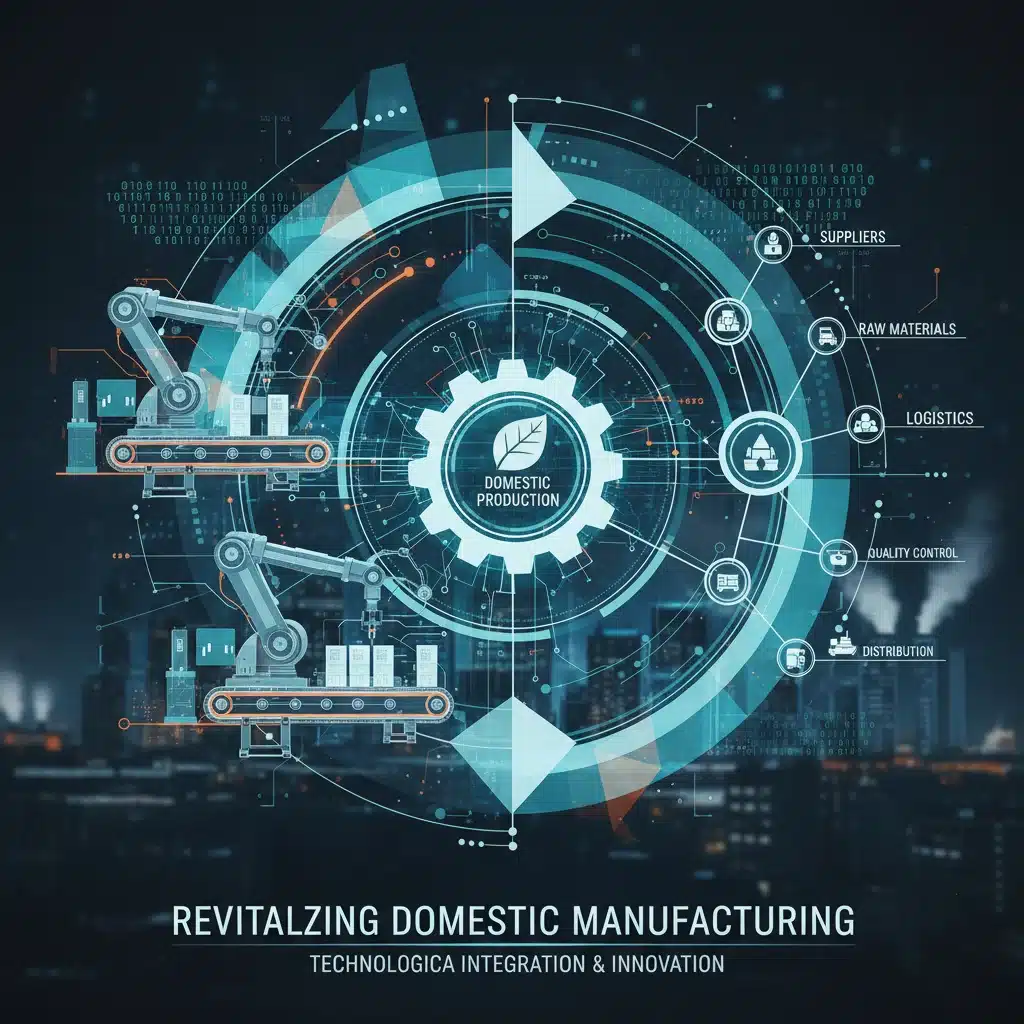
The first industry poised for substantial growth is Advanced Manufacturing and Reshoring. For decades, the narrative surrounding US manufacturing was one of decline, as production moved offshore in pursuit of lower labor costs. However, a confluence of factors, including geopolitical risks, supply chain vulnerabilities exposed by recent global events, rising overseas labor costs, and a renewed emphasis on national security, has sparked a significant reversal. The concept of ‘reshoring’ – bringing manufacturing back to American soil – is no longer just a buzzword but a strategic imperative, driving substantial investment and innovation.
The projected 20%+ growth in this sector by late 2026 is underpinned by several key trends. Firstly, governmental incentives, such as the CHIPS and Science Act, are pouring billions into domestic semiconductor manufacturing and research, creating a ripple effect across the entire advanced manufacturing ecosystem. This isn’t just about microchips; it extends to electric vehicle (EV) battery production, renewable energy components, aerospace, and defense technologies. These investments are not only attracting new facilities but also modernizing existing ones, integrating cutting-edge technologies like artificial intelligence (AI), robotics, and automation.
Secondly, the definition of manufacturing itself is evolving. We are moving beyond traditional assembly lines to ‘smart factories’ where data analytics optimize production, predictive maintenance minimizes downtime, and customized products can be manufactured with unprecedented efficiency. This technological integration, often referred to as Industry 4.0, reduces the reliance on cheap labor, making US manufacturing competitive on a global scale once again. Companies are investing heavily in these technologies to enhance productivity, reduce waste, and improve quality, driving demand for specialized equipment, software, and skilled labor.
Furthermore, the focus on supply chain resilience is prompting companies to diversify their sourcing and bring critical production closer to home. This reduces lead times, mitigates risks associated with geopolitical instability, and allows for greater control over quality and intellectual property. The demand for domestically produced goods, especially in critical sectors, is strengthening, fueled by both consumer preference and national security considerations. This shift is creating a robust environment for new manufacturing startups and expansions of established players, all contributing to the significant US Industry Growth we anticipate.
The impact of this resurgence extends beyond factory floors. It generates high-paying jobs in engineering, robotics, data science, and skilled trades. It stimulates local economies, fosters innovation ecosystems, and reinforces national technological sovereignty. The commitment to advanced manufacturing and reshoring represents a fundamental recalibration of the US industrial base, positioning it for long-term, sustainable growth and resilience against future shocks. This sector’s expansion is not merely a recovery; it’s a strategic evolution, solidifying its place as a leader in global innovation and production.
Biotechnology and Personalized Medicine Revolution
The second industry experiencing monumental growth is Biotechnology and Personalized Medicine. This sector has consistently been a powerhouse of innovation, but recent breakthroughs and accelerated research during global health crises have propelled it into an even higher orbit. The projected 20%+ growth by late 2026 is a testament to the transformative potential of advancements in genomics, gene editing, targeted therapies, and AI-driven drug discovery.
One of the primary catalysts for this expansion is the deepening understanding of the human genome and its implications for disease prevention and treatment. Personalized medicine, which tailors medical treatment to the individual characteristics of each patient, is moving from a niche concept to a mainstream reality. This approach leverages an individual’s genetic profile, lifestyle, and environment to predict disease susceptibility, optimize drug efficacy, and minimize adverse reactions. The demand for genetic testing, companion diagnostics, and bespoke therapeutic solutions is skyrocketing, creating a vast market for biotech firms.
Moreover, advancements in gene editing technologies like CRISPR are opening unprecedented avenues for treating previously incurable genetic disorders. While still in nascent stages for widespread clinical application, the speed of research and development in this area is phenomenal, attracting massive investment from venture capitalists and pharmaceutical giants alike. The promise of correcting genetic defects at their source is a powerful driver of innovation and market value within the biotechnology landscape.
Artificial intelligence and machine learning are also revolutionizing drug discovery and development. AI algorithms can analyze vast datasets of biological information, identify potential drug candidates, predict their efficacy and toxicity, and accelerate clinical trials. This significantly reduces the time and cost associated with bringing new therapies to market, increasing the pipeline of innovative treatments and driving profitability for biotech companies. The synergy between AI and biotechnology is creating a new paradigm for medical innovation, making this sector a prime candidate for sustained US Industry Growth.
Furthermore, the aging global population and the rising prevalence of chronic diseases are creating an ever-increasing demand for advanced healthcare solutions. Biotech companies are at the forefront of developing novel treatments for cancer, autoimmune disorders, neurodegenerative diseases, and infectious diseases. The continuous need for new and more effective therapies ensures a robust market for biotech products and services. Government funding for biomedical research, coupled with private sector investment, is fueling a vibrant ecosystem of startups and established companies, all contributing to the anticipated growth. The ethical considerations and regulatory frameworks surrounding these advanced technologies are also evolving, creating a more defined pathway for commercialization and patient access, further solidifying the sector’s growth trajectory.
Sustainable Energy and Green Technology Innovations
The third industry set for remarkable growth is Sustainable Energy and Green Technology Innovations. The global imperative to combat climate change, coupled with increasing energy independence goals, is driving an unprecedented surge in investment and development within this sector. The projected 20%+ growth by late 2026 is a direct reflection of policy support, technological maturity, and growing consumer and industrial demand for cleaner, more efficient energy solutions.
A significant driver of this growth is the rapid expansion of renewable energy sources, particularly solar and wind power. Declining costs of solar panels and wind turbines, coupled with advancements in energy storage technologies like advanced batteries, are making these alternatives increasingly competitive with traditional fossil fuels. Federal and state incentives, tax credits, and regulatory mandates are further accelerating the adoption of renewables across residential, commercial, and utility-scale projects. The push for a decarbonized grid is creating massive opportunities for developers, manufacturers, and installers of renewable energy systems.
Beyond electricity generation, green technology innovations encompass a broad spectrum of solutions aimed at reducing environmental impact and promoting sustainability. This includes electric vehicles (EVs) and their charging infrastructure, which are experiencing exponential growth. As major automotive manufacturers commit to electrifying their fleets, the demand for EV components, battery manufacturing, and widespread charging networks is creating a burgeoning industry. The transition to EVs is not just about transportation; it’s a fundamental shift in energy consumption patterns that will drive significant economic activity.
Furthermore, innovations in sustainable agriculture, waste management, water purification, and circular economy models are gaining traction. Companies developing technologies for carbon capture, efficient resource utilization, and biodegradable materials are attracting substantial investment. The focus on environmental, social, and governance (ESG) factors by investors is also channeling capital towards companies with strong sustainability credentials, further fueling the growth of green tech. This holistic approach to sustainability is creating a diverse and dynamic market for innovative solutions, making it a cornerstone of future US Industry Growth.

The commitment to green technology is not merely an environmental concern; it is an economic opportunity. It fosters job creation in research, manufacturing, installation, and maintenance. It reduces reliance on volatile global energy markets and enhances national energy security. The continuous innovation in this sector promises not only a cleaner future but also a more resilient and prosperous economy. As the world increasingly seeks sustainable solutions, the US is positioning itself as a leader in developing and deploying these critical technologies, ensuring robust and sustained growth.
Navigating Economic Headwinds and Maximizing Opportunities
While the outlook for these three industries is exceptionally positive, it is crucial to acknowledge that they will operate within a broader economic context that may still present challenges. Persistent inflation, rising interest rates, labor shortages, and geopolitical instability are factors that could influence the pace and trajectory of growth. However, the inherent strengths and strategic importance of Advanced Manufacturing and Reshoring, Biotechnology and Personalized Medicine, and Sustainable Energy and Green Technology Innovations suggest they are uniquely positioned to not only withstand these headwinds but to thrive because of them.
For investors, this presents a compelling case for strategic allocation. Diversifying portfolios to include companies at the forefront of these sectors could yield substantial returns. Identifying key players, innovative startups, and established leaders within each domain will be critical. Due diligence regarding specific company fundamentals, management teams, and competitive advantages remains paramount. The growth projected is not uniform across all companies within these sectors; rather, it will be concentrated among those that can effectively innovate, scale, and capture market share.
For businesses, understanding these trends is vital for strategic planning, talent acquisition, and market positioning. Companies in related industries should explore partnerships, mergers, and acquisitions that align with these growth trajectories. Investing in research and development, fostering a culture of innovation, and upskilling the workforce to meet the demands of these evolving sectors will be key to long-term success. The demand for skilled labor in these areas, from engineers and scientists to technicians and data analysts, will continue to outpace supply, highlighting the importance of robust talent pipelines and educational initiatives.
Policymakers also have a critical role to play in nurturing these growth industries. Continued support through favorable regulations, research funding, infrastructure development, and workforce training programs will be essential. Creating an environment that encourages innovation, reduces bureaucratic hurdles, and provides clear pathways for commercialization can significantly amplify the projected US Industry Growth. The synergy between public policy and private sector innovation is a powerful engine for economic expansion.
Conclusion: A Future Forged in Innovation and Resilience
The economic landscape of late 2026, while still distant, is taking shape, and it is one where specific US industries are poised for extraordinary growth. Advanced Manufacturing and Reshoring, Biotechnology and Personalized Medicine, and Sustainable Energy and Green Technology Innovations stand out as the vanguard of this expansion, each projected to achieve over 20% growth despite prevailing economic headwinds. These sectors are not merely recovering; they are undergoing fundamental transformations driven by technological breakthroughs, strategic investments, and a renewed national focus on resilience and innovation.
The insights presented in this report underscore a powerful narrative: even in challenging times, opportunities for significant economic advancement abound. By focusing on these high-potential areas, stakeholders can strategically position themselves to capitalize on the next wave of prosperity. The future of the US economy is being forged in laboratories, smart factories, and renewable energy fields, promising a vibrant and dynamic period of US Industry Growth that will redefine our economic capabilities and global competitiveness. Staying informed and agile will be the keys to unlocking the full potential of these burgeoning sectors.