Spot vs. Futures Crypto Trading 2026: US Investor Returns This Quarter
The cryptocurrency landscape is an ever-evolving frontier, captivating investors worldwide with its promise of unprecedented returns. As we edge closer to 2026, many US investors are meticulously weighing their options: should they engage in spot crypto trading or venture into the more complex world of crypto futures? This decision is far from trivial, as each approach carries its own unique set of risks, rewards, and strategic implications, especially when considering the dynamic regulatory environment and market sentiment expected in the coming years. Understanding which strategy offers superior crypto trading returns for US investors in the first quarter of 2026 requires a deep dive into the fundamentals of each, alongside an analysis of market projections and regulatory shifts.
For US investors, the stakes are particularly high. The regulatory framework surrounding cryptocurrencies is still maturing, and any significant changes could impact the viability and profitability of certain trading strategies. Moreover, the global economic outlook, technological advancements within the blockchain space, and the increasing institutional adoption of digital assets will all play pivotal roles in shaping the market. This comprehensive guide aims to arm you with the knowledge needed to make an informed decision, dissecting spot trading and futures trading to help you determine which path might lead to better crypto trading returns for your portfolio in 2026.
Understanding Spot Crypto Trading: The Foundation of Digital Asset Ownership
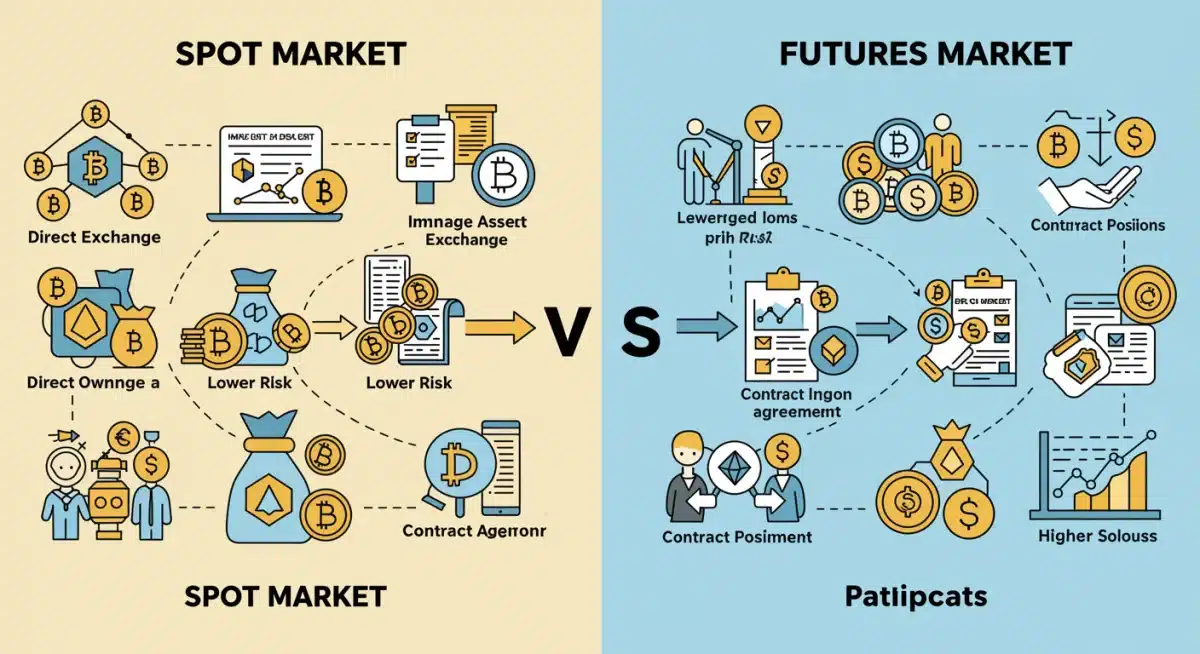
Spot crypto trading is arguably the most straightforward way to engage with the cryptocurrency market. When you participate in spot trading, you are buying or selling actual cryptocurrencies, such as Bitcoin, Ethereum, or Solana, with the immediate exchange of assets. This means that upon completion of a trade, you take direct ownership of the cryptocurrency you purchased, or you relinquish ownership of the cryptocurrency you sold. The price at which these transactions occur is the current market price, or ‘spot price.’
How Spot Trading Works
Imagine you want to buy Bitcoin. You would typically go to a cryptocurrency exchange like Coinbase, Kraken, or Binance.US. You deposit fiat currency (like USD) or another cryptocurrency, and then place an order to buy Bitcoin at its current market price. Once the order is filled, the Bitcoin is transferred to your exchange wallet or a personal wallet, and you become the legal owner of that Bitcoin. When you decide to sell, you place a sell order, and the Bitcoin is exchanged for your chosen currency, which is then credited to your account.
Advantages of Spot Trading for US Investors
- Direct Ownership: The primary advantage is that you own the underlying asset. This gives you full control and the ability to transfer it to a cold storage wallet, use it for payments, or participate in staking and other DeFi activities.
- Simplicity: It’s generally easier to understand and execute compared to derivatives. This makes it an ideal entry point for new investors or those who prefer a less complex trading environment.
- Lower Risk (Relative to Futures): While all crypto trading carries risk, spot trading doesn’t involve leverage. This means your potential losses are limited to your initial investment. You won’t face margin calls or the risk of liquidation due to extreme price movements beyond your initial capital.
- Long-Term Investment Potential: Spot trading is well-suited for long-term investment strategies, such as ‘HODLing,’ where investors buy and hold assets with the expectation of significant price appreciation over time.
- No Expiration Dates: Unlike futures contracts, spot assets do not have expiration dates. You can hold them for as long as you wish.
Disadvantages of Spot Trading
- Limited Profit Potential in Bear Markets: In a declining market, spot traders primarily profit from selling their assets before further drops or by holding until a recovery. Short-selling, while possible on some spot exchanges, is not as prevalent or fluid as in futures markets.
- Capital Intensive: To make substantial profits, you need a significant amount of capital, as you are trading with your own funds without leverage.
- Lower Liquidity for Some Altcoins: While major cryptocurrencies have high liquidity, some smaller altcoins on spot markets might have lower trading volumes, making it harder to enter or exit positions quickly without affecting the price.
- Transaction Fees: Exchanges charge fees for each spot trade, which can accumulate, especially for frequent traders.
For US investors eyeing 2026, spot trading offers a relatively secure and straightforward path to accumulate digital assets. Its appeal lies in its transparency and the tangible ownership of crypto, making it a strong contender for those prioritizing capital preservation and long-term growth.
Delving into Crypto Futures Trading: Amplifying "Crypto Trading Returns"
Crypto futures trading is a more advanced strategy that involves contracts agreeing to buy or sell a cryptocurrency at a predetermined price on a specified future date. Unlike spot trading, you don’t directly own the underlying asset. Instead, you are trading a contract that derives its value from the price of the underlying cryptocurrency. The allure of futures trading primarily stems from the ability to use leverage and profit from both rising and falling markets.
How Futures Trading Works
In futures trading, you enter into a contract to buy or sell a crypto asset at a future date at a specific price. For example, you might buy a Bitcoin futures contract, speculating that Bitcoin’s price will rise by the contract’s expiration. If the price rises, you profit from the difference between the contract price and the market price at settlement. Conversely, if the price falls, you incur a loss. Many futures contracts are cash-settled, meaning no actual cryptocurrency changes hands; only the profit or loss is exchanged in fiat currency or stablecoins.
Leverage: The Double-Edged Sword
One of the most significant features of futures trading is leverage. Leverage allows traders to open larger positions with a smaller amount of capital. For instance, with 10x leverage, a $1,000 investment can control a $10,000 position. While this can amplify profits significantly, it also magnifies losses. A small adverse price movement can lead to a margin call, where you’re required to deposit more funds to maintain your position, or even liquidation, where your position is automatically closed, and you lose your initial margin.
Advantages of Futures Trading for US Investors
- Amplified Profits with Leverage: The potential for higher crypto trading returns is a major draw. Even small price movements can result in substantial profits when using leverage.
- Profit from Bear Markets (Short Selling): Futures contracts allow traders to easily ‘short’ an asset, meaning they can profit when the price of a cryptocurrency falls. This provides hedging opportunities and allows for profitability in volatile or declining markets, which is a significant advantage over typical spot trading.
- Hedging Against Price Volatility: Investors holding a large amount of a cryptocurrency can use futures contracts to hedge against potential price drops. By shorting futures, they can offset losses in their spot holdings.
- Capital Efficiency: Due to leverage, you don’t need to commit as much capital upfront to control a large position, freeing up funds for other investments.
- High Liquidity: Futures markets, especially for major cryptocurrencies, often boast very high liquidity, allowing for large trades without significant price impact.
Disadvantages of Futures Trading
- High Risk of Liquidation: Leverage is a double-edged sword. While it can amplify gains, it can also lead to rapid and complete loss of your invested capital if the market moves against your position.
- Complexity: Futures trading involves more complex concepts like margin, funding rates, contract specifications, and expiration dates, making it less suitable for beginners.
- Regulatory Scrutiny: In the US, futures trading, especially with high leverage, is under significant regulatory scrutiny. Restrictions on leverage or the types of contracts available might impact US investors.
- Funding Rates: Perpetual futures contracts involve funding rates, which are periodic payments exchanged between long and short positions to keep the contract price close to the spot price. These can eat into profits or add to losses.
- Counterparty Risk: While minimized on reputable exchanges, there is always an element of counterparty risk in derivatives.
For US investors seeking aggressive crypto trading returns, futures offer a powerful tool. However, the inherent risks demand a sophisticated understanding of market dynamics and robust risk management strategies.
The US Regulatory Landscape and Its Impact on "Crypto Trading Returns" in 2026
The regulatory environment in the United States is a critical factor influencing both spot and futures crypto trading. As of late 2023, and looking ahead to 2026, the regulatory picture remains a patchwork of state and federal initiatives, with ongoing debates about how to classify and oversee digital assets. This uncertainty can create both challenges and opportunities for investors.
Key Regulatory Considerations for Spot Trading
For spot trading, the primary concerns revolve around consumer protection, anti-money laundering (AML), and know-your-customer (KYC) regulations. US-based exchanges are subject to stringent oversight by agencies like FinCEN (Financial Crimes Enforcement Network) and, in some cases, state financial regulators. The Securities and Exchange Commission (SEC) continues to assert jurisdiction over many cryptocurrencies, classifying them as securities, which could lead to stricter listing requirements and potential legal challenges for certain projects.
- Impact on Accessibility: Stricter regulations might limit the number of cryptocurrencies available for spot trading on regulated US platforms, potentially reducing the diversity of investment opportunities.
- Enhanced Security: On the flip side, a more regulated environment often means greater security for investor funds held on exchanges, reducing the risk of hacks or fraud.
- Taxation: The IRS views cryptocurrencies as property, meaning capital gains taxes apply to profitable spot trades. Clarity on tax reporting requirements continues to evolve, and investors must stay informed to ensure compliance.
Key Regulatory Considerations for Futures Trading
Futures trading, especially involving leverage, falls under the purview of the Commodity Futures Trading Commission (CFTC) when the underlying asset is classified as a commodity (like Bitcoin or Ethereum). The CFTC has been more proactive in regulating crypto derivatives, leading to the establishment of regulated futures exchanges like CME Group, which offer cash-settled Bitcoin and Ethereum futures.
- Leverage Restrictions: US-regulated exchanges typically offer lower leverage ratios compared to their offshore counterparts. This is a deliberate measure to protect investors from excessive risk, but it also limits the potential for amplified crypto trading returns that attract many to futures.
- Access to Offshore Platforms: US investors often face restrictions when trying to access offshore exchanges that offer higher leverage and a wider array of derivatives products. Engaging with unregulated platforms carries significant risks, including lack of consumer protection and potential legal repercussions.
- Product Offerings: The types of crypto futures contracts available to US investors might be limited to major cryptocurrencies, depending on regulatory interpretations and approvals.
By 2026, it’s plausible that the US will have a more defined regulatory framework. This could bring greater clarity and institutional participation, potentially stabilizing the market and leading to more predictable crypto trading returns. However, it could also introduce new compliance burdens for individual investors.
Market Projections for "Crypto Trading Returns" in 2026 Q1
Predicting market movements in the volatile crypto space is challenging, but we can analyze current trends and expert forecasts to anticipate potential scenarios for crypto trading returns in Q1 2026. Several factors will likely shape the market:
Macroeconomic Environment
Global economic conditions, including inflation rates, interest rate policies by central banks (especially the US Federal Reserve), and geopolitical stability, will significantly influence investor sentiment towards risk assets like cryptocurrencies. A period of economic expansion and lower interest rates could fuel greater investment in crypto, benefiting both spot and futures markets.
Technological Advancements and Adoption
Continued innovation in blockchain technology, such as advancements in scalability (e.g., Ethereum’s upgrades, Layer 2 solutions), interoperability, and real-world applications (DeFi, NFTs, GameFi, enterprise blockchain), will drive utility and adoption. Increased utility often correlates with higher demand and price appreciation, positively impacting crypto trading returns.
Institutional Investment
The increasing involvement of institutional investors (hedge funds, asset managers, corporations) through vehicles like spot Bitcoin ETFs (if approved and widely adopted in the US), Grayscale-like trusts, and direct investments, could inject substantial capital into the market. Institutional money tends to bring more stability and liquidity, potentially reducing extreme volatility while pushing prices upward over the long term.
Regulatory Clarity
As discussed, clearer US regulations could attract more mainstream investors, boosting confidence and market participation. A well-defined framework could reduce uncertainty, making cryptocurrencies a more attractive asset class for traditional portfolios.
Potential Scenarios for Q1 2026
- Bullish Scenario: If the global economy shows strong recovery, inflation is under control, and regulatory clarity emerges in the US, we could see a robust bull market. In this scenario, both spot and futures traders could achieve significant crypto trading returns. Futures traders, with leverage, might see higher percentage gains, but also face amplified risks if market corrections occur.
- Bearish Scenario: A prolonged global recession, persistent high inflation, or unexpected regulatory crackdowns could lead to a bear market. Spot traders would focus on capital preservation or accumulating assets at lower prices. Futures traders, however, could profit immensely through short positions, assuming they accurately predict the downturn and manage their risk effectively.
- Sideways/Consolidation Scenario: The market might enter a period of consolidation with no clear direction. In such a scenario, day traders using futures might find opportunities in smaller price fluctuations, but longer-term spot investors might see limited gains.
Given the inherent volatility of crypto, investors should prepare for all scenarios. Diversification and risk management will be paramount regardless of the market direction.
Risk Management Strategies for Maximizing "Crypto Trading Returns"
Regardless of whether you choose spot or futures trading, effective risk management is the cornerstone of sustainable profitability, especially when aiming for consistent crypto trading returns. The high volatility of the crypto market necessitates disciplined approaches.
Risk Management for Spot Trading
- Diversification: Don’t put all your capital into a single cryptocurrency. Spread your investments across several promising assets to mitigate the impact of a poor performance by one.
- Position Sizing: Determine how much capital you are willing to allocate to each trade. A common rule is to risk only a small percentage (e.g., 1-2%) of your total portfolio on any single trade.
- Stop-Loss Orders: While not as common as in futures, some spot exchanges allow stop-loss orders. These automatically sell your asset if its price drops to a predetermined level, limiting potential losses.
- Dollar-Cost Averaging (DCA): Instead of investing a lump sum, invest a fixed amount regularly (e.g., weekly or monthly). This strategy averages out your purchase price over time, reducing the risk of buying at a market peak.
- Cold Storage: For long-term spot holdings, moving assets off exchanges to a hardware wallet significantly reduces the risk of hacks or exchange failures.
Risk Management for Futures Trading
- Strict Stop-Loss and Take-Profit Orders: These are absolutely critical in futures trading. A stop-loss order limits your downside, while a take-profit order secures gains at a predetermined level.
- Appropriate Leverage: Do not use maximum leverage unless you are an experienced trader with a high-risk tolerance. Start with lower leverage (e.g., 2x-5x) to understand the market’s movements and your risk capacity.
- Understanding Margin Requirements: Always be aware of your initial margin and maintenance margin. Keep sufficient funds in your account to avoid margin calls and liquidations.
- Emotional Control: The high stakes of futures trading can lead to emotional decisions. Stick to your trading plan and avoid impulsive actions based on fear or greed.
- Market Analysis: Conduct thorough technical and fundamental analysis. Understand market trends, support/resistance levels, and potential catalysts that could affect price.
- Don’t Over-Leverage: This cannot be stressed enough. Over-leveraging is the fastest way to lose capital in futures trading.
For US investors, navigating the regulatory environment while implementing robust risk management strategies will be key to achieving positive crypto trading returns in 2026. Understanding the nuances of each strategy and tailoring them to your risk appetite and financial goals is paramount.
Which Strategy Offers Better "Crypto Trading Returns" for US Investors in Q1 2026?
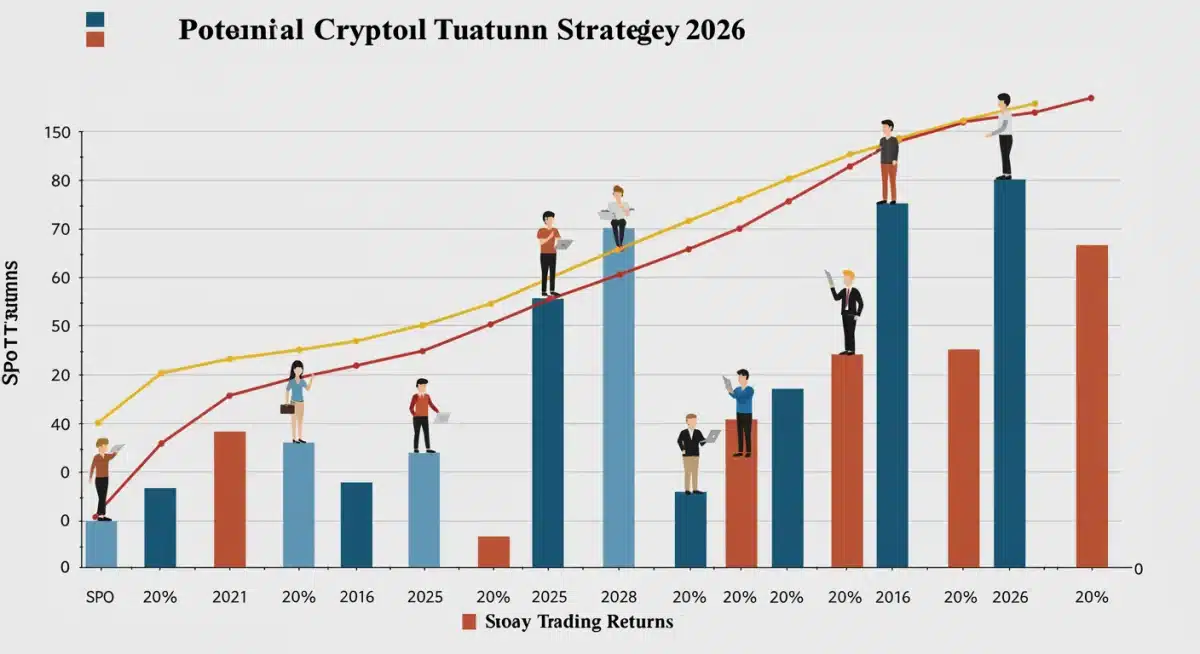
The question of which strategy will yield better crypto trading returns for US investors in the first quarter of 2026 doesn’t have a single, definitive answer. The optimal choice depends heavily on individual investor profiles, market conditions, and risk tolerance.
For the Conservative Investor
If you are a risk-averse US investor, new to crypto, or prioritize capital preservation, spot trading is likely the more suitable option. The direct ownership, absence of liquidation risk (from leverage), and simpler mechanics make it a safer bet. While returns might be slower, they are generally more predictable and less stressful. In a potentially growing market, steady accumulation through spot trading could lead to solid, albeit not explosive, crypto trading returns.
For the Aggressive Investor (with Experience)
For experienced US investors with a higher risk tolerance and a deep understanding of market dynamics, futures trading offers the potential for significantly higher crypto trading returns. The ability to use leverage and profit from both bull and bear markets provides flexibility and opportunities that spot trading cannot match. However, this comes with the caveat of magnified losses and the constant threat of liquidation. Success in futures trading in 2026 will demand meticulous risk management, continuous market analysis, and emotional discipline.
Considering Market Conditions in Q1 2026
- Bull Market: In a strong bull market, both strategies can deliver positive crypto trading returns. Futures trading with modest leverage could outperform spot trading due to amplified gains.
- Bear Market: If Q1 2026 sees a downturn, futures traders who can accurately short the market will have a distinct advantage. Spot traders would likely incur losses unless they had exited positions or started accumulating.
- Sideways Market: A volatile, range-bound market might favor futures traders employing short-term strategies, while spot traders might see minimal movement.
Ultimately, a hybrid approach might be the most prudent for many US investors. This could involve holding a core portfolio of major cryptocurrencies in spot (long-term investment) while allocating a smaller portion of capital to futures trading for speculative, short-to-medium-term opportunities or hedging purposes.
The Future of "Crypto Trading Returns": Beyond Q1 2026
Looking beyond the first quarter of 2026, the trajectory of crypto trading returns will continue to be influenced by a myriad of factors. The ongoing institutionalization of crypto, the evolution of decentralized finance (DeFi), the impact of central bank digital currencies (CBDCs), and the broader adoption of blockchain technology across various industries will all play crucial roles.
Decentralized Finance (DeFi) Evolution
DeFi is expected to mature further, offering more sophisticated financial products and services. This could indirectly impact both spot and futures markets by creating new avenues for yield generation, liquidity provision, and collateralization, which might attract more capital into the crypto ecosystem.
Technological Breakthroughs
Breakthroughs in quantum computing, artificial intelligence, and new consensus mechanisms could revolutionize blockchain technology, potentially creating new asset classes or enhancing the efficiency and security of existing ones. Staying abreast of these developments will be vital for identifying future opportunities for crypto trading returns.
Global Regulatory Harmony (or Discord)
While the US regulatory landscape is critical, global regulatory harmony or discord will also shape the overall market. Coordinated international efforts could provide greater stability, while fragmented or conflicting regulations could introduce market inefficiencies and arbitrage opportunities.
Investor Education and Sophistication
As the crypto market matures, so too will its participants. Increased investor education and the availability of more sophisticated analytical tools will empower traders to make more informed decisions, potentially leading to more efficient markets and better risk-adjusted crypto trading returns.
For US investors, the key to long-term success in the crypto market will involve continuous learning, adaptability, and a willingness to reassess strategies in light of new information and evolving market conditions. Whether focusing on spot or futures, a well-defined investment thesis, coupled with rigorous risk management, will be indispensable.
Conclusion: Strategic Choices for "Crypto Trading Returns" in 2026
In conclusion, the choice between spot and futures crypto trading for US investors in Q1 2026 is a nuanced one, heavily dependent on individual financial goals, risk appetite, and market outlook. Spot trading offers a secure, straightforward path to direct asset ownership, making it ideal for long-term investors and those new to the space. Its returns are tied directly to the underlying asset’s price appreciation, offering a more stable, albeit potentially slower, growth trajectory.
Futures trading, on the other hand, provides the allure of amplified crypto trading returns through leverage and the flexibility to profit from both rising and falling markets. However, this amplified potential comes with significantly higher risks, including the possibility of rapid liquidation. It is best suited for experienced traders who possess a deep understanding of market mechanics, robust risk management strategies, and the emotional fortitude to navigate extreme volatility.
For US investors, the evolving regulatory environment adds another layer of complexity, impacting access to certain products and leverage levels. Staying informed about these changes will be crucial for compliance and strategic planning. As we approach 2026, a balanced approach, perhaps combining the stability of spot holdings with strategic, well-managed futures positions, might offer the most robust path to optimizing crypto trading returns. Regardless of the chosen path, continuous education, disciplined risk management, and a clear understanding of market dynamics will be the ultimate determinants of success in the dynamic world of cryptocurrency investment.