Achieving Product-Market Fit: A 6-Step Validation Framework for U.S. Startups in 2026

Achieving Product-Market Fit in 2026: A 6-Step Validation Framework for U.S. Startups
In the dynamic and hyper-competitive landscape of 2026, the mantra for U.S. startups remains unchanged: achieve product-market fit (PMF) or perish. While the concept isn’t new, the methodologies, tools, and market expectations evolve at a dizzying pace. What worked a few years ago might be insufficient today. Today, securing genuine product-market fit validation is more crucial than ever.
For any nascent venture, identifying a significant market need and developing a solution that genuinely resonates with that market is the ultimate goal. It’s the bedrock upon which sustainable growth, investor confidence, and lasting success are built. Without it, even the most innovative ideas can falter, draining resources and spirit. This comprehensive guide will walk U.S. startups through a robust, 6-step validation framework designed to navigate the complexities of 2026 and beyond, ensuring you not only find your market but truly own it.
This article delves deep into actionable strategies, from refining your initial concept to scaling your validated solution. We’ll explore how to leverage cutting-edge analytics, engage with your target audience effectively, and iterate your way to undeniable product-market fit. By the end, you’ll have a clear roadmap to validate your product, minimize risk, and set your startup on a trajectory for significant impact.
What Exactly is Product-Market Fit (PMF) in 2026?
Before we dive into the framework, let’s establish a clear understanding of product-market fit in the context of today’s fast-evolving technological and economic climate. Traditionally, PMF is defined as being in a good market with a product that can satisfy that market. Marc Andreessen famously described it as the moment when "the market pulls product out of the startup." In 2026, this definition still holds true, but the nuances have deepened.
Today, PMF isn’t just about having users; it’s about having enthusiastic users who can’t imagine their lives without your product. It’s about achieving significant organic growth, low churn rates, and a clear, demonstrable value proposition that solves a critical problem better than any existing alternative. It also implies a sustainable business model that supports this value delivery.
The 2026 landscape adds layers of complexity:
- Hyper-Personalization: Users expect solutions tailored to their individual needs, making generic offerings less effective.
- Data-Driven Decisions: Gut feelings are no longer enough; robust data analytics are paramount for validating assumptions.
- Ethical AI and Privacy Concerns: Products must not only be effective but also ethically sound and privacy-compliant, especially in the U.S. market.
- Rapid Iteration Cycles: The pace of technological change demands continuous adaptation and quick product evolution.
- Community and Network Effects: Strong communities around a product can significantly accelerate PMF and create defensibility.
Understanding these contemporary facets is the first step toward successfully navigating the journey to product-market fit validation.
The 6-Step Product-Market Fit Validation Framework for U.S. Startups
This framework is designed to be iterative and flexible, allowing startups to pivot and refine their approach based on real-world feedback and data. Each step builds upon the last, guiding you from initial concept to a validated, scalable solution.
Step 1: Deep Dive into Problem-Space and Target Audience Identification
Before you even think about a solution, you must become an expert in the problem you’re trying to solve and the people who experience it. This foundational step is critical for effective product-market fit validation.
1.1. Identify the Core Problem:
- Is it a real problem? Not just an inconvenience, but a significant pain point that people are actively trying to solve (or would pay to solve).
- How acute is it? The more painful the problem, the more urgent the need for a solution, and the higher the willingness to pay.
- Who experiences this problem? Define the demographics, psychographics, behaviors, and existing solutions (or lack thereof) for those affected.
1.2. Define Your Ideal Customer Profile (ICP) and User Personas:
- Demographics: Age, location (especially within the U.S.), income, industry.
- Psychographics: Motivations, goals, values, fears, aspirations.
- Behaviors: How they currently try to solve the problem, their daily routines, technology adoption patterns.
- Pain Points: Be specific about their frustrations and unmet needs.
1.3. Conduct Extensive Customer Discovery Interviews:
- Go beyond surveys: Engage in one-on-one conversations. Ask open-ended questions.
- Listen more than you talk: Understand their world, their language, and their underlying needs.
- Focus on past behavior: "Tell me about the last time you tried to [solve this problem]" is more insightful than "Would you use a product that…?"
- Identify early adopters: These are the individuals most acutely feeling the pain and most likely to try a new solution. They are your initial target for product-market fit validation.
Deliverable: A detailed problem statement, well-defined ICP, and 3-5 user personas with documented pain points and needs.
Step 2: Formulate a Unique Value Proposition (UVP) and Hypothesize a Solution
Once you deeply understand the problem and your target audience, it’s time to craft a compelling UVP and outline a potential solution. This is where your product-market fit validation journey truly begins to take shape.
2.1. Craft Your Unique Value Proposition (UVP):
Your UVP clearly articulates what makes your product different and better than alternatives (even if the alternative is doing nothing). It should answer:
- What problem do you solve?
- Who do you solve it for?
- What is the key benefit they receive?
- What makes you unique or superior?
Example: "For busy U.S. small business owners struggling with manual expense tracking, [Your Product] provides an AI-powered automated expense management solution that saves 10+ hours per week, unlike traditional software that requires significant manual data entry."
2.2. Develop Your Initial Solution Hypothesis:
- Based on your UVP, what is the core functionality your product needs to deliver?
- What are the absolute essential features (Minimum Viable Product – MVP) that will address the primary pain point identified in Step 1?
- Resist the urge to build everything. Focus on the core value.
Deliverable: A clear, concise UVP and a detailed outline of your MVP’s core features and functionalities.
Step 3: Build and Test Your Minimum Viable Product (MVP)
This is where your ideas start to become tangible. The goal is to build the leanest possible version of your product that can deliver core value and gather concrete feedback for product-market fit validation.
3.1. Design and Develop Your MVP:
- Focus on core functionality: Strip away anything non-essential. The MVP is for learning, not perfection.
- User Experience (UX) first: Even a minimal product needs to be intuitive and easy to use for your target audience.
- Speed over features: Get it into users’ hands quickly.
3.2. Define Key Performance Indicators (KPIs) for Success:
Before launching your MVP, decide how you will measure its effectiveness. These KPIs are crucial for assessing product-market fit validation.
- Engagement: Daily/weekly active users (DAU/WAU), time spent in the app, feature usage.
- Retention: How many users return after day 1, week 1, month 1?
- Conversion: If applicable, what percentage of users complete a key action (e.g., sign up, complete a task, make a purchase)?
- Qualitative Feedback: NPS (Net Promoter Score), qualitative interviews, usability testing.
3.3. Launch to Early Adopters and Gather Feedback:
- Recruit from your Step 1 interviews: These are your most valuable early testers.
- Observe user behavior: Don’t just ask what they think; watch what they do.
- Conduct structured interviews: Ask about their experience, what they liked, disliked, and what they would change.
- Implement feedback loops: Make it easy for users to report bugs or suggest improvements.
Deliverable: A functional MVP, a set of defined KPIs, and initial user feedback data (both quantitative and qualitative).
Step 4: Analyze, Iterate, and Measure Product-Market Fit
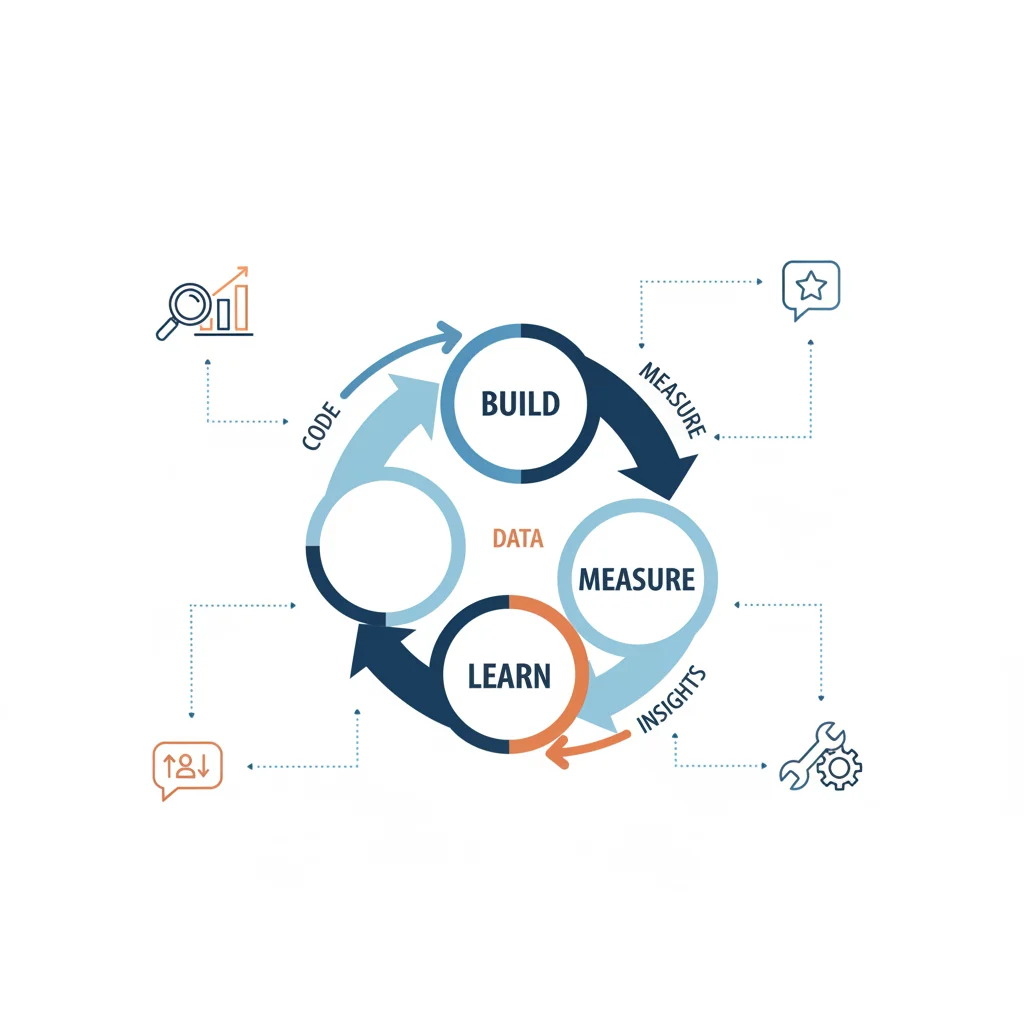
This is the heart of the product-market fit validation process – a continuous cycle of learning and improvement. You’ll be using your defined KPIs and user feedback to refine your product.
4.1. Analyze Data and Feedback:
- Quantitative Analysis: Track your KPIs. Are users engaging as expected? Is retention strong? Where are they dropping off?
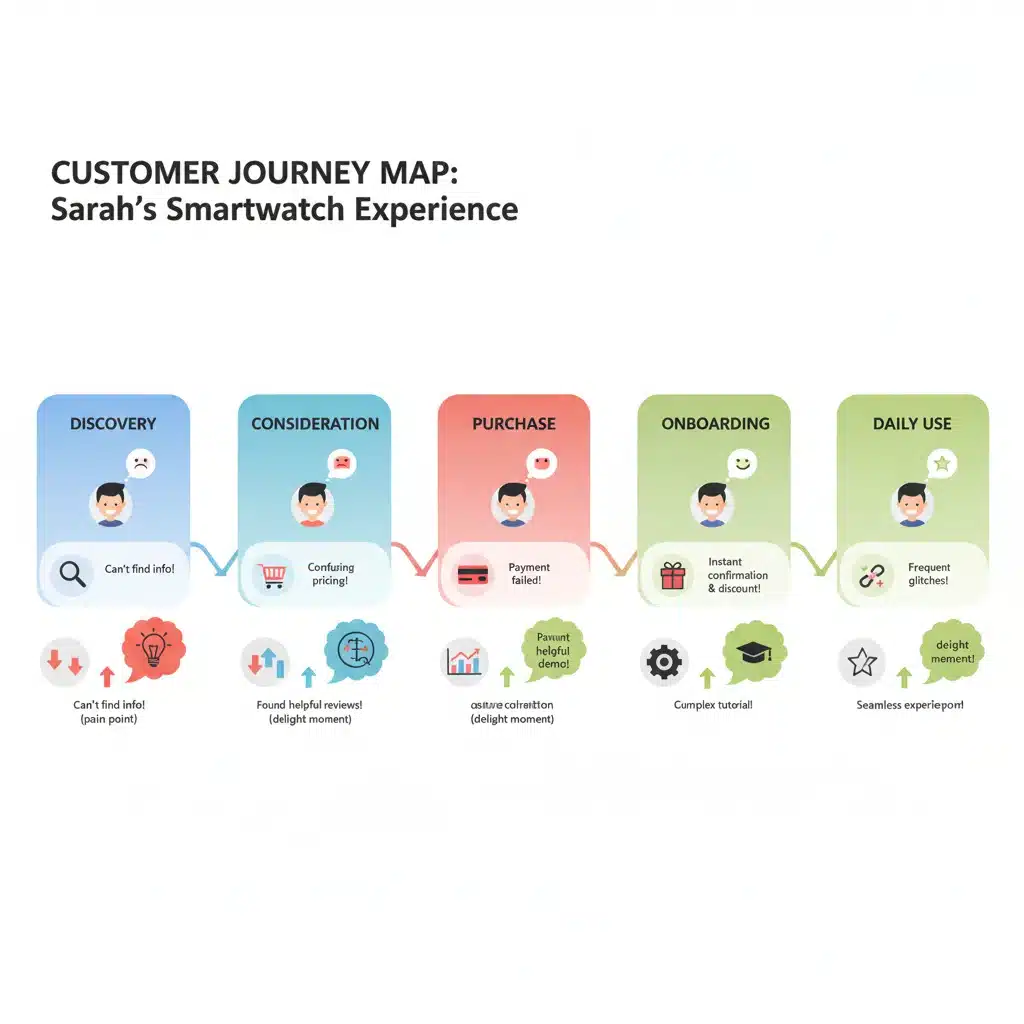
- Qualitative Analysis: Look for patterns in user comments, interview transcripts, and usability session notes. What are the common pain points or delight moments?
- Identify Gaps: Where does your product fall short of user expectations or fail to solve the problem effectively?
4.2. Iterate on Your Product:
- Prioritize Improvements: Based on your analysis, decide which changes will have the biggest impact on user satisfaction and problem-solving.
- Implement Changes: Make targeted adjustments to your product features, UX, or messaging.
- Test Again: Release updated versions to your early adopters and repeat the feedback gathering process.
4.3. Measure Product-Market Fit:
While PMF isn’t a single metric, several indicators can signal you’re getting close:
- Sean Ellis Test: Ask users, "How would you feel if you could no longer use [product]?" If 40% or more answer "very disappointed," you’re likely nearing PMF.
- High Retention Rates: Users consistently returning and actively using your product.
- Organic Growth/Referrals: Users are telling others about your product without prompting.
- Low Churn: Users are sticking around and not abandoning your product.
- Positive NPS: A high Net Promoter Score indicates strong user satisfaction and willingness to recommend.
Deliverable: Iterated product versions, continuous KPI tracking, a clear understanding of user satisfaction, and a growing confidence in achieving product-market fit.
Step 5: Refine Business Model and Go-to-Market Strategy
Achieving product-market fit validation isn’t just about the product; it’s also about a viable business model and an effective way to reach your target market. This step runs in parallel with iteration.
5.1. Validate Your Business Model:
- Pricing Strategy: How much are users willing to pay for your solution? Test different pricing tiers and models (subscription, freemium, one-time purchase).
- Cost Structure: Understand your operational costs to ensure profitability.
- Revenue Streams: How will you generate revenue? Is it sustainable?
5.2. Develop a Scalable Go-to-Market (GTM) Strategy:
- Channels: Where will you find your ideal customers? (e.g., digital marketing, partnerships, direct sales, content marketing).
- Messaging: Refine your messaging based on what resonated most with your early adopters.
- Sales Process: If applicable, design an efficient sales funnel.
- Customer Acquisition Cost (CAC): Start tracking how much it costs to acquire a new customer.
- Lifetime Value (LTV): Estimate the revenue a customer will generate over their relationship with your product. Ensure LTV > CAC.
Deliverable: A validated pricing model, a clear understanding of CAC and LTV, and a preliminary GTM strategy.
Step 6: Scale and Continuously Monitor PMF
Once you have strong signals of product-market fit validation, it’s time to scale your operations. However, PMF is not a one-time achievement; it’s a state that needs continuous monitoring.
6.1. Expand Your User Base:
- Execute GTM Strategy: Ramp up your marketing and sales efforts based on the validated channels and messaging.
- Onboarding Optimization: Ensure new users have a seamless experience that quickly highlights your product’s value.
- Customer Success: Invest in supporting your users to maximize retention and satisfaction.
6.2. Monitor PMF Continuously:
- Keep an Eye on KPIs: Regularly track engagement, retention, churn, and NPS. Any significant dips could indicate a shift in the market or user needs.
- Competitive Analysis: The market is always moving. Keep an eye on competitors and emerging trends.
- Listen to Your Users (Always): Continue gathering feedback through surveys, user interviews, and community forums.
- Innovate and Expand: Once core PMF is solid, consider new features or market segments, but always validate these expansions.
Deliverable: A growing user base, sustained strong KPIs, and an ongoing process for market and user feedback.
Common Pitfalls to Avoid in Your Product-Market Fit Validation Journey
The path to product-market fit is fraught with challenges. Being aware of common mistakes can help U.S. startups navigate more effectively.
- Building for Everyone: Trying to please too many different customer segments dilutes your value proposition and makes it impossible to achieve deep product-market fit. Focus on a niche initially.
- Ignoring Negative Feedback: It’s uncomfortable, but critical feedback is a goldmine. Don’t dismiss it; understand it.
- Falling in Love with Your Solution: Be prepared to pivot or even abandon your initial idea if the market tells you it’s not working. Your solution is a hypothesis, not a sacred cow.
- Premature Scaling: Expanding operations, marketing spend, or hiring before solid product-market fit is established can burn through capital rapidly and lead to failure.
- Lack of Data-Driven Decisions: Relying solely on intuition without validating with quantitative and qualitative data is a recipe for disaster.
- Underestimating Competition: Not just direct competitors, but also indirect solutions or the "do nothing" option. Understand why users choose alternatives.
- Ignoring the Business Model: A great product without a viable way to generate revenue and cover costs won’t survive long-term.
The Future of Product-Market Fit in 2026 and Beyond
As we look further into 2026 and beyond, the concept of product-market fit will continue to evolve. Expect an even greater emphasis on:
- AI-Driven Personalization: Products that can dynamically adapt to individual user needs using AI will have a significant edge.
- Community-Led Growth: Building strong, engaged communities around products will become a primary driver of retention and acquisition.
- Ethical Product Development: Users will increasingly demand transparency, privacy, and ethical AI practices, making these integral to product-market fit.
- Sustainability and Social Impact: Products aligning with broader societal values and sustainability goals may find deeper resonance with certain market segments.
- Adaptive PMF: The need to continuously re-evaluate and adapt your product to maintain PMF in rapidly changing markets will be paramount.
Conclusion: Your Roadmap to Product-Market Fit Validation
Achieving product-market fit is the holy grail for any U.S. startup, especially in the competitive landscape of 2026. It’s not a destination but a continuous journey of discovery, iteration, and adaptation. By diligently following this 6-step validation framework – from deeply understanding your customer and their problems, crafting a compelling UVP, building and testing an MVP, to continuously analyzing data, iterating, and refining your business model – you significantly increase your chances of success.
Remember, the goal is not just to build a product, but to build a product that your target market desperately needs and loves. Embrace feedback, stay agile, and always keep your customer at the center of your universe. The startups that master product-market fit validation in 2026 will be the ones that thrive and redefine industries. Start your rigorous validation process today, and pave your way to lasting impact.