Achieve Financial Independence by 2036: Your 10-Year U.S. Roadmap

Achieving Financial Independence by 2036: A 10-Year Roadmap for U.S. Individuals Starting Today
Are you dreaming of a life where your time is truly your own, where work is a choice, not a necessity, and where financial stress is a distant memory? For many U.S. individuals, this vision is known as financial independence. It’s not just a lofty aspiration; it’s an achievable goal, especially if you start with a clear, actionable plan. This comprehensive 10-year roadmap is designed to guide you, step-by-step, towards achieving financial independence by 2036. It’s an ambitious timeline, yes, but with consistent effort, smart choices, and strategic planning, it is entirely within your reach.
The journey to financial independence is transformative. It requires discipline, education, and a willingness to challenge conventional thinking about money. But the payoff? A life of freedom, security, and the ability to pursue your passions without financial constraints. This article will delve into the core principles, practical strategies, and essential milestones you’ll need to navigate over the next decade. Whether you’re just starting your career, looking to accelerate your savings, or aiming to retire early, this roadmap provides the framework you need to turn your financial dreams into a tangible reality.
Understanding Financial Independence: More Than Just Early Retirement
Before we outline the roadmap, it’s crucial to define what financial independence truly means. It’s often conflated with early retirement, but while the two can overlap, they are not identical. Financial independence, at its core, means having enough passive income to cover your living expenses. This passive income can come from various sources: investments, rental properties, dividends, royalties, or a business that runs without your daily involvement. Once your passive income consistently exceeds your expenses, you are financially independent. You may choose to continue working, but you no longer have to.
The beauty of this definition is its flexibility. It’s not about accumulating a specific, arbitrary sum of money that someone else dictates. It’s about understanding your personal expenses and building a system that generates income to meet those expenses, indefinitely. For U.S. individuals, this often involves navigating complex tax laws, understanding various investment vehicles, and making informed decisions about debt and savings. Our financial independence roadmap will address these nuances.
Year 1-2: Laying the Foundation – Assess, Optimize, and Automate
• Month 1-3: Financial Audit and Goal Setting
The first step on your financial independence roadmap is to get a clear picture of your current financial situation. This involves a thorough financial audit:
- Track Your Spending: For at least three months, meticulously track every dollar you spend. Use budgeting apps (Mint, YNAB, Personal Capital) or a simple spreadsheet. This will reveal where your money is actually going.
- Calculate Your Net Worth: List all your assets (cash, investments, property, retirement accounts) and all your liabilities (mortgage, student loans, credit card debt, car loans). Your net worth is Assets – Liabilities. This provides a baseline.
- Define Your FI Number: This is arguably the most critical step. Estimate your annual living expenses in your desired financially independent lifestyle. A common rule of thumb (the 4% rule) suggests you’ll need 25 times your annual expenses saved to be financially independent. So, if your annual expenses are $50,000, your FI number is $1,250,000. This gives you a tangible target.
- Set SMART Goals: Beyond the FI number, set specific, measurable, achievable, relevant, and time-bound goals for the next 10 years. Break down your financial independence roadmap into smaller, manageable milestones.
• Month 4-12: Optimize Your Cash Flow and Tackle High-Interest Debt
With your financial picture clear, it’s time to optimize. This phase is crucial for accelerating your journey to financial independence.
- Create a Detailed Budget: Based on your spending audit, create a realistic budget that prioritizes saving and debt repayment. Identify areas where you can cut unnecessary expenses. The goal is to maximize your savings rate. A higher savings rate is the single biggest accelerator to financial independence.
- Attack High-Interest Debt: Credit card debt and personal loans are wealth destroyers. Prioritize paying these off aggressively. Consider the ‘debt snowball’ or ‘debt avalanche’ methods. Eliminating high-interest debt frees up significant cash flow for investing.
- Build an Emergency Fund: Aim for 3-6 months of essential living expenses in an easily accessible, high-yield savings account. This acts as a buffer against unexpected events, preventing you from derailing your financial independence roadmap.
- Increase Your Income: Look for ways to boost your earnings. Can you negotiate a raise? Take on a side hustle? Develop new skills that command higher pay? Every extra dollar earned can be directed towards your FI goal.
- Automate Your Savings and Investments: Set up automatic transfers from your checking account to your savings and investment accounts on payday. This ‘pay yourself first’ strategy ensures consistency and discipline, making progress on your financial independence roadmap almost effortless.
Year 3-5: Accelerating Growth – Strategic Investing and Debt Reduction
• Focus on Investment Education and Diversification
Now that your foundation is solid, it’s time to become a savvy investor. This is where your money truly starts working for you on your path to financial independence.
- Understand Investment Basics: Learn about different asset classes: stocks, bonds, mutual funds, Exchange Traded Funds (ETFs), and real estate. Understand concepts like diversification, risk tolerance, and compound interest.
- Maximize Retirement Accounts: Contribute as much as you can to tax-advantaged accounts like 401(k)s (especially if your employer offers a match, which is free money!), IRAs (Traditional or Roth), and HSAs (Health Savings Accounts, which offer a triple tax advantage). These vehicles are powerful tools for financial independence.
- Open a Brokerage Account: Once you’ve maxed out retirement accounts (or are contributing significantly), open a taxable brokerage account for additional investments. Focus on low-cost index funds or ETFs that track broad market indexes like the S&P 500.
- Consider Real Estate: Explore real estate investing, whether through REITs (Real Estate Investment Trusts) or by purchasing rental properties. Real estate can provide both passive income and appreciation, bolstering your financial independence strategy.
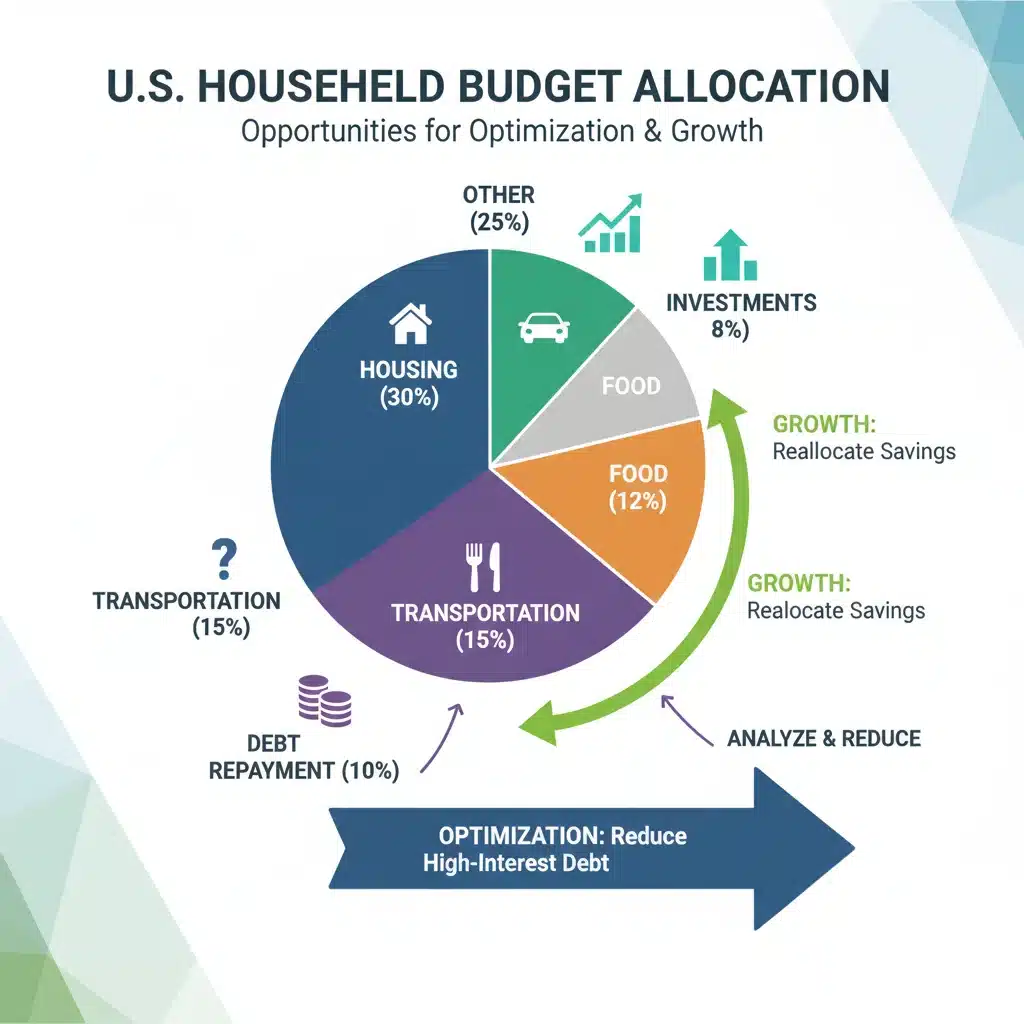
• Mid-Term Debt Strategy and Lifestyle Creep Control
As your income potentially grows, it’s easy to fall victim to lifestyle creep – increasing your spending as your income rises. This is a significant roadblock to financial independence.
- Maintain Your Savings Rate: As your income increases, resist the urge to proportionately increase your spending. Instead, increase your savings and investment contributions. Aim to maintain or even increase your savings rate.
- Address Remaining Debt: Continue aggressively paying down any remaining student loans or mortgage debt, if it aligns with your overall financial independence roadmap. While some debt can be ‘good debt’ (low-interest mortgage), reducing it can free up cash flow and reduce financial obligations.
- Review and Adjust Your Budget: Periodically review your budget to ensure it still aligns with your goals. Life changes, and your budget should evolve with it.
Year 6-8: Optimization and Income Generation
• Advanced Investment Strategies and Portfolio Rebalancing
By this stage, you’ll have a substantial investment portfolio. The focus shifts to optimizing its performance and ensuring it remains aligned with your goals for financial independence.
- Portfolio Rebalancing: Regularly rebalance your portfolio (e.g., annually) to maintain your desired asset allocation. If one asset class has grown significantly, you might sell some to reinvest in underperforming assets, keeping your risk profile consistent.
- Tax Efficiency: Learn about tax-loss harvesting and other tax-efficient investment strategies. For U.S. individuals, understanding capital gains taxes and how to minimize them is crucial for maximizing your returns on your financial independence roadmap.
- Explore Alternative Investments: Depending on your risk tolerance, you might explore more advanced investment opportunities like peer-to-peer lending, venture capital (if applicable), or even starting a small business that generates passive income.
• Diversifying Income Streams
Relying on a single source of income, even passive income, can be risky. This phase focuses on building multiple streams to solidify your journey to financial independence.
- Side Hustle to Passive Income: If you started a side hustle in earlier years, can you scale it or automate it to become a more passive income stream? Think about creating digital products, writing a book, or building an online course.
- Rental Properties: If you haven’t already, consider purchasing an investment property. Rental income can be a stable and significant contributor to your passive income goal.
- Dividend Stocks: Invest in dividend-paying stocks or dividend ETFs. Reinvesting dividends can significantly accelerate compound growth, bringing you closer to financial independence.
- Royalties/Intellectual Property: If you have creative skills, explore generating royalties from music, writing, or software.
Year 9-10: The Home Stretch – Safeguarding and Transitioning
• Finalizing Your FI Number and Stress Testing Your Plan
As you approach your target date of 2036, it’s time for rigorous review and fine-tuning of your financial independence roadmap.
- Recalculate Your FI Number: Re-evaluate your desired annual expenses. Have they changed? Account for inflation. Adjust your FI number accordingly.
- Stress Test Your Portfolio: Use online calculators or financial planners to stress test your portfolio against various market scenarios (e.g., a recession, extended low returns). This helps ensure your plan is robust.
- Withdrawal Strategy: Research and plan your withdrawal strategy. The 4% rule is a good starting point, but understand its limitations and consider dynamic withdrawal strategies. For U.S. individuals, understanding tax implications of withdrawals from different account types (401k, Roth IRA, taxable brokerage) is critical.
- Healthcare Planning: Healthcare costs are a significant concern for early retirees in the U.S. Research options like the Affordable Care Act (ACA) marketplace, health sharing ministries, or employer-sponsored plans if you plan to work part-time. Factor these costs into your FI number.

• Preparing for the Transition to Financial Independence
The final phase isn’t just about the numbers; it’s about preparing mentally and practically for the transition.
- Trial Run: If possible, take a ‘mini-retirement’ or an extended leave from work to experience what financially independent life might feel like. This can help you refine your expense estimates and identify potential challenges.
- Estate Planning: Ensure your will, trusts, and power of attorney documents are up to date. This protects your assets and ensures your wishes are honored.
- Find Your Purpose: Financial independence frees up your time. What will you do with it? Plan for hobbies, volunteer work, travel, or starting a passion project. Having a purpose beyond work is crucial for a fulfilling financially independent life.
- Inform Your Employer (Strategically): Plan how and when you will inform your employer. You might consider a phased approach, transitioning to part-time work before fully stepping away.
Key Principles for Success on Your Financial Independence Roadmap
While the 10-year roadmap provides a detailed plan, several underlying principles are essential for success:
- High Savings Rate: This is the most powerful lever you have. The more you save and invest, the faster you’ll reach financial independence.
- Compound Interest: Understand and harness the power of compound interest. Start early, invest consistently, and let time do the heavy lifting.
- Frugality (Mindful Spending): Distinguish between needs and wants. Challenge consumerism and find joy in experiences over possessions. This doesn’t mean deprivation, but intentional spending.
- Continuous Learning: The financial landscape is always evolving. Stay informed about investment strategies, tax laws, and economic trends.
- Patience and Persistence: The journey to financial independence is a marathon, not a sprint. There will be market downturns and unexpected expenses. Stay consistent, remain patient, and persist through challenges.
- Flexibility: Life rarely goes exactly as planned. Be prepared to adjust your strategies and timeline as circumstances change.
- Health is Wealth: Don’t neglect your physical and mental health in pursuit of financial goals. A healthy body and mind are essential to enjoy your future financial independence.
Common Pitfalls to Avoid on Your Journey to Financial Independence
Even with a clear roadmap, there are common traps that can derail your progress. Being aware of these can help you navigate around them:
- Lifestyle Creep: As mentioned, increasing your spending as your income rises is a significant obstacle. Always prioritize increasing your savings rate over increasing discretionary spending.
- Fear of Investing: Many people are intimidated by the stock market. While caution is wise, paralysis by analysis can mean missing out on significant growth. Start with simple, diversified index funds.
- Chasing "Get Rich Quick" Schemes: Avoid speculative investments or schemes that promise unrealistic returns. Sustainable wealth building for financial independence is a long-term game.
- Ignoring Healthcare Costs: For U.S. individuals, healthcare can be a major expense, especially before Medicare eligibility. Failing to plan for this can severely impact your FI number.
- Lack of an Emergency Fund: Without a solid emergency fund, unexpected expenses can force you into debt, setting back your progress.
- Isolation: The journey can feel solitary. Connect with online communities (FIRE movement forums, Reddit groups) or local financial groups for support and shared wisdom.
Conclusion: Your Path to Financial Independence by 2036 Begins Now
Achieving financial independence by 2036 is an ambitious yet entirely attainable goal for U.S. individuals who commit to this 10-year roadmap. It requires dedication, smart financial decisions, and a long-term perspective. By systematically assessing your finances, optimizing your cash flow, aggressively tackling debt, and strategically investing, you can build the wealth necessary to support your desired lifestyle without relying on a traditional job.
Remember, this roadmap is a guide, not a rigid set of rules. Adapt it to your personal circumstances, values, and goals. The most important step is to start today. Every dollar saved, every investment made, and every financial habit formed brings you closer to that ultimate freedom. Envision your life in 2036 – a life of choice, security, and purpose – and let that vision fuel your journey. Your financial independence roadmap is laid out; now it’s time to walk the path.