2026 Seed Funding: A 3-Month Action Plan for U.S. Startups
Navigating the 2026 Seed Funding Landscape: A 3-Month Action Plan for U.S. Startups
The quest for early-stage capital is a defining moment for any startup. As we inch closer to 2026, the seed funding landscape in the U.S. continues to evolve, presenting both formidable challenges and unprecedented opportunities. For U.S. startups aiming to secure crucial seed funding in 2026, a proactive, strategic approach is not just advisable—it’s essential. This comprehensive guide outlines a meticulously crafted 3-month action plan designed to prepare your venture for the rigors of investor scrutiny, optimize your pitch, and significantly increase your chances of securing that vital initial investment. Understanding the nuances of the 2026 seed funding environment is your first step towards success.
Understanding the 2026 Seed Funding Environment
Before diving into the action plan, it’s crucial to grasp the prevailing trends and expectations within the 2026 seed funding market. The venture capital world is dynamic, influenced by macroeconomic factors, technological advancements, and shifting investor priorities. For U.S. startups, this means being acutely aware of what investors are looking for.
Key Trends Shaping 2026 Seed Funding:
- Increased Scrutiny on Unit Economics: While growth potential remains important, investors are placing a heavier emphasis on sustainable business models and clear paths to profitability. Demonstrating strong unit economics from the outset will be a significant differentiator when seeking seed funding 2026.
- AI and Deep Tech Dominance: The generative AI boom continues to fuel investment in artificial intelligence, machine learning, and other deep technologies. Startups leveraging these areas with innovative applications will likely find a more receptive audience.
- ESG and Impact Investing: Environmental, Social, and Governance (ESG) considerations are no longer just a ‘nice-to-have.’ Investors are increasingly looking for startups that not only promise financial returns but also demonstrate a positive societal or environmental impact.
- Hybrid Work Models and SaaS Solutions: The lasting impact of remote and hybrid work continues to drive demand for robust SaaS solutions that enhance collaboration, productivity, and security.
- Healthcare Innovation: Digital health, biotech, and personalized medicine remain high-priority sectors, especially those addressing accessibility, efficiency, and data-driven patient care.
- Defensible Moats: In an increasingly crowded market, investors seek startups with strong competitive advantages, whether through proprietary technology, network effects, or unique market positioning.
Navigating this landscape requires more than just a good idea; it demands a well-articulated strategy, a clear understanding of your market, and a compelling vision for the future. This is where our 3-month action plan for seed funding 2026 comes into play.
Month 1: Foundation and Refinement – Building Your Investor-Ready Core
The first month is dedicated to solidifying your startup’s core proposition and ensuring all foundational elements are robust and investor-ready. This phase is critical for U.S. startups to establish credibility and demonstrate a deep understanding of their market and business model.
Week 1-2: Market Research and Business Model Validation
Begin by rigorously validating your market opportunity. This isn’t just about identifying a problem; it’s about proving a significant, addressable market exists and that your solution is uniquely positioned to capture it. For startups targeting seed funding 2026, data-driven validation is paramount.
- Deep Dive Market Analysis: Conduct thorough research into your target market size, growth trends, competitive landscape, and customer demographics. Use reputable sources and primary research where possible.
- Problem-Solution Fit: Re-evaluate if your product or service truly solves a critical pain point for your target customers. Gather feedback through surveys, interviews, and focus groups.
- Business Model Canvas Refinement: Use tools like the Business Model Canvas to articulate your value proposition, customer segments, channels, revenue streams, and cost structure. Ensure every component is clearly defined and interconnected.
- Competitive Advantage: Clearly define your unique selling propositions (USPs) and what makes your solution superior or different from existing alternatives. What is your defensible moat?
Week 3-4: Financial Modeling and Projections
Investors want to see a clear path to financial viability and growth. This period focuses on developing realistic and defensible financial projections. This is a non-negotiable step for any startup seeking seed funding 2026.
- Build a Detailed Financial Model: Create a 3-5 year financial projection that includes revenue forecasts, cost structures, burn rate, cash flow, and profitability analysis. Be conservative yet ambitious.
- Assumptions and Drivers: Clearly articulate the key assumptions underpinning your financial model. Be prepared to defend these assumptions with market data and industry benchmarks.
- Funding Ask and Use of Funds: Determine precisely how much seed funding you need and, more importantly, how you plan to use it. A detailed breakdown of how the investment will fuel specific milestones and growth initiatives is crucial.
- Key Metrics Identification: Identify the critical performance indicators (KPIs) that will demonstrate your startup’s health and growth potential. These might include customer acquisition cost (CAC), lifetime value (LTV), monthly recurring revenue (MRR), churn rate, etc.
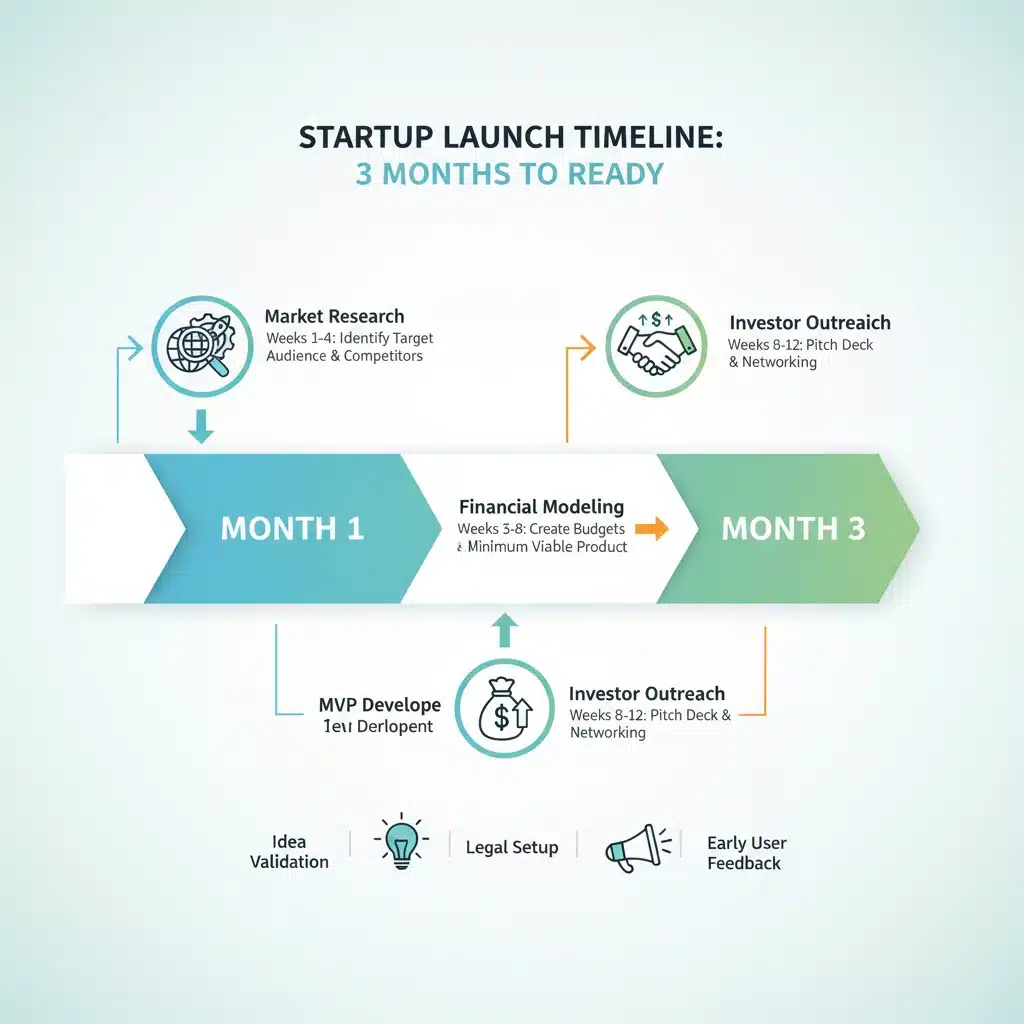
Month 2: Product, Team, and Pitch Deck Perfection
With a solid foundation in place, Month 2 shifts focus to showcasing your product, strengthening your team narrative, and crafting a compelling pitch deck that resonates with investors. This is where U.S. startups transform their ideas into tangible, investable propositions for seed funding 2026.
Week 5-6: MVP Development/Refinement and Traction
An MVP (Minimum Viable Product) or demonstrable traction is often a prerequisite for seed funding. If you don’t have one, this is the time to build it. If you do, focus on showcasing its capabilities and user engagement.
- Develop/Refine MVP: Ensure your MVP clearly demonstrates your core value proposition. It doesn’t need to be perfect, but it must be functional and solve the identified problem effectively.
- Gather User Feedback: Continuously iterate based on user feedback. Show that you are responsive to your market and committed to product-market fit.
- Showcase Early Traction: Even small wins matter. Highlight any early user acquisition, engagement metrics, pilot programs, or letters of intent from potential customers. This validates your market hypothesis and shows momentum.
- Intellectual Property (IP) Strategy: Consider what IP you have or are developing and how you plan to protect it. This can be a significant asset for seed funding 2026.
Week 7-8: Team Building and Pitch Deck Creation
Investors invest in people as much as ideas. Your team’s expertise, passion, and complementary skills are paramount. Simultaneously, your pitch deck is your startup’s story—it needs to be clear, concise, and captivating.
- Highlight Team Strengths: Clearly articulate the relevant experience, skills, and past successes of your founding team and key advisors. Address any gaps and how you plan to fill them.
- Advisory Board: Consider assembling a small, strategic advisory board with industry veterans who can lend credibility and guidance.
- Craft Your Pitch Deck: Develop a visually appealing and content-rich pitch deck (typically 10-15 slides). Ensure it covers all essential components: problem, solution, market, product, business model, traction, team, financials, and ask.
- Storytelling: Frame your startup’s journey as a compelling narrative. Investors remember stories. Practice your pitch until it flows naturally and confidently.
- One-Pager/Executive Summary: Create a concise one-pager or executive summary (1-2 pages) that can be easily shared as a pre-read or follow-up.
Month 3: Investor Outreach and Closing the Deal
The final month is dedicated to actively engaging with potential investors, refining your pitch based on feedback, and ultimately securing your seed funding. This is the culmination of all your hard work, and U.S. startups must be prepared for an intensive period of networking and negotiation for seed funding 2026.
Week 9-10: Investor Research and Networking
Targeted outreach is far more effective than a scattergun approach. Research investors who align with your industry, stage, and mission.
- Identify Target Investors: Research angel investors, seed-stage venture capital firms, and accelerators that invest in your sector and stage. Look at their portfolio companies and investment theses.
- Warm Introductions: Prioritize warm introductions. Leverage your network (advisors, mentors, other founders) to get introductions to potential investors. Cold outreach is rarely effective for seed funding.
- Attend Industry Events: Participate in relevant startup conferences, pitch competitions, and networking events. These provide opportunities to meet investors and other founders.
- Practice Your Pitch: Rehearse your pitch endlessly. Practice with mentors, advisors, and even other founders to get constructive feedback. Be ready for tough questions.
Week 11-12: Pitching, Feedback, and Due Diligence
This is where the rubber meets the road. Be prepared for multiple meetings, follow-ups, and a thorough due diligence process.
- Initial Pitch Meetings: Conduct your initial investor meetings. Be confident, articulate, and listen intently to feedback.
- Iterate on Feedback: Don’t be afraid to refine your pitch or even your business model based on constructive investor feedback. This shows adaptability and a willingness to learn.
- Follow-Up Diligently: Send prompt, personalized thank-you notes and follow up on any requested information quickly.
- Prepare for Due Diligence: Organize all your legal documents (incorporation papers, IP agreements, employment contracts), financial records, and operational data. Create a data room in advance to streamline this process.
- Negotiate Term Sheets: If you receive a term sheet, understand its implications thoroughly. Seek legal counsel from an experienced startup lawyer. Don’t rush this process.
- Close the Round: Once terms are agreed upon, work closely with your legal team to finalize the investment documents and officially close your seed funding round.

Beyond the 3-Month Plan: Sustaining Momentum Post-Seed Funding
Securing seed funding 2026 is a monumental achievement, but it’s just the beginning. The real work starts once the money is in the bank. Maintaining momentum and delivering on your promises is crucial for future funding rounds and sustainable growth.
Key Post-Funding Actions for U.S. Startups:
- Execute Your Plan: Immediately put your ‘use of funds’ plan into action. Hire key personnel, develop your product, and aggressively pursue your go-to-market strategy.
- Communicate with Investors: Keep your new investors informed about your progress, milestones, and challenges. Regular updates build trust and can open doors for future support.
- Monitor KPIs: Continuously track the KPIs you identified in your financial model. These metrics will be your compass for growth and will be scrutinized in subsequent funding rounds.
- Maintain Financial Discipline: Even with new capital, prudent financial management is essential. Monitor your burn rate and ensure efficient allocation of resources.
- Focus on Product-Market Fit: Continue to iterate on your product based on user feedback and market demands. Achieving a strong product-market fit is the ultimate goal for sustainable growth.
- Build Your Network: Continue to expand your network within the startup ecosystem. Connections can provide invaluable advice, partnerships, and future investment opportunities.
The journey for U.S. startups seeking seed funding 2026 is intense and demanding, but incredibly rewarding. By meticulously following this 3-month action plan, you’ll not only prepare your startup for investor scrutiny but also build a stronger, more resilient foundation for long-term success. The market is competitive, but with preparation, persistence, and a compelling vision, your startup can thrive.
Conclusion: Your Strategic Advantage in 2026 Seed Funding
The landscape for seed funding 2026 demands more than just innovation; it requires strategic foresight, meticulous preparation, and flawless execution. For U.S. startups, this 3-month action plan provides a clear roadmap to navigate the complexities of investor engagement, from validating your market and refining your financials to perfecting your pitch and closing the deal. By dedicating time and resources to each phase, you significantly enhance your attractiveness to investors, demonstrating not just potential, but a concrete plan for growth and success.
Remember, securing seed funding is a marathon, not a sprint. It involves continuous learning, adaptation, and unwavering belief in your vision. Equip your startup with the tools and strategies outlined here, and position yourself at the forefront of the competitive 2026 seed funding environment. Your future success starts with today’s preparation.