Post-Funding Operational Excellence for U.S. Startups in 2026: Streamlining Processes to Boost Efficiency by 18%

In the dynamic and fiercely competitive landscape of U.S. startups, securing funding is often perceived as the ultimate validation of an innovative idea. It marks a pivotal moment, transitioning a nascent venture from conceptualization to accelerated growth. However, the euphoria of a successful funding round can quickly give way to the complex realities of scaling operations. The influx of capital, while essential, simultaneously introduces a new set of challenges: how to manage increased resources effectively, streamline burgeoning workflows, and ensure that every dollar invested contributes directly to sustainable growth and profitability. This is where the concept of startup operational excellence becomes not just beneficial, but absolutely critical for long-term success.
By 2026, U.S. startups are projected to face even greater pressures to demonstrate efficiency and a clear path to profitability. Investors are increasingly scrutinizing operational metrics, demanding not just growth, but smart growth. Achieving an 18% boost in efficiency – a seemingly ambitious but entirely attainable goal – will distinguish the market leaders from those that falter. This comprehensive guide delves into the strategies, methodologies, and technological adoptions necessary for U.S. startups to cultivate post-funding operational excellence, ensuring they are not merely surviving, but thriving.
The Post-Funding Paradigm Shift: Why Operational Excellence Matters More Than Ever
Once the ink is dry on the funding agreement, a startup’s focus must shift decisively from securing capital to deploying it strategically. This phase is characterized by rapid expansion, increased hiring, and often, a diversification of product or service offerings. Without a robust operational framework, this growth can quickly devolve into chaos, leading to inefficiencies, increased costs, and ultimately, a squandering of valuable investment. Startup operational excellence is about creating a systematic approach to managing resources, processes, and people to consistently deliver maximum value.
The stakes are particularly high for U.S. startups due to the competitive environment and the high expectations of venture capitalists. Investors are not just looking for a return on investment; they are looking for a significant, exponential return. This necessitates an operational model that can scale efficiently, adapt quickly to market changes, and maintain a lean, agile structure even as the organization grows. Achieving an 18% efficiency gain means that for every unit of input (time, money, effort), the output is proportionally higher. This translates directly into improved margins, faster time-to-market, and a stronger competitive position.
Defining Operational Excellence in a Startup Context
For startups, operational excellence isn’t about rigid corporate bureaucracy; it’s about intelligent agility. It encompasses:
- Process Streamlining: Identifying and eliminating bottlenecks, redundancies, and unnecessary steps in workflows.
- Resource Optimization: Ensuring that human capital, technology, and financial resources are allocated and utilized to their fullest potential.
- Data-Driven Decision Making: Leveraging analytics to gain insights into performance, identify areas for improvement, and make informed strategic choices.
- Continuous Improvement Culture: Fostering an environment where teams are empowered to identify inefficiencies and contribute to solutions.
- Scalability: Designing systems and processes that can handle increasing volume and complexity without significant proportional increases in cost or effort.
Pillar 1: Strategic Process Streamlining for Maximum Impact
The foundation of startup operational excellence lies in meticulously designed and executed processes. Many startups, in their initial sprint for product-market fit, often develop ad-hoc processes that become unsustainable as they scale. Post-funding is the ideal time to critically evaluate and overhaul these workflows.
Identifying and Mapping Core Processes
The first step is to document all critical operational processes. This includes everything from customer acquisition and onboarding to product development, support, and financial reporting. Visualizing these processes through flowcharts or process maps helps to identify:
- Bottlenecks: Points where work piles up or slows down.
- Redundancies: Tasks or steps that are duplicated across different departments or roles.
- Non-Value-Added Activities: Steps that do not directly contribute to the customer or business value.
- Dependencies: How different processes and teams rely on each other.
Implementing Lean Principles
Inspired by manufacturing, Lean principles can be profoundly effective for startups. The core idea is to maximize customer value while minimizing waste. Key Lean practices include:
- Value Stream Mapping: A visual tool to understand the flow of materials and information as a product or service makes its way through the value stream. This helps identify waste and opportunities for improvement.
- Just-in-Time (JIT): Reducing inventory and work-in-progress to only what is needed, when it is needed. For startups, this can translate to agile development cycles and efficient resource deployment.
- Kaizen (Continuous Improvement): Encouraging small, incremental changes made by all employees to improve processes over time.
Automating Repetitive Tasks
Technology offers immense potential for streamlining. Identify tasks that are repetitive, rule-based, and consume significant human effort. These are prime candidates for automation. Examples include:
- Customer Support: Chatbots for FAQs, automated ticketing systems.
- Marketing: Email marketing automation, social media scheduling.
- HR: Onboarding workflows, payroll processing.
- Finance: Invoice generation, expense tracking, reconciliation.
Automation not only reduces manual errors but also frees up valuable human capital to focus on more strategic, creative, and customer-facing activities. This directly contributes to the 18% efficiency target.
Pillar 2: Optimizing Resource Allocation and Management
Post-funding, startups often experience a surge in resources – more employees, more budget, more tools. Managing these resources effectively is paramount to achieving startup operational excellence.
Talent Management and Development
Your team is your most valuable asset. Operational excellence in talent management involves:
- Strategic Hiring: Moving beyond simply filling roles to hiring individuals who not only possess the necessary skills but also align with the company culture and long-term vision.
- Onboarding Excellence: A structured and efficient onboarding process ensures new hires become productive quickly, reducing time-to-value.
- Continuous Training and Development: Investing in upskilling and reskilling employees ensures they remain competent and adaptable to evolving business needs.
- Performance Management: Implementing clear performance metrics and regular feedback loops to ensure individual and team goals align with organizational objectives.
- Retention Strategies: High employee turnover is costly and disruptive. Focus on creating an engaging work environment, offering competitive compensation, and providing growth opportunities.
Financial Prudence and Budgeting
While funding provides a runway, it’s not unlimited. Operational excellence in finance means:
- Granular Budgeting: Moving beyond high-level spending to detailed budgets for each department and project, with clear accountability.
- Cost Control Measures: Regularly reviewing expenditures, negotiating with vendors, and identifying areas where costs can be reduced without compromising quality or growth.
- Cash Flow Forecasting: Accurate forecasting is crucial for managing liquidity and making informed investment decisions.
- Unit Economics Focus: Understanding the profitability of each product, service, or customer to ensure scalable and sustainable growth.
Technology Stack Optimization
With growth, startups often accumulate a variety of software tools. Without proper management, this can lead to a fragmented tech stack, data silos, and increased costs. Optimize your technology by:
- Consolidating Tools: Replacing redundant tools with integrated solutions where possible.
- Leveraging Integration: Ensuring different systems – CRM, ERP, project management, marketing automation – communicate seamlessly to provide a unified view of operations and customers.
- Cloud-First Strategy: Utilizing scalable, flexible cloud infrastructure to reduce maintenance overhead and enable rapid deployment.
- Data Governance: Establishing clear policies for data collection, storage, security, and usage to ensure data integrity and compliance.
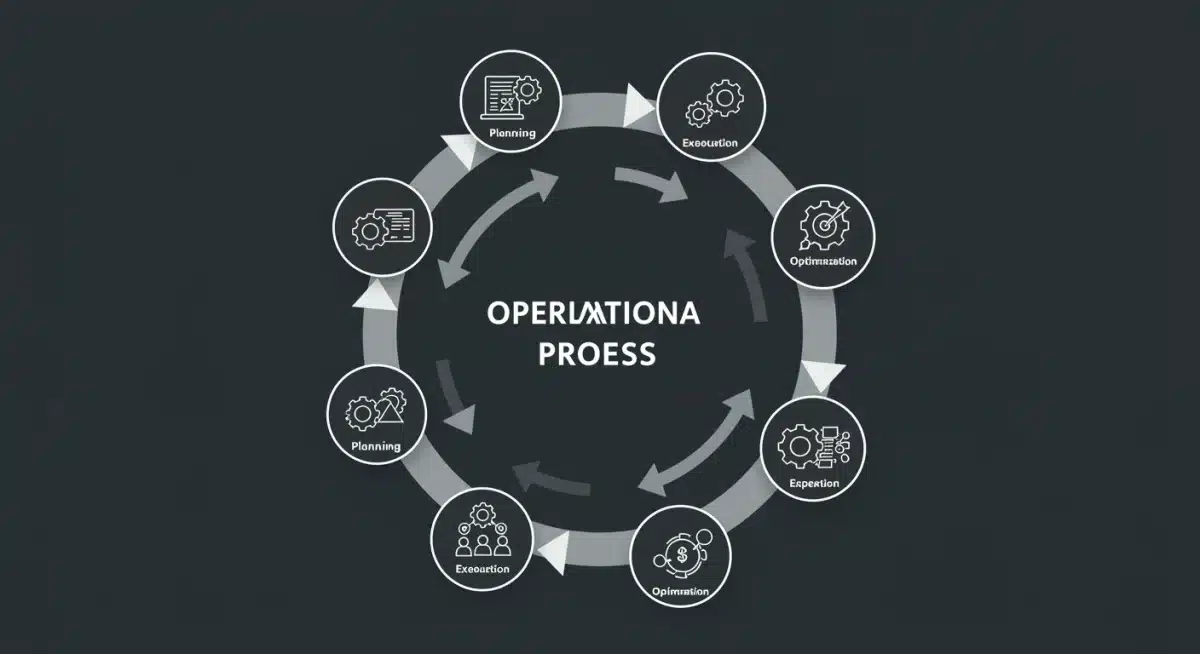
Pillar 3: Leveraging Technology and Data for Predictive Insights
In 2026, technology will not just be a tool for execution; it will be a strategic partner for predictive insights, driving the next level of startup operational excellence. Data is the new oil, and startups that can effectively refine and utilize it will gain a significant competitive edge.
Implementing Business Intelligence (BI) and Analytics
BI tools transform raw data into actionable insights. For startups, this means:
- Centralized Data Warehousing: Consolidating data from various sources (sales, marketing, product, finance) into a single, accessible repository.
- Interactive Dashboards: Providing real-time visibility into key performance indicators (KPIs) across all operational areas. This allows for quick identification of trends, anomalies, and opportunities.
- Predictive Analytics: Using historical data to forecast future outcomes, such as sales trends, customer churn, or resource needs. This enables proactive decision-making rather than reactive problem-solving.
- A/B Testing and Experimentation: Systematically testing different approaches (e.g., in marketing campaigns, product features) to identify what works best and optimize performance.
Embracing Artificial Intelligence (AI) and Machine Learning (ML)
AI and ML are no longer just for tech giants. Affordable and accessible AI/ML solutions can significantly enhance operational efficiency for startups:
- Customer Service Automation: Advanced chatbots and virtual assistants that can handle more complex queries, personalize interactions, and escalate issues appropriately.
- Personalized Marketing: AI-driven engines that analyze customer data to deliver highly targeted content and offers, improving conversion rates.
- Fraud Detection: ML algorithms can identify unusual patterns in transactions or user behavior, helping prevent financial losses.
- Supply Chain Optimization: Predicting demand fluctuations, optimizing inventory levels, and streamlining logistics.
- Predictive Maintenance: For hardware-focused startups, AI can predict equipment failures, allowing for proactive maintenance and reducing downtime.
Cybersecurity and Data Privacy
As startups collect more data and rely more heavily on digital operations, robust cybersecurity and data privacy measures become non-negotiable. Breaches can be devastating, leading to financial losses, reputational damage, and loss of customer trust. Operational excellence includes:
- Implementing Strong Security Protocols: Multi-factor authentication, encryption, regular security audits.
- Employee Training: Educating staff on cybersecurity best practices and identifying phishing attempts.
- Compliance: Adhering to relevant data privacy regulations like GDPR, CCPA, and industry-specific standards.
- Incident Response Plan: Having a clear plan in place for how to respond to and recover from a security breach.
Pillar 4: Fostering a Culture of Continuous Improvement
Technology and processes are only as effective as the people who use them. A culture that champions continuous improvement is the glue that holds startup operational excellence together.
Empowerment and Accountability
- Decentralized Decision-Making: Empowering teams and individuals to make decisions within their areas of expertise, fostering ownership and faster problem-solving.
- Clear KPIs: Establishing measurable key performance indicators for every team and individual, linking them to overall business objectives.
- Regular Feedback Loops: Implementing mechanisms for continuous feedback, both upward and downward, to identify areas for personal and process improvement.
Cross-Functional Collaboration
Silos are the enemy of efficiency. Encourage collaboration between departments:
- Inter-Departmental Projects: Launching initiatives that require input and collaboration from multiple teams.
- Shared Goals: Aligning departmental goals with overarching company objectives to foster a sense of shared purpose.
- Communication Tools: Utilizing collaboration platforms (e.g., Slack, Microsoft Teams) to facilitate open and transparent communication.
Learning from Failures and Successes
A continuous improvement culture views failures as learning opportunities and successes as benchmarks to build upon. This involves:
- Post-Mortem Analysis: Conducting thorough reviews after projects or significant events (both successful and unsuccessful) to identify lessons learned.
- Knowledge Sharing: Creating platforms and processes for documenting best practices, lessons learned, and institutional knowledge.
- Experimentation Mindset: Encouraging a willingness to try new approaches, measure their impact, and iterate.

Measuring and Sustaining the 18% Efficiency Boost
The goal of an 18% efficiency boost by 2026 isn’t arbitrary; it’s a measurable target that requires careful tracking and commitment. To achieve and sustain startup operational excellence, measurement is key.
Key Metrics for Operational Efficiency
While specific metrics will vary by industry and business model, common indicators of operational efficiency include:
- Customer Acquisition Cost (CAC): How much it costs to acquire a new customer. Lower CAC indicates more efficient marketing and sales operations.
- Customer Lifetime Value (CLTV): The total revenue a business can expect from a single customer account. A higher CLTV relative to CAC signifies strong operational health.
- Time-to-Market: The speed at which new products or features are developed and launched. Faster time-to-market often reflects efficient R&D and product development processes.
- Employee Productivity: Revenue per employee, tasks completed per hour, or other metrics relevant to your business.
- Operational Costs as a % of Revenue: A key indicator of how efficiently you are running your business.
- Process Cycle Time: The time it takes to complete a specific process from start to finish.
- Error Rates: The frequency of mistakes in processes, products, or services.
- Resource Utilization Rates: How effectively assets (human, technological, financial) are being used.
Establishing Baseline and Targets
Before you can improve, you must know where you stand. Establish clear baselines for all relevant operational metrics. Then, set ambitious but realistic targets for improvement, with the 18% overall efficiency boost serving as the guiding star.
Regular Review and Adjustment
Operational excellence is not a one-time project; it’s an ongoing journey. Schedule regular reviews of your operational performance – weekly, monthly, quarterly – to assess progress against targets. Be prepared to adjust strategies, processes, and resource allocation based on performance data and evolving market conditions. Agility and adaptability are crucial for sustaining long-term efficiency gains.
The Road Ahead: Challenges and Opportunities
While the path to startup operational excellence is clear, it is not without its challenges. Resistance to change, lack of resources (even post-funding, resources must be managed carefully), and the complexity of integrating new technologies can all pose hurdles. However, these challenges also present opportunities for startups to differentiate themselves.
- Opportunity for Talent Attraction: A well-oiled, efficient operation is attractive to top talent who seek to work in environments where their contributions have a clear impact.
- Enhanced Investor Confidence: Demonstrating strong operational metrics and a clear path to profitability will solidify investor confidence and make future funding rounds easier.
- Scalability for Market Leadership: Efficient operations enable faster, more sustainable scaling, positioning startups for market leadership.
- Improved Customer Experience: Streamlined internal processes often translate directly into a smoother, more satisfying experience for customers.
Conclusion
For U.S. startups in 2026, the transition from securing funding to achieving sustained, profitable growth hinges on a relentless pursuit of operational excellence. It’s about more than just incremental improvements; it’s about a fundamental shift in how resources are managed, processes are designed, and technology is leveraged. By strategically streamlining processes, optimizing resource allocation, embracing data-driven decision-making, and fostering a culture of continuous improvement, startups can not only achieve an ambitious 18% efficiency boost but also build resilient, scalable businesses poised for long-term success in an increasingly competitive global market. The time to invest in your operational backbone is now, ensuring that your innovative vision is supported by an equally innovative and efficient execution strategy.