Yield Farming 2026: A US Investor’s Guide to 8%+ Returns
In the rapidly evolving landscape of decentralized finance (DeFi), yield farming has emerged as a powerful strategy for investors seeking to generate significant returns on their cryptocurrency holdings. As we approach 2026, the opportunities within this sector continue to expand, offering the potential for annual percentage yields (APYs) exceeding 8% for savvy US investors. However, with great opportunity comes inherent risk and complexity. This comprehensive guide is designed to equip US investors with the knowledge, strategies, and cautionary insights needed to navigate the intricate world of Yield Farming US effectively and responsibly.
Yield farming, at its core, involves leveraging various DeFi protocols to maximize returns on crypto assets. This can include providing liquidity to decentralized exchanges (DEXs), lending assets through money markets, or staking tokens to secure a blockchain network. The rewards often come in the form of transaction fees, governance tokens, or a combination of both. For US investors, understanding the regulatory environment, tax implications, and specific platforms available is paramount to success.
Understanding the Fundamentals of Yield Farming
Before diving into advanced strategies, it’s crucial to grasp the foundational concepts of yield farming. This isn’t merely about buying and holding cryptocurrencies; it’s about actively deploying your assets within the DeFi ecosystem to earn passive income.
What is Yield Farming?
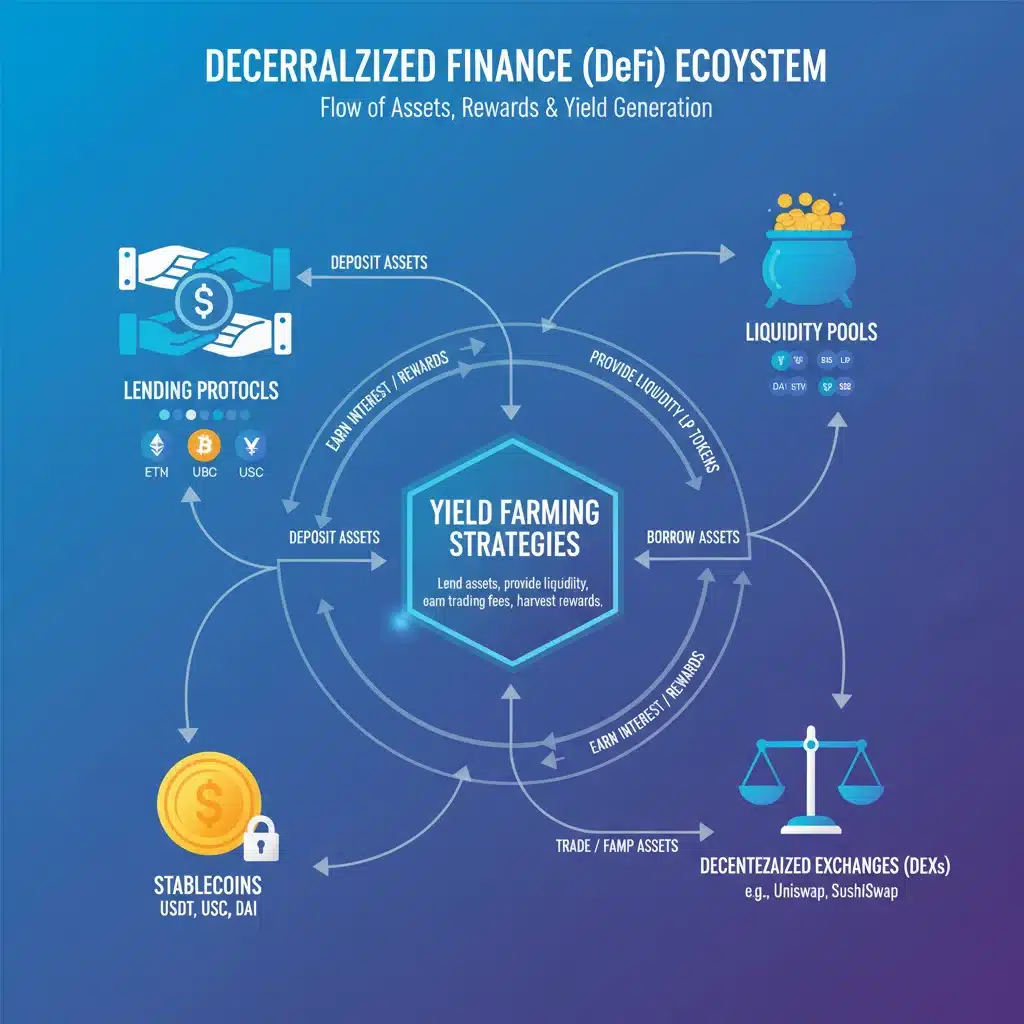
Yield farming is a method of generating rewards with cryptocurrency by staking or lending crypto assets. Participants, known as yield farmers, deposit their funds into liquidity pools or lending protocols, enabling others to borrow, trade, or exchange these assets. In return for providing this essential liquidity, farmers earn fees or newly minted tokens. The goal is to maximize these returns, often by moving assets between different protocols to chase the highest yields.
Key Components of the DeFi Ecosystem for Yield Farming
- Liquidity Pools: These are pools of tokens locked in a smart contract, facilitating trading on decentralized exchanges (DEXs). Users who provide liquidity to these pools (Liquidity Providers or LPs) earn a share of the trading fees.
- Decentralized Exchanges (DEXs): Platforms like Uniswap, SushiSwap, and PancakeSwap enable peer-to-peer cryptocurrency trading without intermediaries. They rely on liquidity pools for their operations.
- Lending Protocols: Platforms such as Aave and Compound allow users to lend out their crypto assets to borrowers and earn interest.
- Staking: In Proof-of-Stake (PoS) networks, staking involves locking up cryptocurrency to support the operations of a blockchain network. Stakers earn rewards for validating transactions.
- Stablecoins: Cryptocurrencies pegged to a stable asset like the US dollar (e.g., USDT, USDC, DAI) are frequently used in yield farming to minimize volatility risk.
Why Yield Farming is Attracting US Investors in 2026
The appeal of Yield Farming US for investors in 2026 stems from several factors:
- High Returns: Traditional investment vehicles often struggle to offer the double-digit APYs seen in some yield farming strategies. While these high returns come with commensurate risks, the potential for significant profit is a major draw.
- Passive Income Potential: Once set up, yield farming can generate a continuous stream of income without requiring constant active management, making it an attractive option for passive income seekers.
- Innovation and Growth: The DeFi space is continually innovating, with new protocols and strategies emerging regularly. This dynamic environment offers diverse opportunities for those willing to adapt and learn.
- Accessibility: DeFi protocols are permissionless, meaning anyone with an internet connection and cryptocurrency can participate, democratizing access to financial services that were once exclusive to traditional institutions.
Getting Started: A Step-by-Step Guide for US Investors
For US investors looking to achieve 8%+ returns through Yield Farming US, a structured approach is essential.
Step 1: Set Up Your Crypto Wallet and Acquire Initial Capital
Your journey begins with a secure non-custodial wallet that supports various blockchain networks, such as MetaMask, Ledger, or Trezor. Fund your wallet by purchasing cryptocurrencies (e.g., Ethereum, stablecoins like USDC) from a reputable exchange like Coinbase, Kraken, or Gemini. Remember to consider transaction fees and network congestion when transferring funds.
Step 2: Research and Understand Different Yield Farming Strategies
Not all yield farming is created equal. Different strategies carry varying levels of risk and potential reward.
- Liquidity Provision (LP Farming): Deposit two different tokens into a liquidity pool on a DEX. You earn trading fees and often receive LP tokens, which can then be staked in a ‘farm’ to earn additional governance tokens.
- Lending: Deposit assets into a lending protocol (e.g., Aave, Compound) to earn interest from borrowers. This is generally considered lower risk than LP farming.
- Staking: Lock up tokens to support a PoS blockchain or a specific protocol, earning staking rewards.
- Automated Yield Aggregators: Platforms like Yearn Finance or Beefy Finance automate the process of finding the best yield farming opportunities across multiple protocols, rebalancing and compounding rewards for users. These can simplify the process but introduce additional smart contract risk.
Step 3: Evaluate Platforms and Protocols
The DeFi landscape is vast. For US investors, it’s crucial to select reputable and audited platforms. Look for protocols with:
- Strong Security Audits: Projects should have undergone multiple audits by reputable firms.
- High Total Value Locked (TVL): A high TVL indicates significant user trust and liquidity.
- Transparent Documentation: Clear information about how the protocol works, its tokenomics, and risk factors.
- Active Community: A vibrant and engaged community can be a sign of a healthy project.
- Regulatory Considerations: Be aware of any platform-specific restrictions for US users.
Step 4: Implement Your Chosen Strategy
Once you’ve selected a strategy and platform:
- Connect Your Wallet: Access the chosen DeFi protocol’s website and connect your MetaMask or other compatible wallet.
- Approve Tokens: Grant the protocol permission to interact with your tokens. This is usually a one-time transaction.
- Deposit Assets: Deposit the required tokens into the chosen liquidity pool, lending platform, or staking contract.
- Monitor and Manage: Regularly check your positions, monitor APYs, and be prepared to adjust your strategy as market conditions or protocol yields change.
Achieving 8%+ Returns: Strategies and Optimization
While 8%+ APYs are achievable, they often require a combination of smart strategy, risk management, and continuous optimization. Here are some approaches for Yield Farming US that can help you target these returns:
Focus on Stablecoin-to-Stablecoin Pools
One of the safest ways to enter yield farming is by providing liquidity to stablecoin pairs (e.g., USDC-DAI, USDT-USDC). These pools typically have lower impermanent loss risk because the assets are pegged to the same value. While base APYs might be lower, many protocols offer additional token rewards, pushing combined yields well above 8%.
Leverage Automated Yield Aggregators
Platforms like Yearn Finance or Convex Finance are designed to automatically compound your rewards and shift your assets to the highest-yielding opportunities. This can significantly boost your effective APY, but it’s crucial to understand the additional smart contract risks associated with these aggregators.
Explore Emerging L1/L2 Ecosystems
Newer Layer 1 blockchains (e.g., Solana, Avalanche, Fantom, Polygon) and Layer 2 solutions (e.g., Arbitrum, Optimism) often offer lucrative yield farming incentives to attract liquidity. These can provide higher APYs than more established chains, but they also come with potentially higher volatility and less battle-tested security.
Understand and Utilize Governance Token Rewards
Many yield farming protocols distribute their native governance tokens as rewards. The value of these tokens can fluctuate significantly. Strategic farmers might choose to sell these tokens regularly to lock in profits or hold them if they believe in the long-term appreciation of the protocol. Understanding the tokenomics of the reward token is vital.
Reinvest and Compound Regularly
The power of compounding is critical in yield farming. Regularly reinvesting your earned rewards back into the farm or other high-yield opportunities can dramatically increase your overall APY over time. Automated aggregators often handle this for you.
Risks and Challenges for US Investors
While the allure of high returns is strong, Yield Farming US is not without significant risks. US investors must be particularly diligent in understanding and mitigating these challenges.
Impermanent Loss
This is arguably the most significant risk for liquidity providers. Impermanent loss occurs when the price ratio of assets in a liquidity pool changes from when you deposited them. If one asset significantly outperforms the other, you may end up with a lower dollar value than if you had simply held the assets outside the pool. While not a permanent loss until you withdraw, it can erode returns.
Smart Contract Vulnerabilities
DeFi protocols are built on smart contracts. Bugs, exploits, or malicious code within these contracts can lead to the loss of all deposited funds. Always choose protocols that have been thoroughly audited and have a strong reputation.
Rug Pulls and Scams
The DeFi space is unfortunately rife with scams, including ‘rug pulls’ where developers abandon a project and abscond with user funds. Always perform extensive due diligence on new or unfamiliar projects.
Liquidation Risk (for leveraged farming)
Some advanced yield farming strategies involve borrowing assets to amplify returns. This introduces liquidation risk, where your collateral can be automatically sold if the market moves against your position.
Regulatory Uncertainty in the US
The regulatory landscape for cryptocurrencies and DeFi in the US is still evolving. Potential future regulations could impact the accessibility, tax treatment, or legality of certain yield farming activities. Staying informed about legislative developments is crucial.
Gas Fees and Network Congestion
High transaction (gas) fees, particularly on the Ethereum network, can eat into profits, especially for smaller capital allocations or frequent rebalancing. Utilizing Layer 2 solutions or alternative, lower-fee blockchains can help mitigate this.
Price Volatility of Reward Tokens
The governance tokens received as rewards can be highly volatile. Their value can drop significantly, impacting your overall APY, even if the base yield remains high.

Regulatory and Tax Considerations for US Investors
For US investors, understanding the regulatory and tax implications of Yield Farming US is critical for compliance and long-term success.
Taxation of Yield Farming Income
The IRS generally views cryptocurrency as property. Income generated from yield farming (e.g., interest, farming rewards, new tokens) is typically considered taxable income at the fair market value of the crypto received at the time of receipt. Capital gains or losses are realized when you sell, trade, or otherwise dispose of your farmed tokens. Accurate record-keeping is paramount.
KYC/AML and Reporting Requirements
While many DeFi protocols are permissionless, the on-ramps and off-ramps (centralized exchanges) often require Know Your Customer (KYC) and Anti-Money Laundering (AML) compliance. As regulations evolve, there may be increased scrutiny on DeFi activities, potentially requiring more detailed reporting.
Navigating State-Specific Regulations
Beyond federal regulations, some US states have specific laws regarding cryptocurrency and financial activities. It’s advisable to consult with a tax professional or legal expert specializing in cryptocurrency to ensure compliance with both federal and state laws.
Best Practices for Successful Yield Farming in 2026
To maximize your chances of achieving 8%+ returns and managing risks effectively in Yield Farming US, adopt these best practices:
Diversify Your Portfolio
Never put all your capital into a single yield farming strategy or protocol. Spread your investments across different chains, protocols, and strategies to mitigate risk.
Start Small and Scale Up
Begin with a smaller amount of capital to familiarize yourself with the process, platforms, and risks. As you gain experience and confidence, you can gradually increase your investment.
Continuous Learning and Research
The DeFi space is constantly evolving. Stay updated on new protocols, emerging risks, and regulatory changes. Follow reputable crypto news sources, analysts, and community discussions.
Use Reliable Security Measures
Protect your crypto assets with strong passwords, two-factor authentication (2FA), and hardware wallets. Be wary of phishing attempts and always verify URLs before connecting your wallet.
Understand Impermanent Loss Mitigation
For LP farming, consider strategies to mitigate impermanent loss, such as focusing on stablecoin pairs or pools with assets that have historically moved in sync.
Regularly Monitor and Rebalance
Keep a close eye on your yield farming positions. APYs can fluctuate, and market conditions can change rapidly. Be prepared to rebalance your portfolio or move assets to more profitable or safer opportunities.
Consult Professionals
For significant investments, consult with a financial advisor who understands the cryptocurrency market and a tax professional specializing in crypto taxation to ensure you are making informed decisions and complying with all regulations.
The Future of Yield Farming in the US
Looking ahead to 2026 and beyond, the future of Yield Farming US is likely to be shaped by several key trends:
- Increased Institutional Adoption: As the DeFi space matures, more institutional players are expected to enter, bringing greater liquidity and potentially more stable yields.
- Regulatory Clarity: The US is likely to provide more concrete regulatory frameworks, which could bring both challenges and opportunities. Clearer rules may attract more traditional investors but might also impose stricter compliance requirements.
- Technological Advancements: Further development of Layer 2 solutions and more efficient Layer 1 blockchains will reduce transaction costs and improve scalability, making yield farming more accessible and profitable for a wider audience.
- Enhanced User Experience: DeFi platforms are continually improving their user interfaces and overall user experience, making yield farming less intimidating for newcomers.
- Innovation in Risk Management: New tools and protocols designed to hedge against impermanent loss, provide insurance against smart contract exploits, and offer better risk assessment will likely emerge.
Conclusion
Yield farming presents an exciting frontier for US investors seeking to generate substantial returns in 2026. With the potential for 8%+ APYs, it offers a compelling alternative to traditional investment avenues. However, success in this dynamic environment demands a thorough understanding of the underlying mechanisms, a diligent approach to risk management, and a commitment to staying informed about regulatory changes and market developments. By following the steps outlined in this guide, diversifying your strategies, and prioritizing security and compliance, US investors can confidently navigate the world of Yield Farming US and unlock its significant potential for passive income and wealth accumulation.
Remember, the DeFi space is still nascent and volatile. While the rewards can be high, so are the risks. Invest only what you can afford to lose, and always prioritize education and due diligence in your yield farming journey.