The Future of NFTs in 2026: Investment Opportunities Beyond Collectibles for US Audiences
The Non-Fungible Token (NFT) market has experienced a whirlwind of hype, speculation, and innovation since its inception. What began as a niche for digital art and profile pictures has rapidly evolved, hinting at a future far more integrated into our financial and daily lives. For US audiences looking ahead to 2026, the landscape of NFT investment opportunities is poised for a significant transformation, moving decisively beyond mere digital collectibles. This article delves into the burgeoning sectors where NFTs are set to redefine ownership, investment, and interaction, offering a comprehensive guide for savvy investors.
The initial frenzy surrounding NFTs, characterized by multi-million dollar sales of digital artwork and unique avatars, often overshadowed their underlying technological potential. However, as the market matures and blockchain technology becomes more robust, the true utility of NFTs is emerging. By 2026, we anticipate a pivot where the inherent properties of NFTs—provable scarcity, immutable ownership, and programmability—will be leveraged to unlock value in a multitude of real-world and digital domains. This shift presents unparalleled NFT investment opportunities for those willing to look beyond the superficial and understand the foundational changes NFTs are bringing.
Understanding the Evolution of NFT Investment
To grasp the future, it’s crucial to understand the journey. Initially, NFTs gained prominence through digital art (e.g., Beeple’s ‘Everydays’), collectibles (e.g., CryptoPunks, Bored Ape Yacht Club), and gaming assets (e.g., Axie Infinity). These early use cases demonstrated the power of digital ownership but often lacked direct correlation to tangible value or sustained utility outside their specific ecosystems. The investment thesis was largely driven by speculative demand, community membership, and cultural significance.
However, the narrative is changing. Regulatory clarity, technological advancements, and a deeper understanding of blockchain’s capabilities are paving the way for more sophisticated applications. By 2026, the focus will increasingly shift towards NFTs as instruments for fractional ownership, digital identity, access rights, and the tokenization of both digital and physical assets. This expansion will diversify the types of NFT investment opportunities available, attracting a broader range of investors, from institutional players to individual retail participants in the US.
Real-World Asset Tokenization: A Game Changer
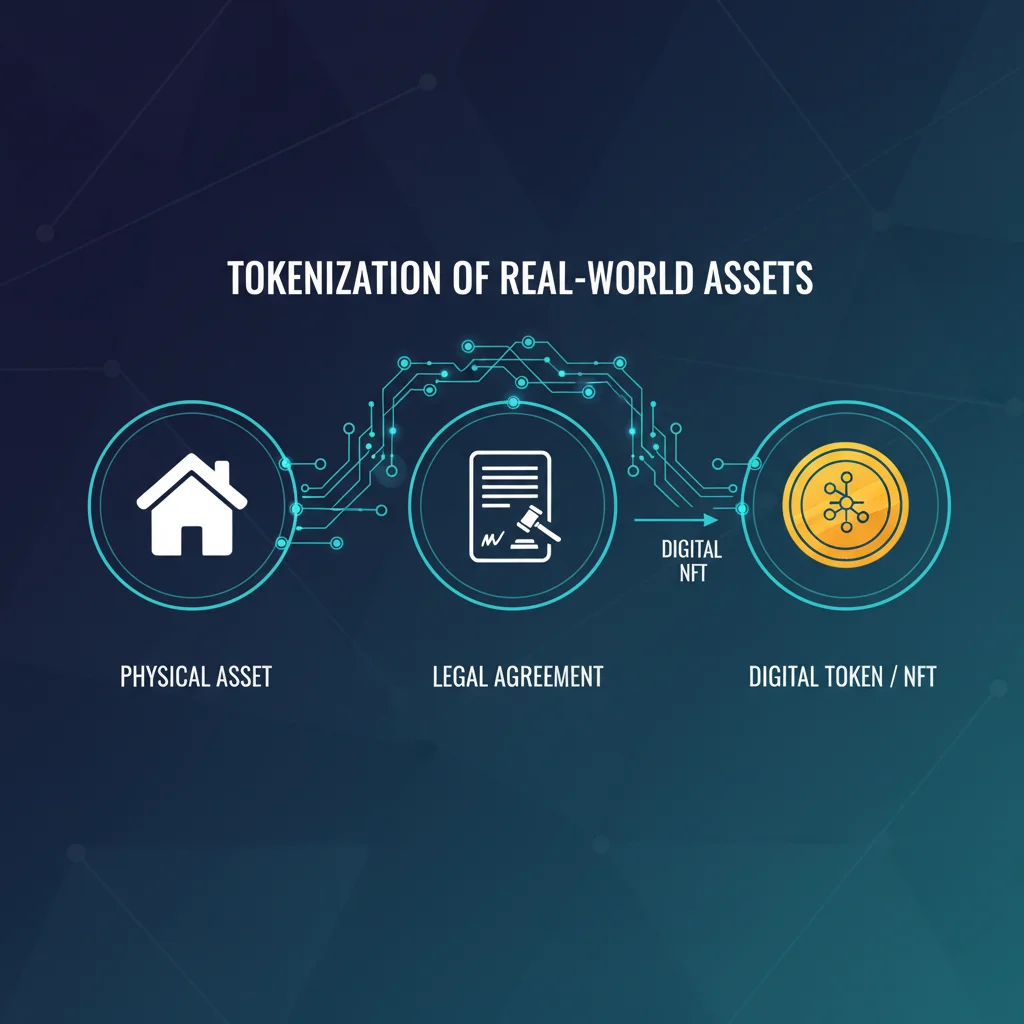
One of the most profound shifts expected by 2026 is the widespread adoption of NFTs for tokenizing real-world assets (RWAs). This involves representing ownership of a physical asset—such as real estate, fine art, luxury goods, or even commodities—as an NFT on a blockchain. This innovation offers several compelling advantages:
- Fractional Ownership: NFTs can divide expensive assets into smaller, more affordable units, allowing multiple investors to own a share. This democratizes access to high-value investments that were previously out of reach for many. Imagine owning a fraction of a commercial building in New York City or a rare diamond, all managed and verified via an NFT.
- Increased Liquidity: Traditional real-world assets often suffer from illiquidity. Selling a property, for instance, can take months. Tokenization allows for near-instantaneous transfers of ownership, potentially creating more dynamic and liquid markets.
- Transparency and Reduced Costs: Blockchain records all transactions immutably, enhancing transparency and significantly reducing the need for intermediaries (lawyers, brokers, escrow services), thereby lowering transaction costs and speeding up processes.
- Global Access: Tokenized assets can be bought and sold by anyone with an internet connection, breaking down geographical barriers to investment.
Real Estate NFTs: Owning a Piece of the Digital and Physical World
The real estate sector is particularly ripe for disruption. By 2026, we could see a significant increase in properties, both residential and commercial, being tokenized. For US investors, this means:
- Direct Investment in Fractional Property: Instead of buying an entire house, investors could purchase NFTs representing a share of a property, earning a proportional share of rental income or appreciation.
- Easier Due Diligence: Property records, title deeds, and historical data could be embedded within or linked to the NFT, streamlining the due diligence process.
- Development Funding: Developers could raise capital by selling NFTs representing future units or equity in a development project.
Companies are already experimenting with this, and as regulatory frameworks evolve to accommodate digital ownership of physical assets, real estate NFTs will undoubtedly become a leading category of NFT investment opportunities.
Intellectual Property (IP) and Creative Works as NFTs
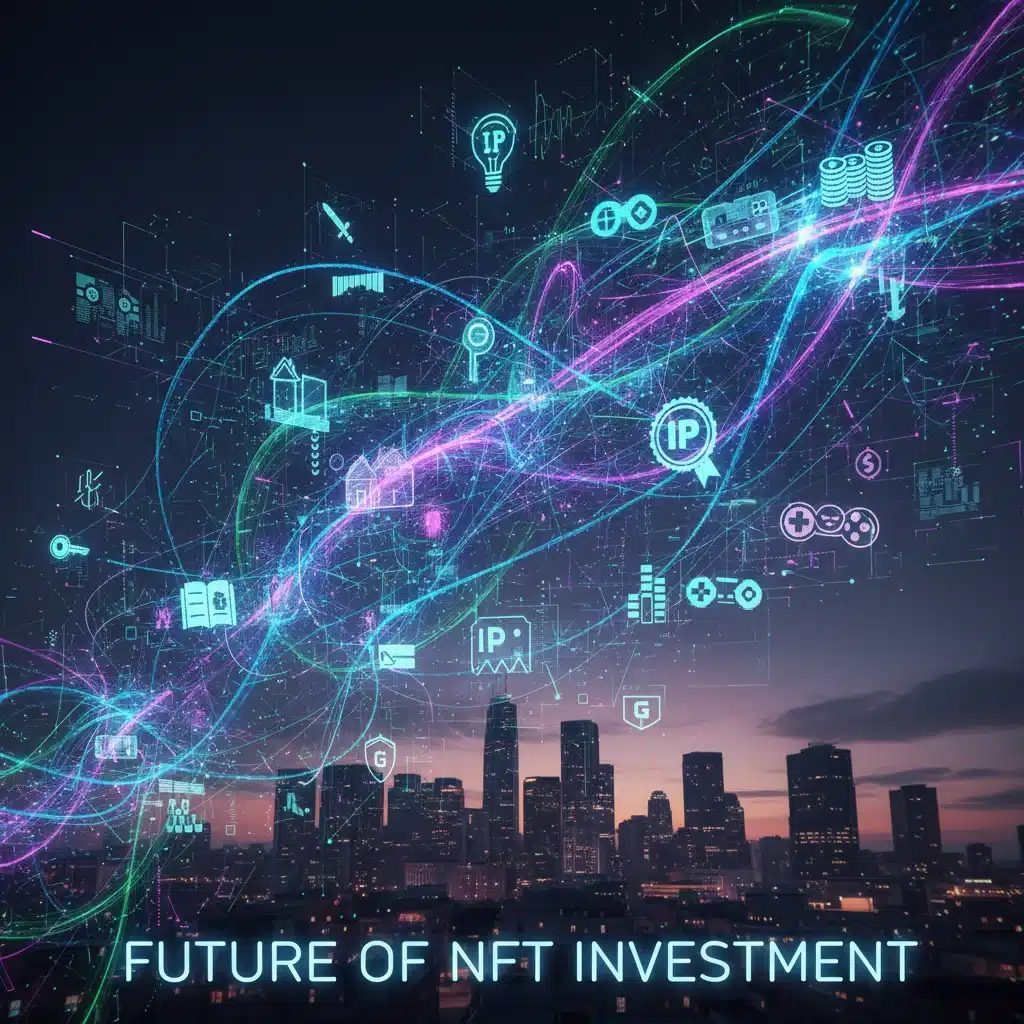
Beyond art, NFTs are set to revolutionize how intellectual property is owned, licensed, and monetized. This extends to music, film, literature, patents, and even brand identities. By 2026, expect to see:
- Music Royalties: Artists can tokenize future royalty streams, selling fractions of their intellectual property to fans or investors. This provides artists with upfront capital and offers investors a direct stake in the success of creative works.
- Film Financing and Distribution: NFTs could represent shares in a film’s production budget, granting owners a percentage of future profits or exclusive access to content. Distribution rights could also be managed and traded via NFTs.
- Patent and Trademark Ownership: Companies could use NFTs to represent ownership of patents or trademarks, simplifying transfers and verification in M&A activities or licensing agreements.
- Digital Collectibles with Utility: While the initial wave of collectibles focused on aesthetics, future NFTs will increasingly bundle IP rights, exclusive content access, or even voting rights within a decentralized autonomous organization (DAO) related to the IP.
For US investors, this opens up a new frontier for supporting creators directly and investing in the burgeoning creator economy, transforming intangible assets into tangible NFT investment opportunities.
Gaming and Metaverse NFTs: The New Digital Economies
The gaming industry has been an early adopter of NFTs, and its integration is only set to deepen by 2026. The rise of the metaverse, a persistent, shared, 3D virtual space, will further accelerate this trend.
- Play-to-Earn (P2E) and Play-and-Own Models: Games will increasingly allow players to truly own in-game assets (characters, skins, weapons, virtual land) as NFTs. These assets can be traded, sold, or even used across different metaverse platforms, creating real economic value for players. Investing in promising P2E game assets early can yield significant returns.
- Virtual Land and Real Estate in the Metaverse: Digital land in popular metaverse platforms (e.g., Decentraland, The Sandbox) has already seen substantial investment. By 2026, this market is expected to mature, with virtual real estate becoming a legitimate asset class, capable of hosting businesses, events, and advertising, generating rental income or appreciation.
- Interoperable Assets: The vision for the metaverse includes interoperability, meaning an NFT asset purchased in one game or platform could potentially be used in another. This enhances the utility and value of these digital items, creating more robust NFT investment opportunities.
- Gaming Guilds and Asset Renting: The concept of ‘gaming guilds’ that own valuable in-game NFT assets and rent them out to players for a share of their earnings is likely to expand, offering a passive income stream for investors.
The metaverse represents a new digital frontier, and NFTs are the keys to unlocking its economic potential. US investors with an eye for emerging digital economies will find a wealth of NFT investment opportunities here.

Decentralized Autonomous Organizations (DAOs) and Governance NFTs
DAOs are blockchain-based organizations governed by smart contracts and often by their token holders. NFTs are increasingly being used to represent membership, voting rights, or specific roles within DAOs. By 2026, investing in governance NFTs could become a significant avenue:
- Exclusive Access and Membership: Certain NFTs might grant exclusive access to communities, events, or premium content within a DAO, acting as a digital membership card.
- Voting Power: Owning specific NFTs could confer voting rights on important decisions within a DAO, giving investors a say in the development and direction of projects.
- Treasury Participation: Some DAOs might distribute a portion of their treasury or future profits to NFT holders, providing a form of dividend or yield.
As the Web3 ecosystem matures, DAOs will play a crucial role in decentralized governance, and their associated NFTs will offer novel NFT investment opportunities rooted in participation and influence.
The Role of Infrastructure and Layer 2 Solutions
The scalability, speed, and cost of blockchain transactions have historically been barriers to widespread NFT adoption. However, by 2026, significant advancements in infrastructure and Layer 2 scaling solutions will alleviate many of these concerns.
- Improved Transaction Speeds and Lower Fees: Layer 2 solutions (e.g., Polygon, Arbitrum, Optimism) and new blockchain architectures (e.g., Solana, Avalanche) are making NFT transactions faster and cheaper, enabling more frequent interactions and micro-transactions essential for gaming and metaverse applications.
- Enhanced Security and Interoperability: Continued development in cross-chain bridges and security protocols will make it safer and easier to move NFTs between different blockchains, unlocking greater utility and market reach.
- User-Friendly Interfaces: The user experience for interacting with NFTs is becoming more intuitive, lowering the barrier to entry for mainstream users and investors.
Investing in the underlying infrastructure (e.g., tokens of promising Layer 2 solutions or specific blockchain ecosystems) can also be considered an indirect yet strategic NFT investment opportunity, as their success underpins the entire NFT market.
Challenges and Risks in the 2026 NFT Market
While the future of NFT investment opportunities looks promising, it’s crucial for US investors to be aware of the inherent risks and challenges:
- Regulatory Uncertainty: The regulatory landscape for NFTs in the US is still evolving. Classifying NFTs as securities, commodities, or unique digital assets will have significant implications for taxation, trading platforms, and investor protection. Investors must stay informed about potential regulatory changes.
- Volatility and Market Speculation: Despite increasing utility, the NFT market is still relatively young and can be highly volatile. Prices can fluctuate wildly based on hype, market sentiment, and broader crypto trends.
- Liquidity Issues: While tokenization aims to improve liquidity, some niche NFTs or illiquid assets may still be difficult to sell quickly at a fair price.
- Security Risks: Smart contract vulnerabilities, phishing scams, and risks associated with centralized exchanges or custodial wallets remain concerns. Robust security practices are paramount.
- Valuation Challenges: Accurately valuing NFTs, especially those tied to nascent projects or subjective intellectual property, can be complex. Traditional financial metrics may not always apply, requiring new valuation models.
- Environmental Concerns: The energy consumption of some blockchain networks (particularly Proof-of-Work chains) has been a point of contention. While many projects are moving to more energy-efficient Proof-of-Stake, this remains a consideration for environmentally conscious investors.
Thorough due diligence, diversification, and a clear understanding of personal risk tolerance are essential for navigating these challenges.
Strategies for US Investors in 2026
For US audiences looking to capitalize on the evolving NFT investment opportunities in 2026, consider the following strategies:
- Focus on Utility and Real-World Value: Shift away from purely speculative ‘flipping’ of collectibles. Prioritize NFTs that offer tangible utility, represent a share in a real-world asset, or provide access to valuable ecosystems (e.g., metaverse land with development potential, IP rights, governance tokens).
- Diversify Your NFT Portfolio: Don’t put all your eggs in one basket. Allocate investments across different categories (e.g., real estate NFTs, gaming assets, IP-backed NFTs) and across various blockchain ecosystems.
- Research the Underlying Project and Team: Investigate the team behind the NFT project, their roadmap, community engagement, and long-term vision. Strong fundamentals are key to sustainable growth.
- Understand the Legal and Regulatory Landscape: Stay updated on US regulations concerning digital assets and NFTs. Consult with financial and legal professionals if necessary, especially for larger investments.
- Consider Fractionalized NFTs: For high-value assets, fractional NFTs can provide exposure with a lower capital outlay, reducing individual risk while still participating in growth.
- Long-Term Horizon: Many of the most significant NFT investment opportunities in 2026 and beyond will likely require a long-term investment horizon, as these technologies and markets mature.
- Security Best Practices: Use hardware wallets, strong passwords, and be vigilant against scams. Never share your seed phrase.
The Future is Tokenized: A Concluding Outlook
The year 2026 will likely mark a pivotal moment for NFTs, moving them from a novel concept to an indispensable component of the digital economy. The shift from speculative collectibles to utility-driven assets, particularly in real estate, intellectual property, and immersive digital worlds, will unlock unprecedented NFT investment opportunities for astute US investors.
As blockchain technology continues to mature, and as regulatory clarity emerges, the barriers to entry will lower, and the potential for real-world impact will expand exponentially. Those who understand this evolution and position themselves strategically will be at the forefront of this new wave of digital ownership and wealth creation. The future of investment is increasingly tokenized, and NFTs are at its very heart.
Embrace the change, educate yourself, and explore the vast and exciting landscape of NFT investment beyond the initial hype. The opportunities in 2026 are not just about collecting digital art; they’re about reshaping the very nature of ownership and value in the digital age.