Crypto Staking Rewards 2026: US Investor’s Guide to 10%+ APY

Maximizing Crypto Staking Rewards in 2026: A US Investor’s Guide to 10%+ APY
The world of cryptocurrency has evolved dramatically, moving beyond simple trading to offer sophisticated avenues for passive income. For US investors, one of the most compelling opportunities lies in maximizing crypto staking rewards. As we look towards 2026, the landscape of digital assets continues to mature, presenting both exciting potential and complex challenges. This comprehensive guide will equip you with the knowledge and strategies to navigate this evolving market, aiming for ambitious 10%+ Annual Percentage Yields (APY) while adhering to US regulatory frameworks.
Staking, at its core, involves locking up your cryptocurrency assets to support the operations of a blockchain network. In return, you earn rewards, much like earning interest in a traditional savings account, but often at significantly higher rates. However, achieving and sustaining 10%+ APY requires a deep understanding of market dynamics, protocol specifics, risk management, and, crucially for US investors, the ever-changing regulatory environment. This article will delve into the intricacies of staking, highlight promising opportunities, discuss essential due diligence, and outline best practices for securing substantial crypto staking rewards in the coming years.
Understanding Crypto Staking: The Foundation of Passive Income
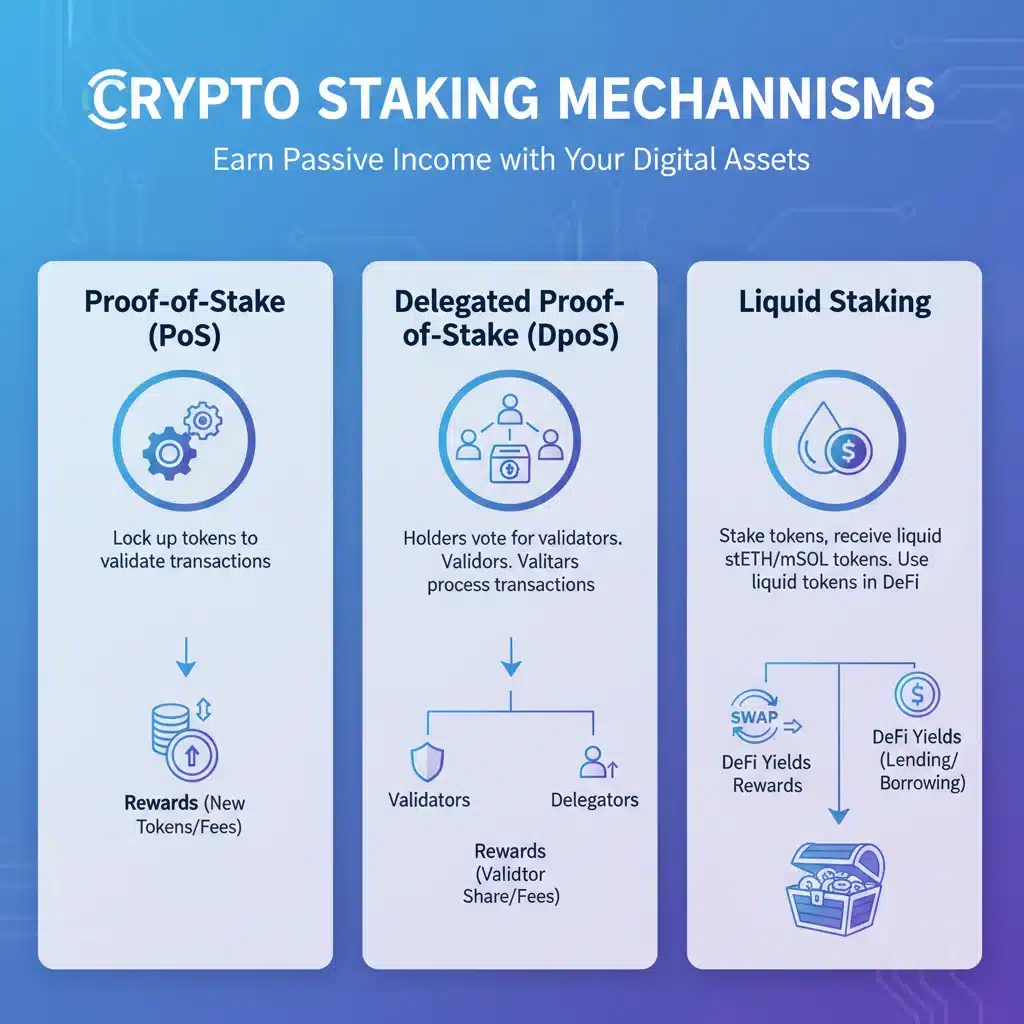
Before diving into strategies for achieving high APY, it’s crucial to grasp the fundamental mechanics of crypto staking. Staking is integral to Proof-of-Stake (PoS) blockchain networks, where it replaces the energy-intensive Proof-of-Work (PoW) consensus mechanism. Instead of miners solving complex puzzles, validators are chosen to create new blocks and validate transactions based on the amount of cryptocurrency they have ‘staked’ as collateral. This process ensures network security and efficiency.
How Does Staking Work?
When you stake your crypto, you are essentially committing your assets to a blockchain network to help validate transactions and maintain its security. In exchange for your contribution, the network rewards you with newly minted coins or a portion of transaction fees. The amount of your reward, often expressed as an APY, depends on several factors:
- Network Inflation Rate: Many PoS networks issue new tokens as staking rewards, which is a form of inflation.
- Number of Stakers/Total Staked: If fewer people are staking a particular asset, the rewards for individual stakers can be higher, assuming a fixed reward pool.
- Transaction Volume: Some networks distribute a portion of transaction fees to stakers.
- Validator Performance: If you stake with a validator, their uptime and efficiency can affect your rewards. Slashing penalties can occur if a validator acts maliciously or goes offline.
- Lock-up Periods: Some staking mechanisms require you to lock your assets for a specific period, affecting liquidity.
For US investors, understanding these nuances is critical. The rewards generated from staking are typically considered taxable income, and the timing and valuation of these rewards can have significant implications. Early consultation with a tax professional specializing in digital assets is highly recommended.
Identifying High-Yield Crypto Staking Opportunities for 2026
The goal for many US investors is to find platforms and protocols offering crypto staking rewards exceeding 10% APY. While such rates are often associated with higher risk, careful selection and diversification can mitigate potential downsides. Here are key areas to explore:
Emerging Proof-of-Stake Blockchains
Newer PoS blockchains often offer higher staking rewards in their early stages to incentivize participation and secure their networks. These can be excellent sources of high APY, but they also come with increased volatility and technological risk. Researching the project’s fundamentals, team, technology, and community support is paramount.
Liquid Staking Protocols
Liquid staking has emerged as a popular innovation, allowing users to stake their assets (e.g., Ethereum) and receive a liquid staking derivative (LSD) token (e.g., stETH). This LSD can then be used in other DeFi protocols to earn additional yield, effectively compounding your returns. This method can significantly boost your overall APY, potentially pushing it well beyond 10%. However, it introduces smart contract risk and potential de-pegging risk of the LSD.
Decentralized Finance (DeFi) Yield Farming with Staked Assets
While not strictly ‘staking’ in the traditional sense, combining staking with DeFi yield farming strategies can lead to substantial returns. For example, once you’ve obtained an LSD from liquid staking, you might lend it on a DeFi platform, provide liquidity to a DEX pool, or use it as collateral for borrowing, all to generate additional yield. This is an advanced strategy that requires a deep understanding of DeFi protocols and their associated risks.
Niche Protocols and Micro-Cap Projects
Sometimes, smaller, less-known projects offer incredibly attractive staking rewards to attract early adopters. While these can be highly lucrative, they carry the highest risk due to lower liquidity, unproven technology, and potential for rug pulls or significant price depreciation. Thorough due diligence, including code audits, team background checks, and community sentiment analysis, is non-negotiable.
Centralized Exchange (CEX) Staking Programs
Many centralized exchanges (e.g., Coinbase, Kraken, Binance.US) offer simplified staking services. While they may not always offer the absolute highest APY compared to direct staking or DeFi, they provide convenience and often a layer of security. For US investors, choosing CEXs that are regulated and compliant within the US is essential to avoid potential legal issues. Always compare their offered rates to direct staking options.
Key Considerations for US Investors Pursuing 10%+ APY
For US investors, navigating the crypto landscape, especially for high-yield activities like staking, involves unique challenges and regulatory considerations. Ignoring these can lead to significant financial or legal repercussions.
Regulatory Compliance and Tax Implications
The regulatory environment for cryptocurrencies in the US is still evolving. The SEC, IRS, and other agencies are actively scrutinizing digital assets. Staking rewards are generally considered taxable income at the fair market value of the crypto when received. This can become complex with fluctuating prices and frequent reward payouts. Keeping meticulous records and consulting with a crypto-savvy tax advisor is paramount. Furthermore, some staking services or tokens might be deemed securities by US regulators, leading to potential legal issues for platforms and users alike. Always choose platforms with a clear stance on US compliance.
Risk Management Strategies for High APY
Higher APY almost always correlates with higher risk. To protect your investment while pursuing substantial crypto staking rewards, consider these strategies:
- Diversification: Do not put all your capital into one staking asset or platform. Spread your investment across multiple projects, blockchain networks, and staking methods to reduce concentration risk.
- Smart Contract Risk: If using DeFi protocols or liquid staking, you are exposed to smart contract vulnerabilities. Ensure protocols have been audited by reputable third parties and have a strong track record.
- Impermanent Loss: While less direct in staking, if you use staked assets (LSDs) in liquidity pools, you are exposed to impermanent loss. Understand how this risk applies to your specific strategy.
- Slashing Risk: If you delegate to a validator, ensure they have a strong reputation and high uptime to avoid slashing penalties, which can reduce your staked amount.
- Volatility Risk: The underlying asset’s price can fluctuate wildly. Even with a high APY, if the asset’s value drops significantly, your overall return in fiat terms could be negative.
- Platform Risk: Centralized exchanges or staking platforms can be vulnerable to hacks, insolvency, or regulatory shutdowns. Research their security measures, insurance policies, and regulatory standing.
- Liquidity Risk: Some staking mechanisms involve lock-up periods, meaning you cannot access your funds for a set time. Understand these terms before committing your assets.
Due Diligence: Researching Staking Platforms and Protocols
Before committing any capital, conduct exhaustive research. Look for:
- Reputation and Track Record: How long has the project or platform been around? What is its history? Are there any major security incidents or controversies?
- Security Audits: For DeFi protocols, check if their smart contracts have been audited by reputable firms (e.g., CertiK, ConsenSys Diligence).
- Community and Development: A strong, active community and ongoing development are indicators of a healthy project.
- Tokenomics: Understand the supply, distribution, and inflation schedule of the token. High inflation can dilute your rewards.
- Regulatory Clarity: For US investors, prioritize platforms and assets that are making efforts to comply with US regulations or operate in a way that minimizes regulatory risk.
Advanced Strategies for Boosting Crypto Staking Rewards Beyond 10%
For those seeking to push their crypto staking rewards beyond the 10% threshold, advanced strategies often involve combining multiple DeFi primitives. These methods require a higher level of technical understanding and risk tolerance.
Re-staking and Yield Aggregators
Re-staking, particularly in the context of Ethereum’s EigenLayer, allows staked ETH to be used to secure other protocols, earning additional rewards. This creates a powerful compounding effect. Yield aggregators (e.g., Yearn Finance, Beefy Finance) automatically move your assets between various DeFi protocols to find the highest available APY, optimizing your returns without constant manual intervention. While convenient, they add another layer of smart contract risk.
Leveraged Staking
Some platforms allow you to borrow against your staked assets to stake even more, effectively leveraging your position. This can amplify returns significantly but also magnifies losses if the asset’s price declines or if interest rates on borrowed funds become unfavorable. This is an extremely high-risk strategy and generally not recommended for beginners or those averse to substantial capital loss.
Participating in Governance
Beyond direct staking rewards, some protocols offer additional incentives for active participation in governance. By voting on proposals related to the protocol’s development, fee structures, or reward distribution, you might be eligible for bonus tokens or increased staking APY. This requires time and engagement but can be a subtle way to enhance your overall returns.
Strategic Unstaking and Re-Staking
The crypto market is dynamic. APYs can change rapidly. A proactive approach involves monitoring staking rates across different protocols and strategically unstaking from lower-yield opportunities to re-stake in higher-yield ones. Be mindful of unstaking periods and associated fees, as these can eat into your profits. This strategy is time-intensive and requires constant market analysis.

The Future of Crypto Staking for US Investors in 2026
As we approach 2026, the future of crypto staking rewards for US investors will likely be shaped by several key trends:
Increased Regulatory Clarity (and Scrutiny)
It is highly probable that the US will have a more defined regulatory framework for digital assets, including staking, by 2026. This could bring both benefits (e.g., increased institutional adoption, clearer tax guidelines) and drawbacks (e.g., stricter compliance requirements, potential limitations on certain high-risk activities). Investors should stay informed about legislative changes and adapt their strategies accordingly.
Maturation of Liquid Staking Derivatives
LSDs are expected to become even more integrated into the broader DeFi ecosystem, offering new opportunities for yield generation and capital efficiency. However, this also means increased complexity and the need for robust risk assessment of interconnected protocols.
Focus on Sustainable Yields
The market may shift towards more sustainable and battle-tested protocols, with a greater emphasis on real yield (yield generated from protocol fees rather than token inflation). While ultra-high, unsustainable APYs might diminish, more robust and reliable crypto staking rewards could emerge from established projects.
Enhanced Security Measures
With greater adoption and value locked in staking, security will become even more paramount. Expect advancements in smart contract auditing, decentralized insurance protocols, and user-friendly self-custody solutions for staked assets.
Institutional Participation
As regulatory clarity improves, more institutional players are likely to enter the staking space, potentially leading to increased competition for rewards but also greater liquidity and stability for certain assets.
Practical Steps to Begin Maximizing Your Crypto Staking Rewards
Ready to start earning 10%+ APY on your crypto? Here’s a practical roadmap for US investors:
- Educate Yourself: Continuously learn about new protocols, staking mechanisms, and market trends. The crypto space evolves rapidly.
- Assess Your Risk Tolerance: Be honest about how much risk you’re willing to take. Higher APY almost always means higher risk.
- Choose Compliant Platforms: Prioritize centralized exchanges and DeFi protocols that openly address their US regulatory stance and have a good reputation for compliance.
- Start Small and Diversify: Don’t invest all your capital at once. Begin with a smaller amount, diversify across a few different assets and platforms, and gradually increase your exposure as you gain experience.
- Implement Strong Security: Use hardware wallets for storing your crypto, enable two-factor authentication (2FA) on all platforms, and be wary of phishing attempts.
- Monitor Your Investments: Regularly check your staking rewards, the performance of your chosen assets, and any news or updates related to the protocols you’re using.
- Consult Professionals: Work with a crypto-aware financial advisor and tax professional to ensure your strategies align with your financial goals and comply with tax laws.
Common Pitfalls to Avoid When Staking for High APY
While the allure of high crypto staking rewards is strong, there are several common mistakes that investors, particularly those new to the space, should strive to avoid:
Chasing Unsustainable APYs
If an APY seems too good to be true, it often is. Extremely high, triple-digit APYs are usually generated through unsustainable tokenomics (e.g., massive token inflation) or are associated with extremely high-risk, unproven projects. These often lead to significant price depreciation of the underlying asset, negating any staking rewards.
Ignoring Smart Contract Risks
Interacting with DeFi protocols means trusting their underlying smart contracts. Bugs, exploits, or malicious code can lead to irreversible loss of funds. Always verify that contracts have been audited by reputable firms and have a history of secure operation.
Neglecting Regulatory and Tax Obligations
For US investors, ignoring the tax implications of staking rewards can lead to significant penalties. Furthermore, engaging with non-compliant platforms could expose you to legal risks. Always stay informed and seek professional advice.
Lack of Diversification
Putting all your capital into a single asset or staking platform, even if it offers a high APY, is a recipe for disaster. A single project failure, hack, or market downturn can wipe out your entire investment. Diversification is key to managing risk.
Not Understanding Lock-up Periods and Unstaking Delays
Some staking mechanisms require assets to be locked for weeks or even months. Others have unstaking delays. Not understanding these can lead to liquidity issues, especially if you need to access your funds urgently or wish to react quickly to market changes.
Falling for Scams and Phishing Attacks
The crypto space is rife with scams. Always double-check URLs, be suspicious of unsolicited messages offering guaranteed returns, and never share your private keys or seed phrases.
Conclusion: A Strategic Path to 10%+ Crypto Staking Rewards in 2026
The pursuit of 10%+ crypto staking rewards in 2026 is an ambitious yet achievable goal for US investors willing to put in the research and manage the inherent risks. By understanding the fundamentals of staking, identifying promising high-yield opportunities, and diligently navigating the US regulatory and tax landscape, you can position yourself to generate substantial passive income from your digital assets.
Success in this dynamic field requires a combination of continuous learning, strategic diversification, robust security practices, and a pragmatic approach to risk. While the allure of high APY is strong, a measured and informed strategy, coupled with professional guidance, will be your most valuable asset in maximizing your crypto staking rewards and building long-term wealth in the evolving world of cryptocurrency.
Remember, the crypto market is volatile, and past performance is not indicative of future results. Always invest only what you can afford to lose and prioritize security and due diligence above all else.