NFT Investment Future: 2026 US Market Trends & Insights
The Future of NFTs as Investment Vehicles: 2026 Trends and 4 Key US Market Insights
The world of Non-Fungible Tokens (NFTs) has been a whirlwind of innovation, speculation, and groundbreaking artistic expression. What began as a niche interest for tech enthusiasts and digital artists has rapidly evolved into a significant, albeit volatile, sector of the global investment landscape. As we look towards 2026, the question on many investors’ minds is: what does the future hold for NFTs as an investment vehicle? Will the hype sustain, or will a more mature, value-driven market emerge? This comprehensive post will explore the anticipated trends shaping the NFT Investment Future, with a particular focus on four key insights relevant to the United States market.
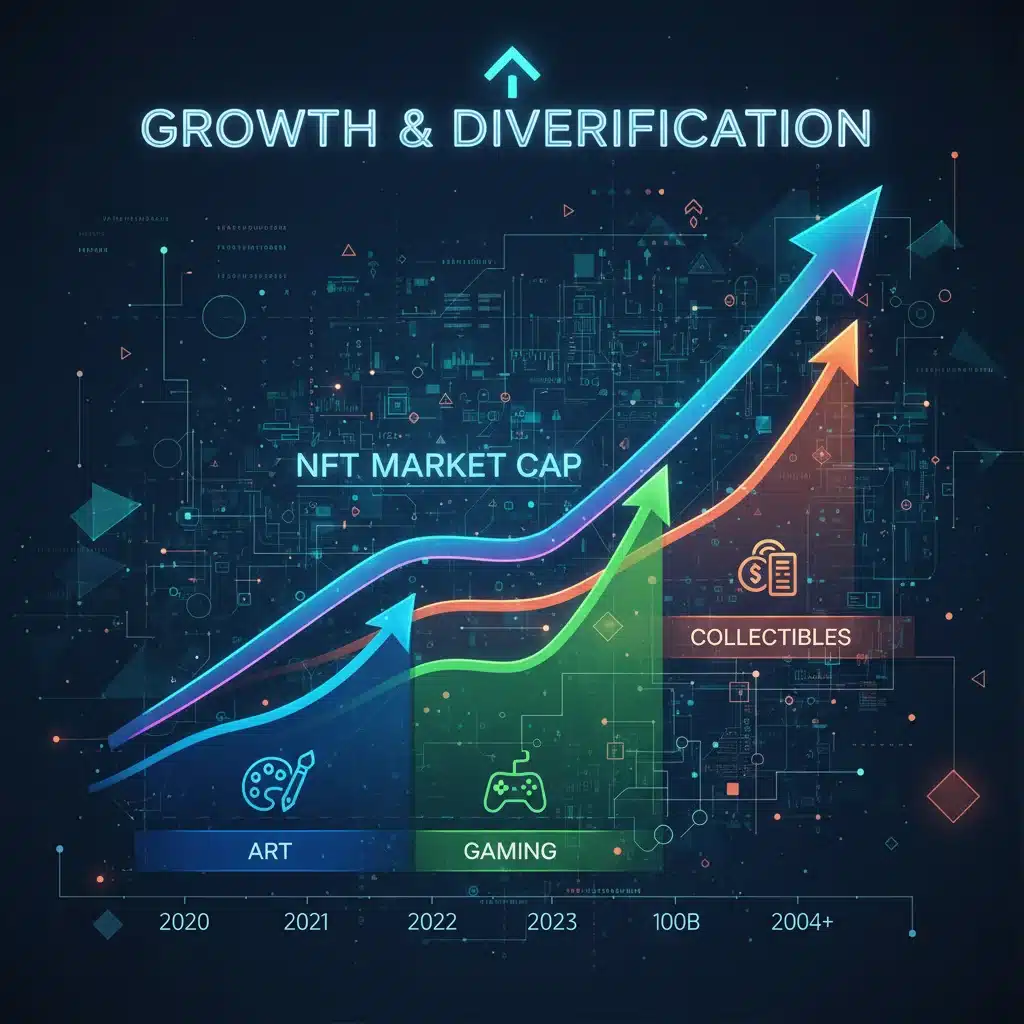
Understanding the trajectory of NFTs requires acknowledging their foundational technology: blockchain. This distributed ledger system provides the immutable proof of ownership and authenticity that underpins every NFT. While initial use cases predominantly revolved around digital art and collectibles, the application spectrum has expanded dramatically to include gaming, music, real estate, intellectual property, and even tokenized real-world assets. This diversification is a crucial indicator of the market’s potential for resilience and growth.
The journey of NFTs from obscure digital tokens to mainstream investment considerations has been nothing short of remarkable. Early adopters saw astronomical returns, while more recent entrants have navigated periods of significant market correction. This volatility is characteristic of nascent technologies and emerging asset classes. However, as the infrastructure matures, regulatory frameworks begin to take shape, and institutional interest grows, the market is expected to stabilize and present more predictable, albeit still dynamic, investment opportunities. Our exploration will delve into these evolving dynamics, providing a forward-looking perspective on where the NFT Investment Future is headed by 2026.
The Evolving Landscape of NFT Investments: Beyond Art and Collectibles
While the initial boom of NFTs was largely fueled by digital art and high-profile collectibles like CryptoPunks and Bored Ape Yacht Club, the market is undergoing a significant transformation. By 2026, the definition of an NFT investment will likely broaden considerably, moving beyond mere speculative digital art into more utility-driven and tangible asset classes. This shift is vital for the long-term sustainability and mainstream adoption of NFTs as legitimate investment vehicles.
Gaming and Metaverse Integration: A New Frontier for NFT Investment Future
Play-to-earn (P2E) gaming models, where players can earn cryptocurrencies and NFTs through gameplay, are set to revolutionize the gaming industry. In 2026, we anticipate a massive surge in investment in gaming NFTs, including in-game assets, characters, skins, and virtual land within metaverse platforms. These aren’t just cosmetic items; they often confer real economic value and utility within their respective ecosystems. The interoperability of these assets across different metaverse platforms will become a key driver of their value, allowing users to carry their digital identities and possessions seamlessly between virtual worlds. Investors will increasingly look for projects with strong community engagement, robust in-game economies, and clear roadmaps for metaverse expansion.
Tokenized Real-World Assets (RWAs): Bridging the Physical and Digital
One of the most exciting, yet still nascent, areas for the NFT Investment Future is the tokenization of real-world assets. Imagine owning a fractional share of a luxury apartment, a rare piece of art, or even a patent, all represented by an NFT. By 2026, we expect to see significant advancements in the legal and technological frameworks required to support this. Tokenized RWAs offer increased liquidity for illiquid assets, fractional ownership opportunities for high-value items, and enhanced transparency through blockchain verification. This could democratize access to investment opportunities previously reserved for a select few, opening up entirely new avenues for investors seeking exposure to diverse asset classes through a digital format.
Intellectual Property and Licensing: Unlocking New Revenue Streams
NFTs are proving to be powerful tools for managing and monetizing intellectual property (IP). Artists, musicians, writers, and creators can use NFTs to prove ownership, track usage, and distribute royalties automatically. By 2026, we foresee a more sophisticated ecosystem for IP-backed NFTs, where investors can purchase fractional ownership in song rights, film production, or even patents, earning royalties as the IP is utilized. This model offers creators greater control and transparency, while providing investors with a novel way to participate in the creative economy and potentially generate passive income streams.
Community and Utility-Driven NFTs: The Rise of the ‘Member-NFT’
Beyond aesthetics, many successful NFT projects are increasingly focusing on utility and community building. Owning certain NFTs grants access to exclusive communities, events, perks, and even voting rights in decentralized autonomous organizations (DAOs). By 2026, the value of these ‘member-NFTs’ will be intrinsically linked to the strength and activity of their respective communities and the tangible benefits they provide. Investors will prioritize projects with strong roadmaps for utility expansion, active governance models, and a clear value proposition beyond simple digital ownership. This paradigm shift emphasizes long-term engagement and value creation over short-term speculative gains.
4 Key US Market Insights Shaping the NFT Investment Future by 2026
The United States market plays a pivotal role in the global NFT landscape, driven by its robust technological infrastructure, a large pool of investors, and a dynamic regulatory environment. Here are four key insights that will significantly influence the NFT Investment Future in the US by 2026:
1. Regulatory Clarity and Institutional Adoption
One of the most significant factors influencing the US NFT market will be the development of clear regulatory frameworks. Currently, the classification of NFTs (as securities, commodities, or property) remains somewhat ambiguous, leading to uncertainty for both creators and investors. By 2026, we anticipate greater clarity from regulatory bodies like the SEC and CFTC. This clarity will be a double-edged sword: it may bring increased compliance costs but will also pave the way for broader institutional adoption. Large financial institutions, investment funds, and traditional asset managers are currently hesitant due to regulatory risks. With clear guidelines, we will likely see a surge in institutional investment, bringing more capital, stability, and legitimacy to the NFT market. This institutional influx could significantly boost the overall market capitalization and introduce more sophisticated financial products, such as NFT-backed loans and derivatives.
Furthermore, state-level initiatives might also contribute to a patchwork of regulations before federal consensus is reached. Investors in the US will need to stay abreast of these evolving legal landscapes, as they will directly impact the legality, tax implications, and liquidity of their NFT holdings. The professionalization of the NFT market, driven by institutional participation, will demand higher standards of due diligence, security, and transparency, ultimately benefiting the entire ecosystem.
2. The Rise of Enterprise NFTs and Brand Engagement
Beyond individual creators, major corporations and brands in the US are increasingly recognizing the potential of NFTs for customer engagement, loyalty programs, and innovative marketing strategies. By 2026, we expect to see a significant expansion of ‘Enterprise NFTs,’ where established brands leverage this technology to create unique digital experiences, exclusive content, and token-gated access for their customers. This could include fashion brands offering digital wearables, entertainment companies providing exclusive fan content, or automotive manufacturers using NFTs for vehicle provenance and ownership records.
These brand-backed NFTs often come with inherent utility and a pre-existing audience, making them potentially more stable and less speculative than some of the purely artistic projects. For investors, this represents an opportunity to invest in projects with strong underlying business models and established brand equity. The success of these enterprise initiatives will be crucial in bringing NFTs to a broader, non-crypto-native audience within the US, further legitimizing the asset class and integrating it into everyday consumer experiences. The strategic partnerships between Web2 giants and Web3 innovators will be a defining characteristic of this trend.
3. Enhanced Security, Scalability, and User Experience
Current challenges in the NFT space include high gas fees on certain blockchains, security vulnerabilities (like phishing scams and wallet hacks), and a complex user experience for newcomers. By 2026, significant advancements in underlying blockchain technology will address these issues, fostering a more secure, scalable, and user-friendly environment. Layer 2 solutions, sidechains, and alternative blockchains (like Solana, Polygon, Avalanche, and future Ethereum upgrades) will offer faster transactions and drastically lower fees, making NFTs more accessible for everyday use and micro-transactions.
Improvements in wallet security, multi-factor authentication, and robust smart contract auditing will mitigate risks for investors. Furthermore, user interfaces for NFT marketplaces and platforms will become more intuitive, abstracting away much of the technical complexity currently associated with buying, selling, and managing digital assets. This enhanced user experience will be critical for attracting the next wave of mainstream investors in the US, who demand simplicity and reliability comparable to traditional financial services. The focus on interoperability and seamless cross-platform functionality will also be a major development.
4. Data-Driven Investment Strategies and Analytics
As the NFT market matures, so too will the tools and methodologies for analyzing its performance. By 2026, US investors will have access to far more sophisticated data analytics platforms, offering insights into market trends, project fundamentals, liquidity, and investor sentiment. This will move the NFT Investment Future away from purely speculative guesswork towards more informed, data-driven decision-making. Metrics like floor price trends, trading volume, unique holder count, rarity scores, and community engagement will be readily available and easily digestible, allowing investors to identify undervalued assets or spot emerging opportunities.
Artificial intelligence and machine learning will play an increasing role in predicting market movements and identifying fraudulent projects. Furthermore, the development of NFT indexes and portfolio management tools will simplify the process of tracking and diversifying NFT holdings, making it easier for both individual and institutional investors to manage their exposure. This shift towards data-centric investing will foster greater market efficiency and potentially reduce some of the extreme volatility currently observed, creating a more professional and transparent investment landscape in the US.

Challenges and Risks in the NFT Investment Future
While the outlook for the NFT Investment Future by 2026 appears promising, it’s crucial to acknowledge the inherent challenges and risks that investors will continue to face. No emerging asset class is without its pitfalls, and NFTs are no exception. Understanding these potential roadblocks is as important as recognizing the opportunities.
Market Volatility and Price Discovery
Despite increased maturity, the NFT market is likely to remain more volatile than traditional asset classes. Price discovery for unique digital assets can be complex, often driven by subjective factors like hype, community sentiment, and celebrity endorsements. While data analytics will improve, predicting the long-term value of many NFTs will still be challenging. Investors must be prepared for significant price swings and the possibility of rapid depreciation, especially in less established projects or those lacking substantial utility.
Liquidity Issues for Niche NFTs
While the overall market liquidity is expected to improve, niche or less popular NFTs may still suffer from low liquidity. Selling a unique digital asset at a fair price can be difficult if there isn’t a robust demand or a deep market. This illiquidity can trap capital and make it challenging to exit positions quickly, especially during market downturns. Investors should consider the potential for illiquidity when allocating capital to specific NFT projects.
Technological Risks and Smart Contract Vulnerabilities
NFTs rely heavily on blockchain technology and smart contracts. While these technologies are generally secure, they are not immune to vulnerabilities. Bugs in smart contract code can lead to exploits, loss of funds, or unauthorized transfers. Furthermore, the underlying blockchain infrastructure itself could face unforeseen challenges, though this risk is generally lower for established networks. Investors need to be aware of the technological risks and ensure they are interacting with reputable platforms and well-audited smart contracts.
Intellectual Property and Ownership Rights Ambiguity
Despite NFTs providing proof of ownership of a digital token, the legal implications regarding the underlying intellectual property (IP) can sometimes be ambiguous. Owning an NFT does not always confer full copyright or commercial rights to the associated digital content. The terms and conditions set by the creator or platform dictate what rights the NFT holder possesses. By 2026, while regulatory clarity will improve, nuanced IP discussions and potential legal disputes related to NFT utilization and commercialization are still likely to arise, requiring careful due diligence from investors.
Environmental Concerns and Sustainability
The energy consumption of certain blockchain networks (particularly proof-of-work chains like Ethereum 1.0, though Ethereum 2.0 aims to address this) has been a significant point of contention. While many newer blockchains and Layer 2 solutions are energy-efficient, the environmental impact of NFTs remains a concern for some investors and the broader public. By 2026, sustainable blockchain practices and carbon-neutral NFT initiatives will likely become more prevalent, but the debate and investor preference for ‘green’ NFTs will continue to influence market dynamics.
Strategies for Navigating the NFT Investment Future
For those looking to participate in the NFT Investment Future, a strategic approach is paramount. The wild west days of purely speculative plays are gradually giving way to a more discerning market that values utility, community, and long-term vision. Here are some strategies to consider:
Diversification Across Categories
Just as with traditional portfolios, diversification is key. Instead of putting all capital into one type of NFT (e.g., only PFP projects), consider diversifying across different categories such as gaming assets, metaverse land, utility tokens, and even fractionalized real-world assets once those markets mature. This can help mitigate risk and capture growth from various segments of the NFT ecosystem.
Focus on Utility and Long-Term Vision
Prioritize projects that offer clear utility, a strong roadmap, and a committed development team. NFTs that provide access to exclusive communities, unlock in-game advantages, or represent fractional ownership in tangible assets are likely to hold more intrinsic value over time compared to purely speculative art pieces. Research the team, their track record, and the long-term vision of the project before investing.
Community Engagement and Social Sentiment Analysis
The strength of an NFT project’s community often correlates with its success. Engage with communities on platforms like Discord and Twitter to gauge sentiment, understand project developments, and assess the level of active participation. Strong, engaged communities can drive demand, provide invaluable feedback, and contribute to the longevity of a project. Tools for social sentiment analysis will become increasingly useful for identifying promising projects and potential red flags.
Stay Informed on Regulatory Developments
Given the evolving regulatory landscape in the US, staying informed about new laws, guidelines, and classifications related to digital assets is crucial. Regulatory changes can significantly impact the legality, tax treatment, and overall viability of certain NFT investments. Following official announcements from regulatory bodies and consulting with legal and financial professionals specializing in digital assets can help investors navigate this complex environment.
Risk Management and Capital Allocation
Only invest what you can afford to lose. The NFT market, even by 2026, will still carry higher risks compared to more established asset classes. Allocate a sensible portion of your investment portfolio to NFTs, ensuring it aligns with your overall risk tolerance. Consider dollar-cost averaging into projects rather than making large lump-sum investments, especially in volatile markets, to mitigate the impact of price fluctuations.
Conclusion: A Maturing Market with Significant Potential
The NFT Investment Future by 2026 paints a picture of a maturing market, moving beyond its speculative infancy towards a more utility-driven and institutionally supported landscape. While challenges remain, particularly around regulation, liquidity, and technological risks, the underlying innovation and expanding use cases suggest a robust future for Non-Fungible Tokens as a legitimate, albeit distinct, asset class.
The US market, with its strong technological base and evolving regulatory environment, will be a key driver of this transformation. As enterprise adoption grows, security and user experience improve, and data-driven investment strategies become more prevalent, NFTs will likely integrate more deeply into both the digital and physical economies. For discerning investors willing to conduct thorough due diligence and embrace a long-term perspective, the opportunities within the NFT Investment Future are significant and poised for continued evolution.
Embracing this digital frontier requires a blend of technological understanding, market awareness, and a strategic approach to risk. As we move towards 2026, the narrative of NFTs will shift from fleeting trends to foundational digital assets, reshaping how we perceive ownership, value, and interaction in the digital age.