Scaling Your US Startup: Achieve 20% Growth in 12 Months

Achieving significant growth for a US startup requires strategic planning and execution, focusing on market expansion, operational efficiency, and funding strategies to secure at least 20% growth over the next 12 months.
Are you ready to propel your venture forward? For any entrepreneur, the goal of scaling your US startup by a significant margin, say 20% in the next 12 months, can seem daunting. However, with a focused approach and the right strategies, this ambitious target is entirely within reach, transforming your vision into tangible success.
Strategic Market Penetration and Expansion
To achieve substantial growth, startups must look beyond their current customer base and explore new avenues for market penetration. This involves a deep understanding of market dynamics and identifying underserved segments or new geographical areas within the US.
Expanding your market presence isn’t just about reaching more people; it’s about reaching the right people with the right message. This requires meticulous research and a willingness to adapt your offerings to new demands.
Identifying New Customer Segments
Understanding who your ideal customer is and where they reside allows for targeted marketing efforts. This detailed segmentation can reveal untapped potential, leading to more efficient customer acquisition.
- Demographic Analysis: Explore age, income, education, and family status to tailor your product or service.
- Psychographic Insights: Understand customer values, attitudes, interests, and lifestyles to craft compelling narratives.
- Behavioral Patterns: Analyze purchasing habits, brand interactions, and product usage to predict future needs.
Geographic Expansion Strategies
While the US is a single market, regional differences can be significant. A successful strategy often involves pilot programs in new cities or states before a full-scale rollout.
Consider the regulatory environment, local competition, and cultural nuances of each new region. A phased approach minimizes risk and allows for continuous learning and adaptation, ensuring that your expansion efforts are both sustainable and impactful.
Optimizing Operational Efficiency
Growth without efficiency can lead to chaos. As your startup scales, streamlining operations becomes paramount. This means leveraging technology, automating repetitive tasks, and fostering a culture of continuous improvement.
Efficient operations not only reduce costs but also enhance customer satisfaction by ensuring consistent service delivery. It’s about doing more with less, without compromising on quality.
Leveraging Automation and AI
Automation tools and artificial intelligence can significantly reduce manual workload, allowing your team to focus on strategic initiatives. From customer service chatbots to automated marketing campaigns, the possibilities are vast.
Implementing AI-driven analytics can provide deeper insights into customer behavior and operational bottlenecks, enabling proactive adjustments. The goal is to create a lean, agile operation that can scale effortlessly.
Streamlining Supply Chain and Logistics
For product-based startups, an optimized supply chain is critical. This involves negotiating better deals with suppliers, improving inventory management, and ensuring timely delivery.
- Supplier Relationship Management: Build strong, collaborative relationships with key suppliers to ensure reliability and cost-effectiveness.
- Inventory Optimization: Implement just-in-time inventory systems to reduce carrying costs and minimize waste.
- Distribution Network Enhancement: Explore new logistics partners or optimize existing routes to expedite delivery and improve customer experience.
Robust Financial Management and Funding
Achieving 20% growth often requires capital infusion and meticulous financial oversight. Startups need a clear understanding of their burn rate, revenue projections, and potential funding sources to sustain their expansion.
Sound financial management is the backbone of sustainable growth, ensuring that resources are allocated wisely and that the company remains solvent through its scaling journey.
Securing Growth Capital
Whether through venture capital, angel investors, or strategic partnerships, securing the right type of funding is crucial. Presenting a compelling growth story and a solid business plan is key to attracting investors.
Beyond traditional funding, consider alternative options such as crowdfunding, grants, or lines of credit. Each option comes with its own set of advantages and disadvantages, and the best choice depends on your startup’s specific needs and stage of development.
Effective Budgeting and Financial Forecasting
A detailed budget and accurate financial forecasts are indispensable tools for managing growth. They help in anticipating cash flow challenges, identifying potential areas for cost savings, and making informed investment decisions.
Regularly review your financial performance against your forecasts. This iterative process allows for timely adjustments, ensuring that your spending aligns with your strategic objectives and that you maintain financial health.
Enhancing Customer Acquisition and Retention
Growth is not just about acquiring new customers; it’s equally about retaining existing ones. A strong customer acquisition and retention strategy ensures a healthy customer lifetime value (CLTV) and reduces churn.
Delivering exceptional customer experiences fosters loyalty and turns customers into advocates, creating a powerful organic growth engine for your startup.
Optimizing Sales and Marketing Funnels
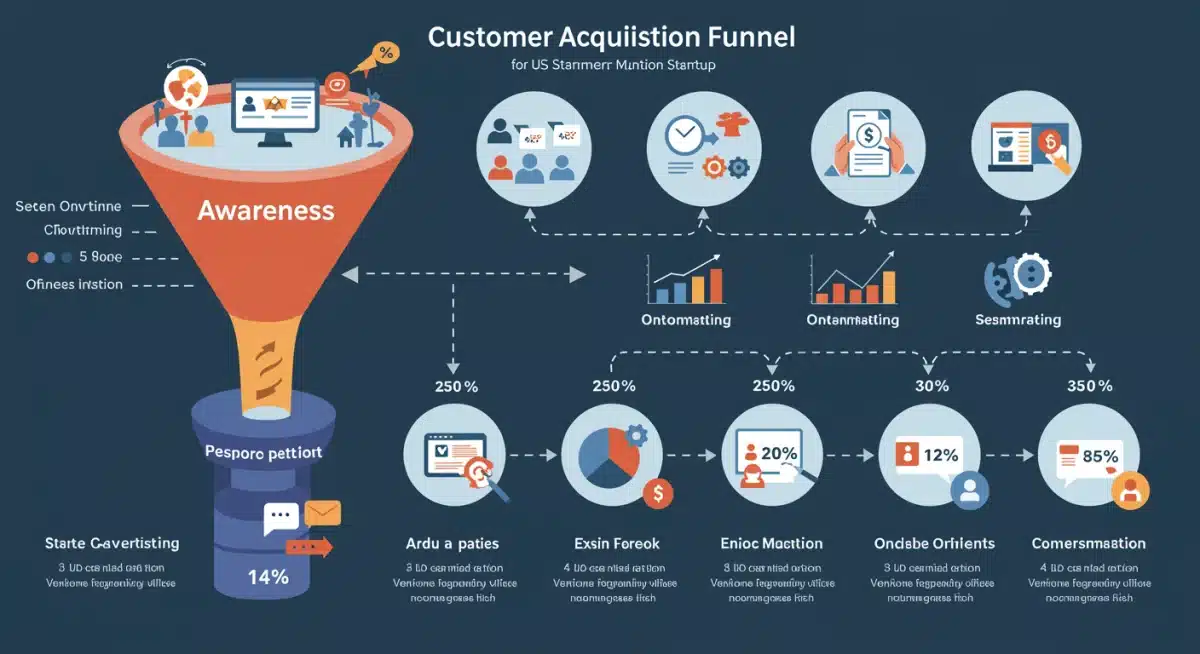
Analyze your current sales and marketing funnels to identify bottlenecks and areas for improvement. From lead generation to conversion, every step can be optimized for better performance.
- Content Marketing: Create valuable content that attracts and engages your target audience, establishing your brand as an authority.
- SEO and SEM: Improve your online visibility through search engine optimization (SEO) and paid search engine marketing (SEM) campaigns.
- Social Media Engagement: Build a strong community and connect with customers on platforms where they are most active.
Building Strong Customer Relationships
Personalized communication, responsive customer support, and loyalty programs are vital for fostering long-term relationships. These efforts make customers feel valued and understood.
Gathering and acting on customer feedback is also crucial. It not only demonstrates that you listen but also provides invaluable insights for product development and service improvement, directly contributing to retention.
Developing Your Team and Culture
Your team is your most valuable asset. As your startup scales, investing in talent development and nurturing a strong company culture becomes critical. A motivated and skilled workforce is essential for executing growth strategies.
A positive culture attracts top talent, boosts productivity, and reduces employee turnover, creating a virtuous cycle of success.
Talent Acquisition and Development
Recruit individuals who not only possess the necessary skills but also align with your company’s values. Once on board, provide continuous learning opportunities and career development paths.
Mentorship programs, workshops, and access to industry conferences can empower your employees and keep them engaged. Investing in your people is investing in your future growth.
Fostering a High-Performance Culture
Clearly define your company’s vision, mission, and values. Encourage open communication, collaboration, and innovation. Recognize and reward achievements to build a sense of purpose and belonging.
A culture that emphasizes accountability, transparency, and continuous feedback creates an environment where everyone feels empowered to contribute to the company’s success. This collective effort is what drives significant growth.
Strategic Partnerships and Alliances
Collaborating with other businesses can unlock new markets, resources, and expertise that would be difficult to access independently. Strategic partnerships can be a powerful catalyst for rapid growth.
These alliances can take many forms, from co-marketing agreements to technology integrations, each offering unique benefits for your scaling journey.
Identifying Complementary Businesses
Look for companies that serve a similar target audience but offer non-competing products or services. These complementary businesses can help you reach new customers and expand your offerings.
- Referral Partnerships: Establish agreements where partners refer customers to each other, expanding reach organically.
- Technology Integrations: Integrate your product or service with another platform to create a more comprehensive solution for users.
- Joint Ventures: Collaborate on a new project or product that leverages the strengths of both companies.
Negotiating Win-Win Agreements
Successful partnerships are built on mutual benefit. Clearly define the roles, responsibilities, and expected outcomes for both parties. Transparency and trust are essential for long-term collaboration.
Ensure that the partnership aligns with your strategic objectives and contributes directly to your growth targets. A well-structured agreement can amplify your market presence and accelerate your scaling efforts significantly.
| Key Growth Area | Brief Description |
|---|---|
| Market Expansion | Identify and penetrate new customer segments or geographic regions. |
| Operational Efficiency | Streamline processes, leverage automation, and optimize supply chains. |
| Financial Management | Secure funding, manage budgets, and forecast effectively for sustainable growth. |
| Team Development | Invest in talent acquisition, development, and a strong company culture. |
Frequently Asked Questions About Scaling Startups
▼
The most critical factor is a clear, actionable growth strategy coupled with disciplined execution. This includes understanding your market deeply, optimizing internal operations, and having sufficient capital. Without a coherent plan and the ability to adapt, growth targets become elusive, regardless of market potential.
▼
Effective identification involves thorough market research, data analytics, and customer feedback. Look for demographic shifts, unmet needs, or underserved niches. Tools like surveys, focus groups, and competitor analysis can provide valuable insights into where your product or service can gain new traction and resonate with different audiences.
▼
Technology is pivotal for scaling operations by enabling automation, enhancing efficiency, and providing data-driven insights. Implementing CRM systems, ERP solutions, and AI-powered analytics can streamline workflows, reduce manual errors, and free up human resources to focus on strategic initiatives, directly contributing to accelerated growth.
▼
Common pitfalls include underestimating funding needs, not having a clear use of funds, or failing to articulate a compelling value proposition to investors. Additionally, not conducting thorough due diligence on potential investors or accepting unfavorable terms can hinder long-term growth and operational flexibility. Always seek expert advice.
▼
Company culture profoundly impacts scaling by influencing employee motivation, retention, and productivity. A strong, positive culture fosters collaboration, innovation, and resilience, which are essential during rapid growth. It attracts and retains top talent, ensuring your team is equipped to handle increased demands and adapt to changes effectively.
Conclusion
Achieving a 20% growth rate for your US startup within the next 12 months is an ambitious yet attainable goal. It demands a multifaceted approach, integrating strategic market expansion, operational excellence, robust financial management, effective customer engagement, and a thriving company culture. By systematically addressing these key areas and embracing continuous adaptation, your startup can not only meet but exceed its growth aspirations, cementing its position in the competitive US market.