Spot vs. Futures ETFs: Crypto Investment Returns in Early 2025
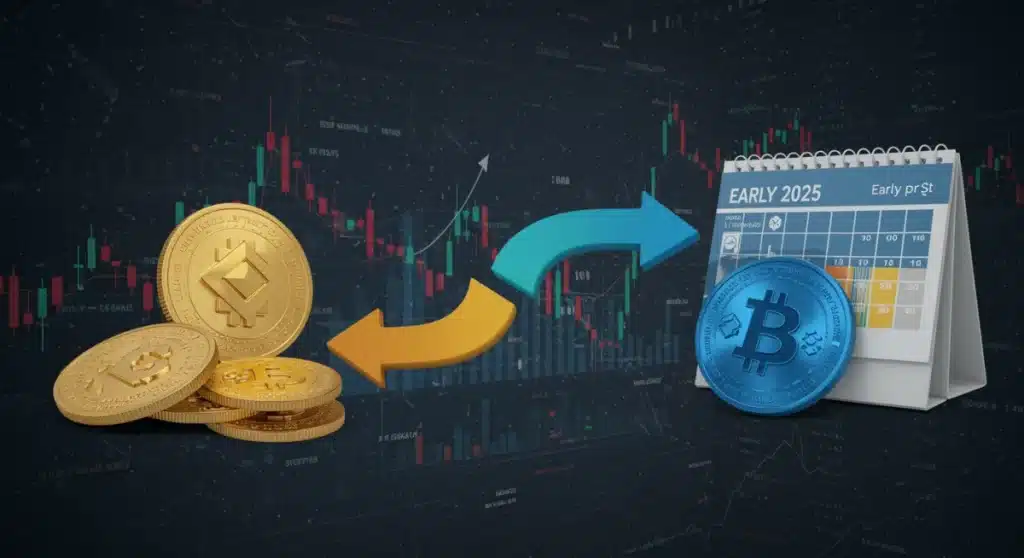
Investors evaluating spot vs. futures crypto ETFs for early 2025 returns must weigh direct asset exposure against derivative-based strategies, considering regulatory shifts and market volatility as primary drivers of potential performance.
As the digital asset landscape matures, investors are increasingly turning to exchange-traded funds (ETFs) to gain exposure to cryptocurrencies. The debate between spot vs. futures crypto ETFs has intensified, especially as we look towards early 2025. This article delves into which investment path might offer more compelling returns and why, helping you navigate this complex yet exciting frontier.
Understanding spot crypto ETFs
Spot crypto ETFs represent direct ownership of the underlying cryptocurrency, such as Bitcoin or Ethereum. When you invest in a spot ETF, the fund manager holds the actual digital assets, providing a more direct correlation to the cryptocurrency’s market price. This direct exposure is often seen as a purer form of investment, aligning closely with the fundamental value of the asset itself.
The introduction of spot Bitcoin ETFs in the U.S. marked a significant milestone, opening doors for traditional investors to access crypto without the complexities of direct ownership. These funds aim to track the price of the underlying asset as closely as possible, minimizing tracking error. For many, this simplicity and directness are major attractions, especially for those who prefer not to manage private keys or deal with various crypto exchanges.
Historically, regulatory hurdles have delayed the approval of spot crypto ETFs in several jurisdictions. However, as regulators become more comfortable with the market’s maturity and infrastructure, more approvals are anticipated. These approvals could lead to increased institutional adoption and broader market liquidity, potentially boosting the performance of these ETFs. The ease of trading spot ETFs on traditional stock exchanges also reduces barriers for entry, making crypto investing more accessible to a wider audience.
Direct exposure benefits
- True price tracking: Spot ETFs aim to mirror the actual market price of the cryptocurrency.
- Simplicity: No need for investors to manage digital wallets or private keys.
- Transparency: Holdings are typically clear and verifiable.
- Accessibility: Traded on traditional exchanges, simplifying investment for many.
In conclusion, spot crypto ETFs offer a straightforward and direct route to cryptocurrency exposure. Their ability to closely track the underlying asset’s price, combined with increasing regulatory acceptance, positions them as a potentially strong contender for returns in early 2025, especially if the crypto market experiences significant upward momentum.
Exploring futures crypto ETFs
Futures crypto ETFs, conversely, do not hold the actual cryptocurrency. Instead, they invest in futures contracts that obligate the buyer to purchase or sell a cryptocurrency at a predetermined price on a specific future date. These ETFs derive their value from the price movements of these contracts, not the direct spot price of the underlying asset.
The primary advantage of futures ETFs lies in their regulatory acceptance, which historically preceded spot ETFs. This allowed investors to gain crypto exposure through regulated products much earlier. However, futures contracts come with their own set of complexities, including concepts like contango and backwardation, which can impact returns. Contango, where futures prices are higher than the spot price, can lead to negative roll yield as contracts are continuously bought and sold, potentially eroding returns over time.
Futures ETFs are often used by investors seeking to hedge against price movements or speculate on future prices without holding the physical asset. They offer a different risk profile and can be less volatile in some scenarios due to their derivative nature. Yet, managing a portfolio of futures contracts requires sophisticated strategies and can incur higher operational costs, which are passed on to investors through expense ratios.
Understanding futures contract dynamics
- Derivative-based: Invests in contracts, not the physical crypto.
- Regulatory advantages: Often approved earlier than spot equivalents.
- Roll yield impact: Contango can negatively affect long-term returns.
- Hedging potential: Can be used for risk management and speculation.
Ultimately, futures crypto ETFs provide indirect exposure to the crypto market. While they offer regulatory clarity and a distinct investment approach, their performance can diverge from spot prices due to contract rollovers and market structure, making them a more nuanced choice for investors targeting superior returns in early 2025.
Key differences and their impact on returns
The fundamental distinction between spot vs. futures crypto ETFs lies in their underlying assets and how they interact with market prices. Spot ETFs aim for direct price correlation, meaning their performance should closely track the actual cryptocurrency. Futures ETFs, however, track the price of futures contracts, which can differ from the spot price due to various market factors, including supply and demand for future delivery.
One critical factor is the concept of contango, particularly prevalent in futures markets. When the price of a futures contract is higher than the current spot price, and this pattern persists as contracts are rolled over, it can create a drag on returns for futures ETFs. This ‘roll cost’ can eat into potential gains, especially during periods of stable or moderately rising prices. Conversely, in a backwardation market, where futures prices are lower than spot, roll yield can be positive, though this is less common for cryptocurrencies.
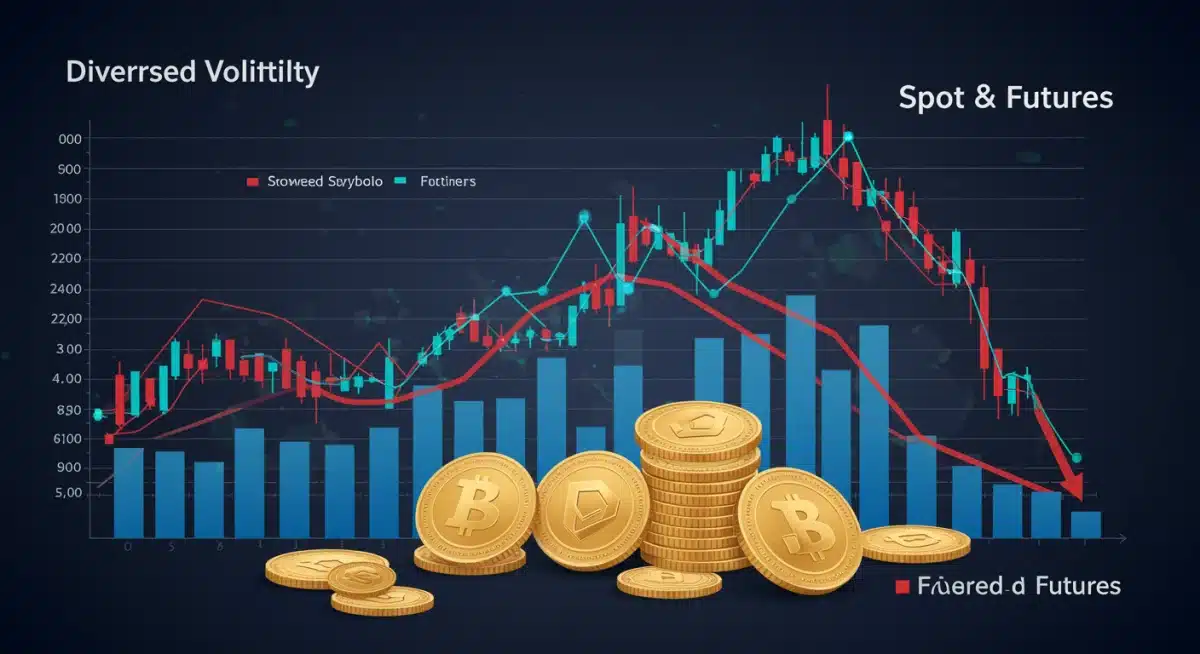
Liquidity also plays a significant role. Spot markets for major cryptocurrencies are generally highly liquid, especially on regulated exchanges. Futures markets, while also liquid, might experience different trading volumes and price discovery mechanisms. The efficiency of price discovery in each market directly influences how well the ETF tracks its intended underlying value, impacting investor returns.
In early 2025, the regulatory environment will continue to shape these differences. As more spot ETFs gain approval and mature, their liquidity and price efficiency are expected to improve further, potentially giving them an edge over futures products in terms of direct market exposure and lower tracking error. However, futures ETFs might still appeal to those seeking regulated products that have a longer track record of approval.
The choice between spot and futures ETFs therefore hinges on an investor’s tolerance for tracking error, their view on market structure (contango/backwardation), and their preference for direct versus derivative exposure. Understanding these nuances is crucial for optimizing returns.
Market outlook for early 2025
The cryptocurrency market in early 2025 is anticipated to be influenced by several key factors, including evolving regulatory frameworks, macroeconomic conditions, and technological advancements. Regulatory clarity, particularly in major economies like the U.S., could provide a significant tailwind for both spot and futures crypto ETFs. Continued institutional adoption, driven by easier access through ETFs, is also expected to bolster market stability and liquidity.
Macroeconomic factors, such as inflation rates, interest rate policies by central banks, and global economic growth, will inevitably impact investor sentiment towards risk assets like cryptocurrencies. If inflation remains elevated, some investors might view Bitcoin as a hedge, potentially driving demand for related ETFs. Conversely, aggressive monetary tightening could dampen enthusiasm for riskier investments.
Technological developments within the crypto space, such as upgrades to major blockchains (e.g., Ethereum’s ongoing developments), could also spark renewed interest and innovation. These advancements can enhance the utility and scalability of cryptocurrencies, leading to increased adoption and potentially higher valuations. The interplay of these factors will create a dynamic environment for crypto ETF performance.
Factors influencing crypto performance
- Regulatory clarity: Increased certainty can attract more institutional capital.
- Macroeconomic trends: Inflation, interest rates, and global economy impact risk appetite.
- Technological innovation: Blockchain upgrades and new applications can drive value.
- Institutional adoption: Growing interest from large financial institutions.
Considering these elements, early 2025 could present a period of significant growth for the crypto market. Spot ETFs, with their direct exposure, might capture more of this upside if market sentiment is strongly bullish. Futures ETFs, while still offering exposure, could face headwinds from contango if the market experiences sustained upward pressure, potentially limiting their relative returns.
Risk considerations for both ETF types
Investing in both spot vs. futures crypto ETFs carries inherent risks that investors must carefully consider. While ETFs simplify access to crypto, they do not eliminate the underlying volatility of digital assets. Cryptocurrency markets are known for their rapid and often unpredictable price swings, which can lead to significant gains or losses in a short period.
For spot crypto ETFs, the primary risk is direct market price volatility. If the underlying cryptocurrency experiences a sharp downturn, the value of the spot ETF will follow suit. There’s also counterparty risk associated with the fund manager holding the physical assets, though reputable funds employ robust security measures like cold storage and insurance to mitigate this.
Futures crypto ETFs introduce additional layers of risk. Beyond market volatility, investors face the complexities of futures contracts, including roll risk. As mentioned, contango can erode returns over time, making it challenging for futures ETFs to keep pace with spot prices during prolonged bull markets. There’s also the risk associated with the liquidity and pricing efficiency of the futures market itself, which might not always perfectly reflect spot market dynamics.
Understanding specific risks
- Market volatility: Cryptocurrencies are inherently volatile assets.
- Tracking error: Both types can deviate from their intended underlying.
- Counterparty risk: Risk associated with the entities holding assets or contracts.
- Regulatory changes: New regulations could impact market structure or ETF operations.
Furthermore, both types of ETFs are subject to regulatory risks. While approvals have increased, future regulatory actions could impact how these products operate or even their legality. Investors should stay informed about the evolving regulatory landscape, as it can significantly influence the risk-return profile of crypto ETFs. Diversification remains a key strategy to manage these risks effectively.
Which path offers better returns in early 2025?
Determining which path—spot vs. futures crypto ETFs—will offer better returns in early 2025 depends largely on anticipated market conditions and an investor’s specific goals. If the crypto market experiences a strong bullish trend, spot ETFs are generally expected to outperform due to their direct exposure and minimal tracking error related to futures roll costs. Their ability to capture the full upside of a rising market makes them attractive for growth-oriented investors.
Conversely, if the market remains range-bound or experiences moderate volatility, futures ETFs might offer a more stable, albeit potentially lower, return profile, especially if backwardation occurs (which is less common but possible). However, under most circumstances, the drag from contango in a futures market could limit their performance compared to spot products.
The ongoing maturation of the crypto market and increasing institutional adoption also favor spot ETFs. As more large players enter the market through these regulated products, liquidity is likely to increase, further solidifying their position as a preferred investment vehicle for direct crypto exposure. The simplicity and transparency of spot ETFs also appeal to a broader investor base, potentially driving more capital into these funds.
Investment path comparison
- Bull market scenario: Spot ETFs likely to outperform due to direct exposure.
- Range-bound/volatile market: Futures ETFs might offer stability but could face roll cost drag.
- Long-term growth: Spot ETFs generally preferred for capturing fundamental asset value.
- Regulatory environment: Continued approvals for spot ETFs enhance their appeal.
In conclusion, for investors targeting superior returns in early 2025, especially those with a bullish outlook on the underlying cryptocurrencies, spot crypto ETFs appear to be the more promising avenue. Their direct correlation to market prices and absence of roll costs position them to capture upside more efficiently, assuming continued market growth and regulatory clarity.
| Key Aspect | Description |
|---|---|
| Spot ETFs | Directly hold the underlying cryptocurrency, aiming for true price tracking. |
| Futures ETFs | Invest in futures contracts, offering indirect exposure with potential roll costs. |
| Market Outlook Early 2025 | Influenced by regulation, macroeconomics, and tech; potential for growth. |
| Risk Factors | Volatility, tracking error, counterparty risk, and regulatory changes for both. |
Frequently asked questions about crypto ETFs
The main difference lies in their underlying assets. Spot crypto ETFs directly hold the actual cryptocurrency, providing direct exposure to its market price. Futures crypto ETFs, however, invest in futures contracts, which are agreements to buy or sell the cryptocurrency at a future date and price, offering indirect exposure.
Spot ETFs are often seen as better for long-term investment because they aim to track the true market price of the underlying cryptocurrency more accurately. They avoid the ‘roll costs’ associated with futures contracts, such as contango, which can erode returns over extended periods, making them more efficient for capturing asset appreciation.
Contango occurs when futures contract prices are higher than the current spot price. For futures crypto ETFs, this means that as older contracts expire and are replaced with newer, more expensive ones, the fund incurs a ‘roll cost.’ This can negatively impact returns, causing the ETF to underperform the spot price over time.
Crypto ETFs are not suitable for all investors due to the inherent volatility of cryptocurrencies. While they offer regulated access, investors must have a high-risk tolerance and be prepared for significant price fluctuations. It’s crucial to understand the risks involved and consider how such investments fit into a diversified portfolio.
Regulatory changes could significantly impact crypto ETF performance. Increased clarity and favorable regulations, such as further spot ETF approvals, could boost investor confidence and institutional adoption, driving prices up. Conversely, stricter regulations or unexpected policy shifts could introduce uncertainty and negatively affect market sentiment and ETF valuations.
Conclusion
The choice between spot vs. futures crypto ETFs for optimal returns in early 2025 hinges on a nuanced understanding of their structures, market dynamics, and risk profiles. While futures ETFs provided early regulated access, their derivative nature and the potential for roll costs from contango often place them at a disadvantage compared to spot ETFs in a bullish market. Spot ETFs, with their direct exposure to the underlying cryptocurrency, are better positioned to capture pure price appreciation. As regulatory environments continue to mature and institutional adoption grows, spot crypto ETFs are increasingly becoming the preferred vehicle for investors seeking direct and efficient exposure to the burgeoning digital asset market. Investors should carefully assess their risk tolerance and market outlook to make an informed decision, always prioritizing diversification and continuous education in this rapidly evolving financial frontier.